Beginner Home Workout: No Equipment Needed
Embarking on a fitness journey can be intimidating, especially for beginners. However, the good news is that you don’t need a gym membership or expensive equipment to get started. A home workout routine using your body weight can be highly effective, allowing you to build strength, flexibility, and endurance. This article outlines practical home exercises, tips for maximizing your workout, and important considerations for your fitness journey.
- Introduction
- Benefits of Home Workouts
- Essential Warm-Up Exercises
- Beginner-Friendly Exercises
- Creating a Routine
- When to Consult a Professional
- Common Myths and Misconceptions
- Frequently Asked Questions
- Conclusion
Benefits of Home Workouts
Home workouts come with a multitude of advantages. They provide convenience, allowing you to exercise without commute time, and they can also save you money. Moreover, ambient comfort can lower the barrier to entry for regular physical activity, making it easier for beginners to stay committed. Engaging in bodyweight exercises can effectively improve cardiovascular health, build muscle, and enhance flexibility.
Essential Warm-Up Exercises
Before diving into your workout, warming up is crucial. It prepares your body for exercise, reduces the risk of injury, and enhances performance. Here are three simple warm-up exercises:
- Arm Circles: Stand with your feet shoulder-width apart. Extend your arms to the sides and make small circles, gradually increasing the size. Perform for about 1 minute.
- Leg Swings: Hold onto a wall or chair for balance. Swing one leg forward and backward, then switch to the other leg. Aim for 30 seconds on each side.
- Torso Twists: Stand with feet hip-width apart and hands on your hips. Gently twist your torso to one side and then the other. Repeat for 1 minute.
Beginner-Friendly Exercises
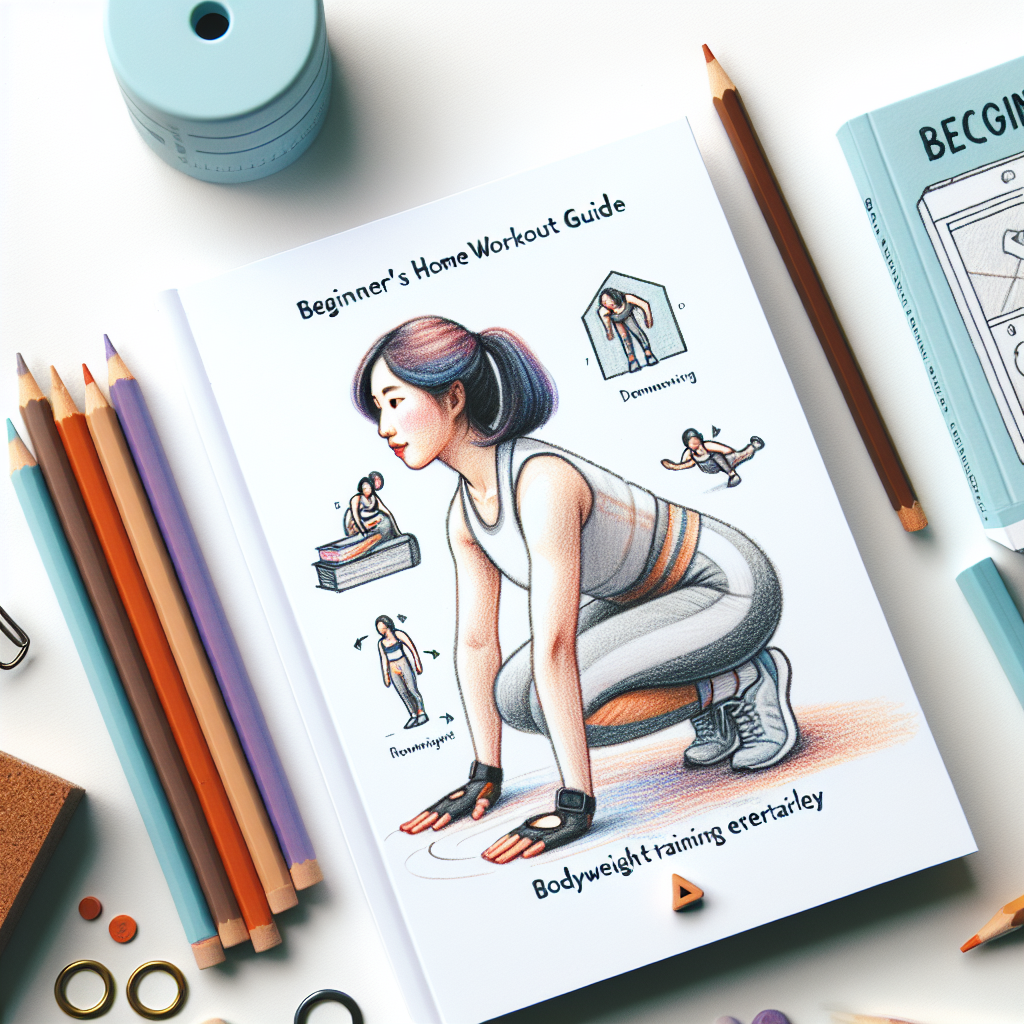
This section introduces a series of bodyweight exercises suitable for beginners. Each exercise can be modified based on your fitness level. Aim for 2–3 sets of 8–12 repetitions for each exercise.
1. Push-Ups
Begin in a plank position with your hands slightly wider than shoulder-width apart. Lower your body until your chest nearly touches the ground, then push back up. For an easier version, perform push-ups on your knees.
2. Bodyweight Squats
Stand with feet shoulder-width apart. Lower your hips back as if sitting in a chair while keeping your chest up. Return to a standing position. Make sure your knees do not extend past your toes.
3. Glute Bridges
Lie on your back with knees bent and feet flat on the ground, hip-width apart. Lift your hips towards the ceiling while squeezing your glutes. Hold for a second at the top, then lower.
4. Plank
Assume a plank position with your forearms on the ground and elbows directly beneath your shoulders. Keep your body in a straight line from head to heels. Hold this position for 20–30 seconds, increasing the duration as you get stronger.
5. Burpees
Start in a standing position, drop into a squat, kick your legs back into a plank, perform a push-up, return to the squat position, and jump up. Burpees improve cardiovascular fitness and strength.
These exercises can be easily adjusted based on your ability, and they can be done without any equipment.
Creating a Routine
A consistent workout routine is essential for achieving results. Consider the following steps:
- Set a Schedule: Choose specific days and times for your workouts to create a habit.
- Duration: Aim for 20-30 minutes of workouts, gradually increasing as your fitness improves.
- Mix it Up: Incorporate different exercises to avoid boredom and target various muscle groups.
- Recovery: Ensure you include rest days to allow your body to recover and prevent injury.
- Track Progress: Keep a journal or use a fitness app to monitor your progress and stay motivated.
For a structured approach, consider registering for a free 30-day exercise program where you only have to commit to 6 minutes of exercise each day, yet can achieve results comparable to gym workouts. You can sign up here.
When to Consult a Professional
While home workouts are generally safe, certain situations warrant consulting a professional. If you experience extreme pain, ongoing discomfort, or significant fatigue, it is advisable to seek the guidance of a healthcare provider or certified trainer. Additionally, professional advice is crucial if you have pre-existing health conditions or injuries.
Common Myths and Misconceptions
As you begin your fitness journey, it’s important to discern fact from fiction. Here are some common myths associated with home workouts:
- Myth 1: You need expensive equipment to get fit. Fact: Bodyweight exercises can provide effective strength and cardiovascular training.
- Myth 2: You must work out for hours to see results. Fact: Short, high-intensity workouts can be just as effective.
- Myth 3: All workouts must be painful to be beneficial. Fact: Gradual progression is key; discomfort is different from pain.
- Myth 4: You can spot reduce fat. Fact: Fat loss occurs throughout the body, and genetics primarily determine where fat is lost.
Frequently Asked Questions
Can I build muscle without equipment?
Yes, bodyweight exercises like push-ups and squats can effectively build muscle strength at home.
How often should I work out as a beginner?
Start with 2-3 sessions per week and gradually increase to 4-5 sessions as your fitness improves.
What should I do if I feel pain during an exercise?
Stop immediately and reassess your form. If pain persists, consider consulting a professional.
Is it necessary to cool down after a workout?
Yes, cooling down helps your heart rate return to normal and aids in recovery.
Can I lose weight with home workouts?
Yes, when combined with a balanced diet, home workouts can contribute to weight loss.
How do I remain motivated while working out at home?
Set clear goals, track your progress, and consider finding a workout partner or community for support.
Conclusion
- Home workouts are an effective alternative to gym sessions.
- Bodyweight exercises can enhance strength and flexibility without equipment.
- A warm-up is essential to prevent injuries.
- Establishing a consistent routine helps in achieving results.
- Do not hesitate to consult a professional if you experience pain or discomfort.
Embarking on your fitness journey with a home workout can be empowering. Begin implementing these strategies today for a healthier lifestyle, and remember to check out the free 30-day exercise program mentioned earlier. Start your transformation now!
Author: John Angel