Basic Full Body Workout: No Equipment Needed
In today’s fast-paced world, the lack of time and access to a gym can hinder one’s fitness journey. Nevertheless, a comprehensive full-body workout can be effectively executed without any equipment. This article outlines a series of exercises that utilize body weight to enhance strength, flexibility, and endurance. By dedicating just a small portion of your day, you can achieve significant results, similar to those seen in traditional gym settings.
- Understanding Bodyweight Training
- The Key Benefits
- Essential Exercises for a Full Body Workout
- Creating Your Routine
- When to Seek Professional Guidance
- Common Misconceptions
- FAQs
Understanding Bodyweight Training
Bodyweight training leverages your own mass as resistance, providing an effective workout that enhances muscle tone and strength. This method cultivates flexibility and can be performed virtually anywhere. From movements that engage all major muscle groups to specific isolation exercises, bodyweight workouts can be both diverse and scalable to individual fitness levels.
The Key Benefits
There are myriad advantages to incorporating bodyweight exercises into your fitness regimen:
- No Equipment Required: Ideal for home workouts or travel.
- Improved Core Stability: Many bodyweight exercises target core muscles, improving stability.
- Enhanced Functional Strength: Builds strength relevant to daily activities.
- Adjustable Intensity: Workouts can be tailored to suit personal fitness levels.
- Boosted Metabolism: Engaging multiple muscle groups increases calorie burn.
Essential Exercises for a Full Body Workout
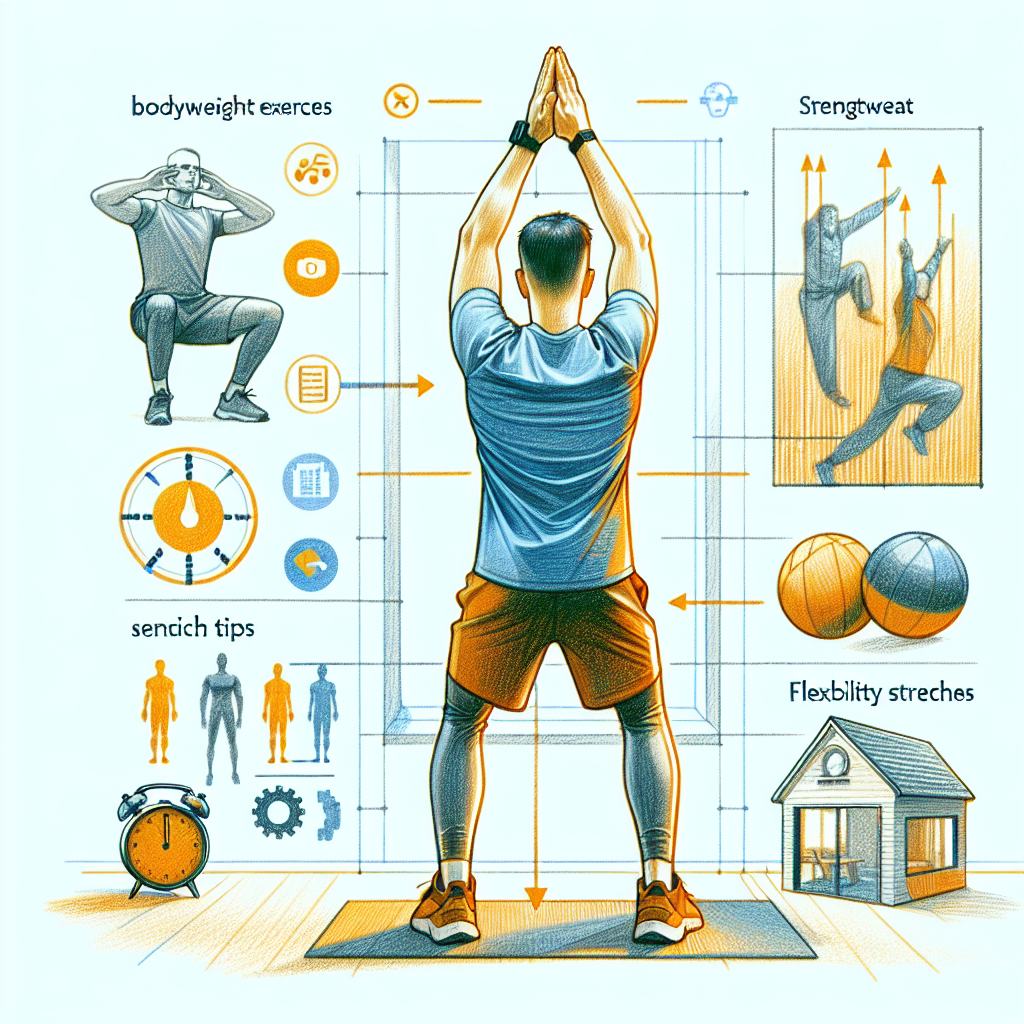
Below is a list of fundamental bodyweight exercises that can be combined for a full-body workout:
- Push-Ups: Excellent for upper body strength (chest, shoulders, triceps).
- Squats: Engages your lower body (quads, hamstrings, glutes).
- Lunges: Enhances balance and works the same muscle groups as squats.
- Planks: Targets core stability and improves overall strength.
- Burpees: A powerhouse exercise that combines strength and cardio.
- Mountain Climbers: Great for cardiovascular fitness and core engagement.
Creating Your Routine
To structure an effective full-body workout without equipment, follow these steps:
- Begin with a warm-up (5-10 minutes of light cardio, such as jogging in place).
- Select 4-6 exercises from the list provided.
- Perform each exercise for 30 seconds to 1 minute, followed by a 15-30 second rest.
- Complete 2-3 sets of your circuit.
- Cool down with stretching to enhance flexibility and prevent injury.
When to Seek Professional Guidance
It is prudent to consult with a qualified professional in the following scenarios:
- Experiencing chronic pain or discomfort during exercise.
- Having pre-existing health conditions that may affect your ability to work out.
- Seeking personalized guidance to achieve specific fitness goals.
- Noticing stalled progress despite consistent efforts.
Common Misconceptions
It is vital to dispel prevalent myths regarding bodyweight workouts:
- Bodyweight Exercises Are Less Effective: Many bodyweight exercises, particularly when performed with proper form and intensity, are highly effective for building strength and endurance.
- Only Beginners Can Benefit: Bodyweight training is scalable; advanced athletes can also find substantial benefits.
- You Need Long Duration Workouts: Brief, high-intensity workouts can be equally effective, especially when focusing on compound movements.
FAQs
Can I gain muscle using only bodyweight exercises?
Yes, bodyweight exercises can promote muscle growth, especially when performed with high intensity and proper progression.
How often should I do these workouts?
For best results, aim for full-body workouts 3-4 times per week.
What is the best way to warm up before starting?
Engage in dynamic stretches and light cardio to elevate heart rate and prepare muscles, such as jogging in place or arm circles.
Can beginners perform these exercises?
Absolutely. Exercises can be modified to suit different fitness levels, making them accessible for beginners and advanced trainees alike.
How long should I hold the plank position?
Begin with 20-30 seconds and gradually increase duration as your core strength improves.
Is it necessary to cool down after a workout?
Cooling down by stretching is recommended to prevent muscle tightness and promote recovery.
Conclusion
- Bodyweight workouts are effective for all fitness levels.
- No special equipment is needed, making exercise accessible anywhere.
- Consistent practice enhances strength, endurance, and flexibility.
- Consult a fitness professional if unsure or experiencing discomfort.
- Explore dedicated 6-minute daily workouts for impactful results: Free 30-Day Exercise Program.
Engaging in a basic full-body workout without equipment opens doors to fitness opportunities, providing you with the flexibility to exercise according to your schedule. Start your journey today by incorporating these principles and exercises into your routine!
Author: John Angel