
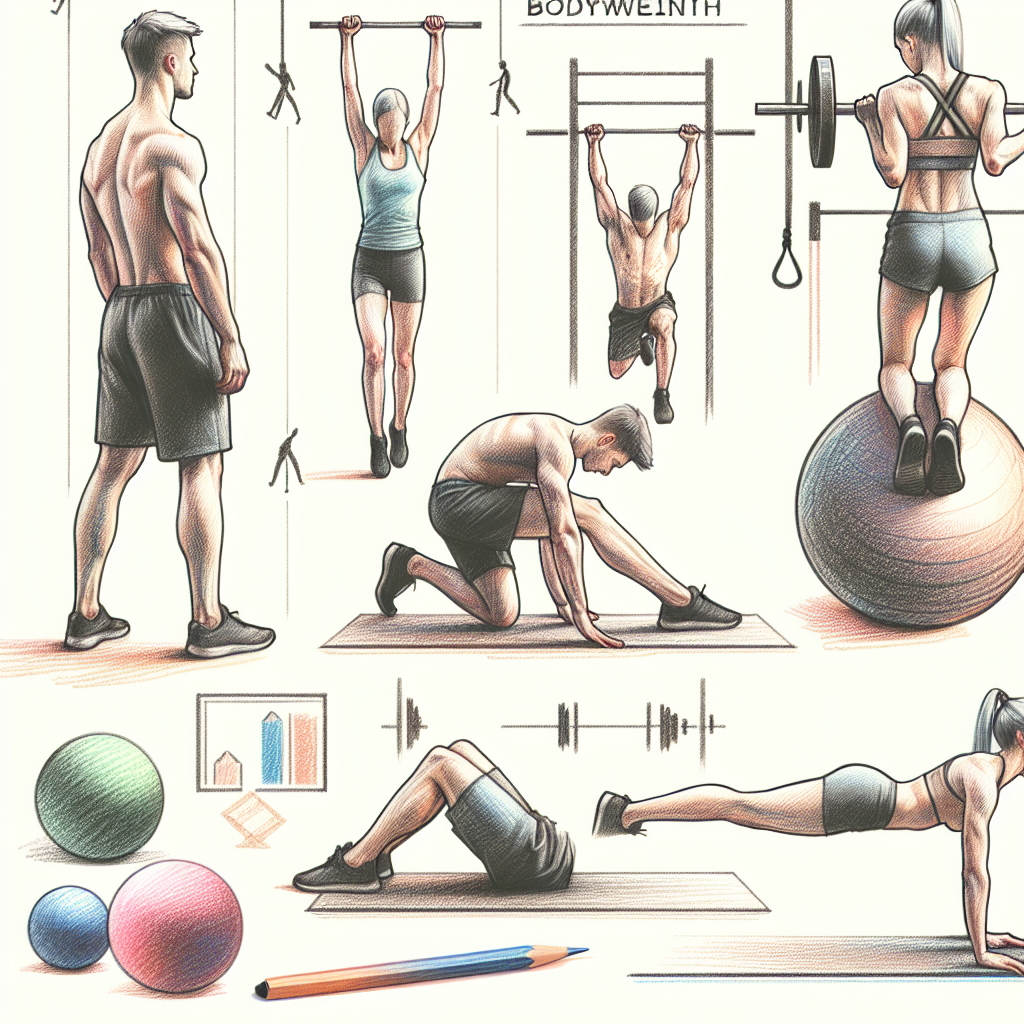
Calisthenics workouts offer an excellent pathway for beginners to embark on a fitness journey without the need for costly gym memberships or equipment. Emphasizing bodyweight exercises, these routines build strength, flexibility, and endurance while enhancing overall physical fitness. This article will guide you through various no-equipment calisthenics workouts suitable for beginners, enabling you to establish a sustainable and effective exercise routine.
- Understanding Calisthenics
- Benefits of No-Equipment Workouts
- Beginner Calisthenics Routine
- When to Consult a Professional
- Common Myths and Mistakes
- FAQ
- Conclusion
Understanding Calisthenics
Calisthenics refers to a form of exercise that utilizes one’s body weight as resistance. This method can range from basic movements, like push-ups and squats, to more complex moves, such as muscle-ups and handstands. By mastering bodyweight exercises, individuals can develop a keen sense of body control and strength, laying the foundation for more advanced fitness pursuits.
Benefits of No-Equipment Workouts
Engaging in no-equipment workouts offers numerous benefits, including:
- Accessibility: You can perform these exercises anywhere, eliminating barriers to entry.
- Cost-Effective: No need for gym memberships or expensive equipment.
- Functional Strength: Many calisthenics movements mimic real-life activities, boosting functional fitness.
- Flexibility and Mobility: Inherently improve flexibility through dynamic movements.
- Progression and Adaptability: Easily adjustable difficulty levels to match one’s fitness journey.
Beginner Calisthenics Routine
To kickstart your calisthenics journey, consider the following 6-minute daily routine, which encompasses fundamental exercises to build strength and endurance:
- Warm-up (1 minute): Start with light cardio or dynamic stretching, such as arm circles and leg swings.
- Push-ups (1 minute): Complete as many push-ups as possible, resting as necessary. Start with modified push-ups if needed.
- Bodyweight Squats (1 minute): Perform squats, ensuring your knees do not extend beyond your toes.
- Plank (1 minute): Hold a plank position, ensuring your body forms a straight line from head to heels.
- Lunges (1 minute): Alternate between forward lunges with each leg.
- Cool Down (1 minute): Gentle stretching of major muscle groups to enhance recovery.
For optimal results, consider supplementing this routine with a guided program. Explore a free registration for a 30-day exercise regime, where you only exercise for 6 minutes daily and achieve significant progress akin to a gym routine, at 30-Day Exercise Program.
When to Consult a Professional
While calisthenics can be initiated independently, certain circumstances warrant consultation with a qualified professional:
- If you experience persistent pain or discomfort during exercises.
- For tailored advice and techniques, particularly for beginners.
- If you have pre-existing medical conditions that may impact your ability to exercise.
- For nutritional guidance to support your fitness goals.
Common Myths and Mistakes
Getting started with calisthenics can be daunting due to prevalent misconceptions:
- Myth 1: Calisthenics is only for athletes. This is false; it is suitable for all fitness levels.
- Myth 2: Bodyweight exercises are ineffective for building muscle. With proper progression, you can achieve significant muscle growth.
- Myth 3: You need a gym to get fit. No-equipment workouts can be just as effective.
- Mistake: Poor form can lead to injuries. Always prioritize form over quantity.
FAQ
What is calisthenics?
Calisthenics is a form of strength training that uses bodyweight exercises to build strength, flexibility, and endurance.
Can beginners do calisthenics?
Yes, calisthenics is suitable for beginners and can be easily modified to match individual fitness levels.
How often should I do calisthenics?
Starting with three to four times per week is advisable, allowing for adequate rest and recovery.
What exercises are included in a calisthenics workout?
Common exercises include push-ups, squats, lunges, pull-ups, and planks.
Do I need equipment for calisthenics?
No, calisthenics primarily utilizes body weight for resistance, making it accessible without any equipment.
How long does it take to see results with calisthenics?
Results vary, but consistent practice can yield improvements in strength and endurance within a few weeks.
Conclusion
- Calisthenics is an accessible and effective workout option for beginners.
- No-equipment workouts can be performed anywhere at no cost.
- The suggested 6-minute daily routine introduces essential exercises.
- Myths surrounding calisthenics can often impede progress; understanding the facts is crucial.
- Always consider consulting a professional for personalized guidance.
Embrace the journey of fitness with calisthenics, and remember, consistent practice is the key to achieving your goals. For additional assistance, don’t forget to explore the free 30-day exercise program that can significantly support your fitness endeavors.
Author: John Angel