Good Workout Routines Without Equipment
Staying fit and active does not always require access to a gym or an array of equipment. Good workout routines without equipment can be both effective and versatile, promoting strength, endurance, and flexibility. Whether you are at home, traveling, or simply prefer bodyweight exercises, there are numerous routines you can follow to achieve substantial fitness results. In this article, we will explore various workout routines that require no equipment, outline their benefits, and provide guidance on how to implement them effectively.
- Understanding Bodyweight Training
- Essential Principles for Effective Workouts
- A Variety of Bodyweight Exercises
- Sample Routines for Different Fitness Levels
- When to Seek Professional Guidance
- Common Myths About Bodyweight Training
- FAQs about No-Equipment Workouts
Understanding Bodyweight Training
Bodyweight training is a form of strength training that utilizes the weight of your own body as resistance. This method not only builds strength but also improves cardiovascular fitness, flexibility, and balance. Effective bodyweight routines are adaptable for individuals at various fitness levels, making them accessible to nearly everyone.
Essential Principles for Effective Workouts
To maximize the benefits of your bodyweight workouts, consider the following principles:
- Consistency: Regularity is key. Aim for at least three to four sessions per week.
- Progression: Gradually increase the intensity or duration of your workouts to continue improving.
- Form over Quantity: Prioritize correct form to prevent injuries and ensure effectiveness.
- Warm-Up and Cool Down: Preparing your body for exercise and aiding recovery afterward are essential steps.
A Variety of Bodyweight Exercises
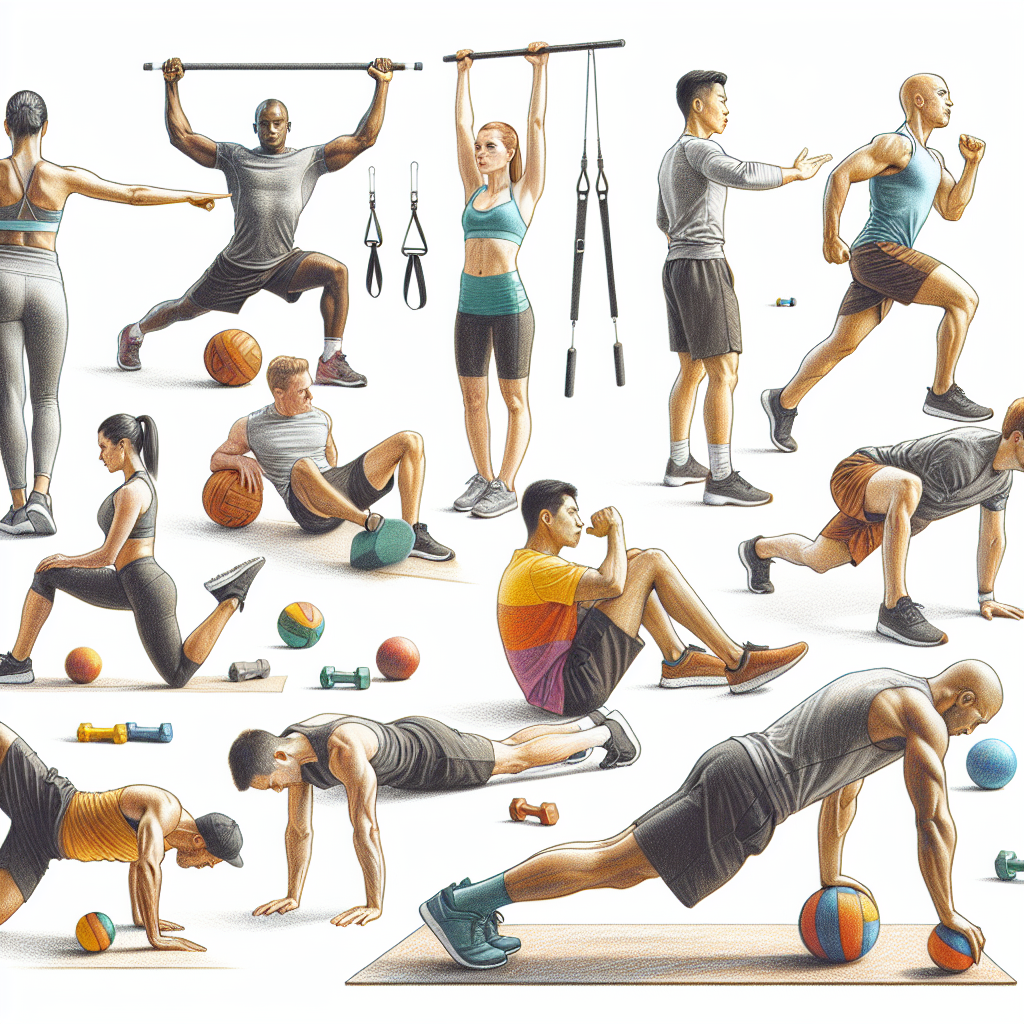
Below are some effective bodyweight exercises that target different muscle groups:
- Push-Ups: Targets the chest, shoulders, and triceps.
- Squats: Works the quadriceps, hamstrings, and glutes.
- Lunges: Engages the legs and stabilizes core muscles.
- Plank: Strengthens the core stabilizers.
- Burpees: Full-body exercise that enhances cardiovascular fitness.
- Mountain Climbers: Boosts cardio while engaging multiple muscle groups.
Sample Routines for Different Fitness Levels
Incorporating bodyweight exercises into a straightforward routine can yield significant results. Below are sample routines tailored for different fitness levels:
Beginner Routine
- 5 Push-Ups
- 10 Squats
- 20-second Plank
- 15 Lunges (alternating legs)
- 5 Burpees
Perform the beginner routine three times, resting for 1-2 minutes between rounds.
Intermediate Routine
- 10 Push-Ups
- 15 Squats
- 30-second Plank
- 10 Lunges (each leg)
- 10 Burpees
The intermediate routine should be performed three times with a 1-minute rest in between.
Advanced Routine
- 15 Push-Ups
- 25 Squats
- 1-minute Plank
- 15 Alternating Lunges
- 15 Burpees
For advanced users, aim for three rounds with minimal rest to challenge your endurance.
If you are seeking a structured program that delivers results while only requiring six minutes of exercise each day, consider signing up for a free 30-day exercise program here: 30-Day Exercise Program.
When to Seek Professional Guidance
While bodyweight training is generally safe for most individuals, there are situations where consulting with a fitness professional is advisable:
- If you experience persistent pain or discomfort during exercises.
- When unfamiliar with proper form and technique, which increases injury risk.
- If you have pre-existing health conditions or injuries that could be aggravated by physical activity.
- When seeking personalized workout plans or guidance for specific fitness goals.
Common Myths About Bodyweight Training
Many people harbor misconceptions about bodyweight training. Below are a few common myths, along with clarifications:
- Myth 1: Bodyweight exercises are not as effective as weight training.
- Myth 2: Only high-intensity workouts yield results.
- Myth 3: Bodyweight training is only for beginners.
- Myth 4: You cannot build muscle without weights.
- Myth 5: Bodyweight exercises are less challenging compared to gym workouts.
FAQs about No-Equipment Workouts
Can I build muscle without weights?
Yes, bodyweight exercises can effectively stimulate muscle growth by providing resistance through your own body weight.
How often should I perform bodyweight workouts?
It is recommended to engage in bodyweight workouts at least three to four times a week for optimal benefits.
Is bodyweight training suitable for weight loss?
Absolutely, when combined with a balanced diet, bodyweight training can help create a calorie deficit essential for weight loss.
How long should my workout sessions be?
Sessions can range from 20 to 60 minutes, depending on your fitness level and goals.
Can bodyweight workouts improve cardiovascular fitness?
Yes, incorporating high-intensity intervals and circuit training can enhance cardiovascular endurance.
Are there any age restrictions for bodyweight training?
No, bodyweight exercises can be adapted for any age group, making them accessible for most individuals.
Conclusion
- Bodyweight training provides an effective workout without the need for equipment.
- Regular, varied routines can improve strength, flexibility, and cardiovascular fitness.
- It is essential to prioritize correct form and gradually progress in difficulty.
- Consult a professional if you experience pain or have pre-existing conditions.
- Embrace the benefits of bodyweight workouts to enhance your overall well-being.
If you’re ready to take the next step towards your fitness journey, consider exploring a structured program that delivers results. Start your 30-day exercise program here: Join Now.
Author: John Angel