Workout Ideas: No Equipment Needed
In today’s fast-paced world, finding time and resources for exercise can be a significant challenge. However, incorporating workout ideas that require no equipment can lead to effective fitness results without the need for a gym membership or bulky gear. This article provides a variety of workout strategies you can implement anywhere, anytime, ultimately promoting strength, flexibility, and cardiovascular fitness.
- Introduction
- Benefits of No-Equipment Workouts
- Types of Bodyweight Exercises
- Creating a Routine
- Common Myths and Mistakes
- When to Consult a Professional
- Frequently Asked Questions
- Conclusion
Benefits of No-Equipment Workouts
Engaging in no-equipment workouts offers numerous advantages:
- Accessibility: You can perform these exercises at home, in a park, or even in your office.
- Cost-Effectiveness: There’s no need for expensive equipment or gym memberships.
- Flexibility: You can easily fit short workouts into your schedule, regardless of your location.
- Variety: With bodyweight exercises, you can mix and match routines to keep your workouts interesting.
- Functional Fitness: Many bodyweight exercises promote balance, coordination, and strength relevant to daily activities.
Types of Bodyweight Exercises
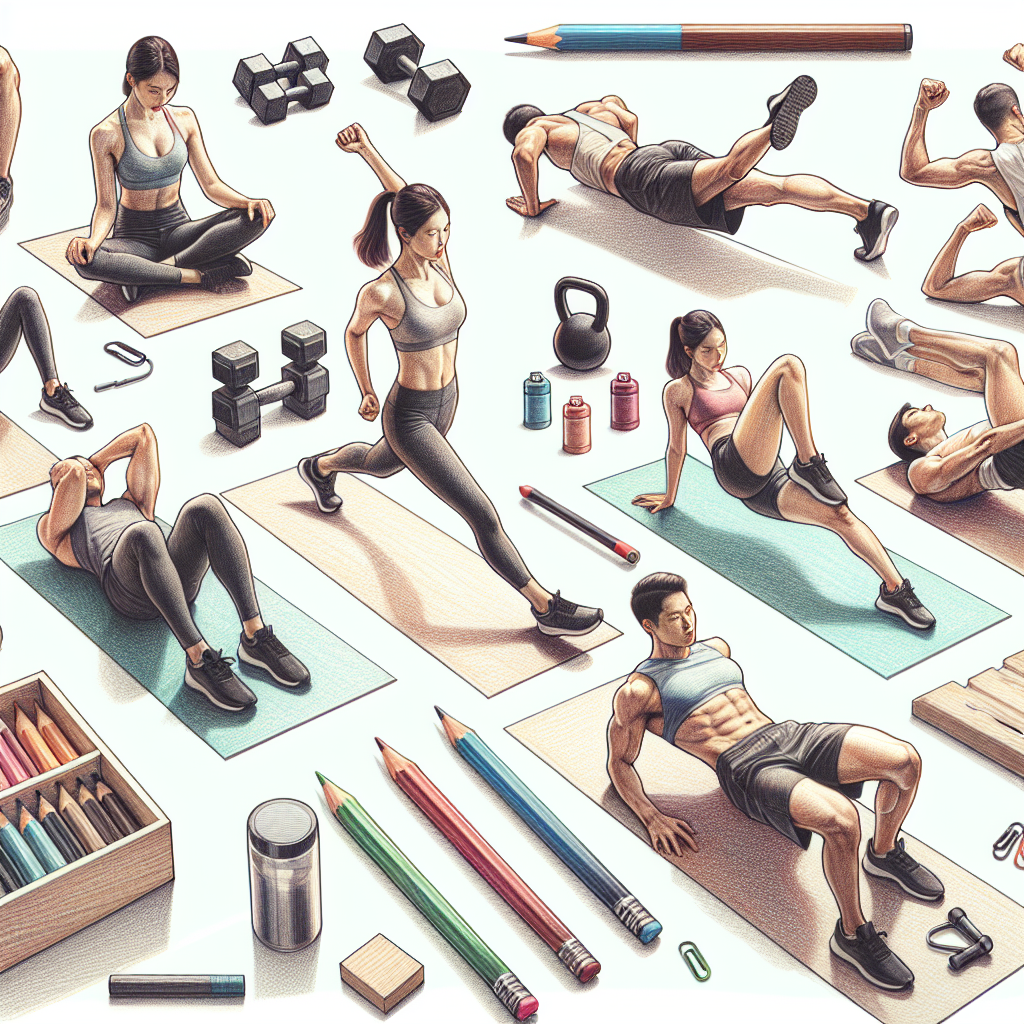
Bodyweight exercises are diverse and can target various muscle groups. Here are some examples:
Upper Body Exercises
- Push-Ups: Target the chest, shoulders, and triceps.
- Tricep Dips: Use a stable surface to engage the triceps.
- Inverted Rows: Utilize a sturdy table or bar for a back workout.
Lower Body Exercises
- Squats: Effective for building leg muscles and enhancing mobility.
- Lunges: Target quads and glutes while improving balance.
- Calf Raises: Strengthen the calves; can be performed on any flat surface.
Core Exercises
- Planks: Build core stability and strength.
- Russian Twists: Great for oblique engagement.
- Bicycle Crunches: Effective for overall abdominal development.
Cardiovascular Exercises
- Jumping Jacks: A full-body exercise that elevates the heart rate.
- Burpees: Combine a squat, push-up, and jump for an intense cardio workout.
- High Knees: Enhance both aerobic fitness and lower body strength.
Creating a Routine
To maximize the effectiveness of no-equipment workouts, consider the following steps for crafting your exercise routine:
- Set Goals: Determine your fitness goals, whether it be fat loss, muscle gain, or improved endurance.
- Choose Exercises: Select a mix of upper body, lower body, core, and cardiovascular exercises that align with your goals.
- Schedule Workouts: Allocate specific days and times for your workouts to establish consistency.
- Progress Gradually: Increase the intensity or complexity of exercises over time to avoid plateaus.
- Monitor Progress: Keep a journal of your workouts and physical improvements.
- Consider Joining a Program: For those seeking guidance, programs like this 30-day exercise program require only 6 minutes of your time each day, yielding results akin to regular gym workouts.
When to Consult a Professional
While many no-equipment workouts are safe for most individuals, certain circumstances warrant professional guidance:
- If you experience persistent pain during or after exercising.
- If you have a pre-existing medical condition that may affect your ability to exercise.
- If you are unsure about your exercise form or technique, which may lead to injury.
- If you want individualized training tailored to your specific needs and goals.
Common Myths and Mistakes
Despite the effectiveness of no-equipment workouts, several common misconceptions may hinder your progress:
- Myth 1: Bodyweight exercises are not effective for muscle building. Truth: They can be just as effective when performed correctly and at appropriate intensity levels.
- Myth 2: You need to spend hours exercising for results. Truth: Short, high-intensity workouts can lead to significant improvements.
- Mistake 1: Neglecting warm-up and cool-down. Recommendation: Always include them to prevent injury.
- Mistake 2: Rushing through reps without focusing on form. Tip: Quality over quantity ensures better results.
- Mistake 3: Skipping rest days. Importance: Recovery is crucial for muscle growth and overall fitness.
Frequently Asked Questions
Can beginners do no-equipment workouts?
Yes, no-equipment workouts can be adapted for beginners by focusing on basic movements and gradually increasing intensity.
How often should I work out with no equipment?
Aim for at least three to five times per week, allowing for rest days to promote recovery.
Can I lose weight with no-equipment workouts?
Absolutely, bodyweight exercises, combined with a healthy diet, can effectively support weight loss goals.
Do no-equipment workouts build muscle?
Yes, bodyweight workouts can build muscle when performed with sufficient intensity and volume.
What if I have an injury?
Consult a qualified healthcare professional before starting any exercise program if you have an injury or chronic pain.
Can I mix no-equipment workouts with other forms of exercise?
Yes, incorporating a variety of workout styles can enhance overall fitness and keep routines engaging.
Conclusion
- No-equipment workouts are accessible, cost-effective, and versatile.
- A variety of exercises allows for effective targeting of all muscle groups.
- Certain precautions should be taken to ensure safe and effective workouts.
- Challenge common myths and misconceptions to better understand the benefits of bodyweight exercises.
- Consider joining structured programs to achieve optimal results, such as a quick 30-day exercise program that only takes 6 minutes a day. Learn more here.
Consider implementing these no-equipment workout ideas into your daily routine for increased fitness, flexibility, and overall well-being.
Author: John Angel