In today’s fast-paced world, finding time for physical fitness can be a challenge, especially when access to a gym is limited. Fortunately, there are a multitude of effective at-home exercises that require no equipment at all. These exercises can provide significant health benefits, including improved strength, flexibility, and cardiovascular fitness, without necessitating a gym membership or much time commitment. This article explores some of the best at-home exercises, how to perform them, and tips for maximizing results.
- Introduction
- Benefits of At-Home Exercises
- Key Exercises for Total Body Strength
- Cardiovascular Workouts to Consider
- Stretching and Mobility Routines
- Creating a Sustainable Exercise Schedule
- When to Seek Professional Help
- Common Myths About At-Home Exercise
- FAQ
- Conclusion
Benefits of At-Home Exercises
Exercising at home offers various advantages. Firstly, it allows for flexible scheduling, eliminating the need to commute to a gym. Secondly, without the requirement for expensive equipment, individuals can engage in workouts tailored to their fitness level. The environment of one’s home can also enhance comfort and reduce intimidation often felt in public workout spaces. Ultimately, at-home exercises can facilitate a consistent fitness routine that enhances overall health.
Key Exercises for Total Body Strength
To build strength across multiple muscle groups, consider incorporating the following exercises into your routine:
- Bodyweight Squats: Stand with feet shoulder-width apart, lower your body by bending your knees, and return to standing.
- Push-Ups: Begin in a plank position, lower your body until your chest nearly touches the floor, and push back up to starting position.
- Lunges: Step forward with one leg, lower your hips until both knees are bent at about a 90-degree angle, and return to standing; alternate sides.
- Plank: Lie face down, lift your body onto your forearms and toes, maintaining a straight line from head to heels; hold for as long as comfortable.
- Glute Bridges: On your back with knees bent, lift your hips towards the ceiling while squeezing your glutes, then lower back down.
Cardiovascular Workouts to Consider
Incorporating cardiovascular workouts into your routine is essential for heart health. Here are a few no-equipment options:
- Jumping Jacks: Stand with feet together, jump while spreading your legs and arms, then return to the starting position.
- High Knees: Run in place while lifting your knees as high as possible, engaging your core.
- Mountain Climbers: Begin in a plank position and quickly alternate bringing your knees to your chest.
- Burpees: From standing, drop into a squat, kick your feet back into a plank, return to squat, and leap up explosively.
Stretching and Mobility Routines
Flexibility and mobility are as important as strength and cardiovascular fitness. Incorporate stretching into your routine through:
- Cobra Stretch: Lie face down, place your hands under your shoulders, and push up to arch your back.
- Cat-Cow Stretch: On all fours, alternate between arching your back towards the ceiling and lowering it while lifting your head.
- Seated Forward Bend: Sit with legs extended and reach towards your toes, keeping your back straight.
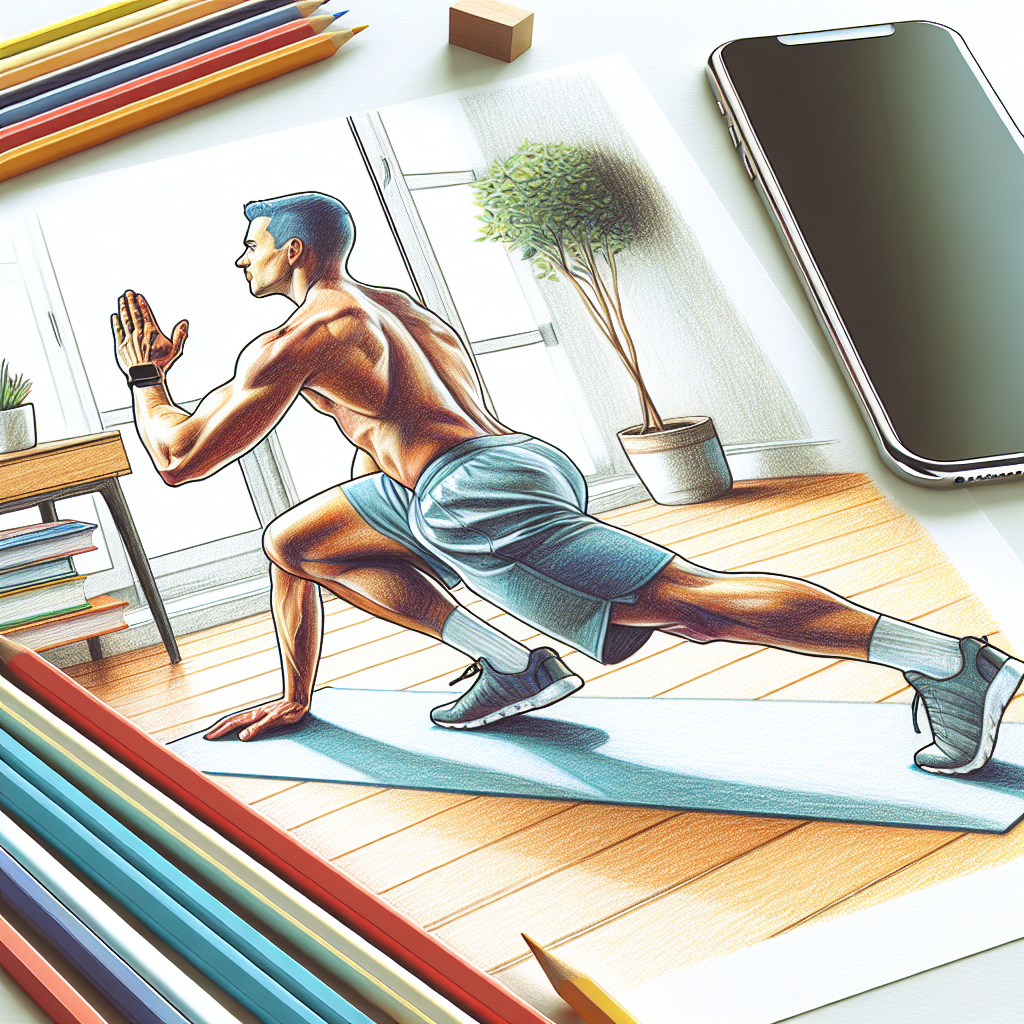
- Hip Flexor Stretch: Lunge forward with one leg while keeping the opposite knee on the floor and pushing your hips forward.
Creating a Sustainable Exercise Schedule
To ensure consistency, developing a structured schedule is vital. Follow these steps for success:
- Set a time and stick to it; consistency builds habit.
- Combine strength, cardio, and flexibility into each week.
- Limit sessions to 20-30 minutes, allowing for quick yet effective workouts.
- Listen to your body; take rest days as needed to prevent burnout.
- Consider joining a structured program; for an excellent option, register for this 30-day exercise program, where you only need to dedicate 6 minutes daily.
When to Seek Professional Help
While at-home exercises offer numerous benefits, certain conditions may warrant professional guidance. Consult a qualified fitness professional or healthcare provider if you experience:
- Persistent pain during or after exercise.
- Injuries that do not improve with rest or conservative measures.
- Uncertainty about how to perform an exercise safely.
- Existing medical conditions that may impact your exercise routine.
Common Myths About At-Home Exercise
Understanding the misconceptions surrounding at-home exercise can help you maximize its potential:
- Myth 1: At-home workouts are ineffective compared to gym workouts. Truth: Many bodyweight exercises can be equally effective when performed with proper form and intensity.
- Myth 2: Only heavy weights build strength. Truth: Bodyweight exercises can effectively build muscle and strength over time.
- Myth 3: You need a lot of time to get a good workout. Truth: Short, focused sessions can yield significant results.
FAQ
What are some quick exercises I can do at home?
Exercises like jumping jacks, push-ups, and bodyweight squats can be done quickly and effectively at home.
How often should I exercise at home?
Aiming for at least 3-5 times per week is ideal for maintaining fitness.
Can I build muscle without weights?
Yes, bodyweight exercises can effectively stimulate muscle growth when performed with proper intensity.
Is it necessary to warm up before exercising?
Yes, warming up helps prepare your muscles and reduces the risk of injury.
How do I stay motivated to work out at home?
Set clear goals, create a schedule, and track progress to maintain motivation for your at-home workouts.
Are there any risks to at-home exercises?
Risks include improper form leading to injuries, so it is essential to educate yourself on exercises to perform them safely.
Conclusion
- At-home exercises can be effective for building strength, improving cardiovascular fitness, and enhancing flexibility.
- Maintaining a structured routine while listening to your body promotes a sustainable fitness lifestyle.
- Professional guidance may be necessary if pain or injury occurs during exercise.
- Dispelling myths about at-home workouts can help optimize your fitness journey.
- Consider exploring structured programs, such as a 30-day exercise program aimed at quick, effective sessions.
Author: John Angel