
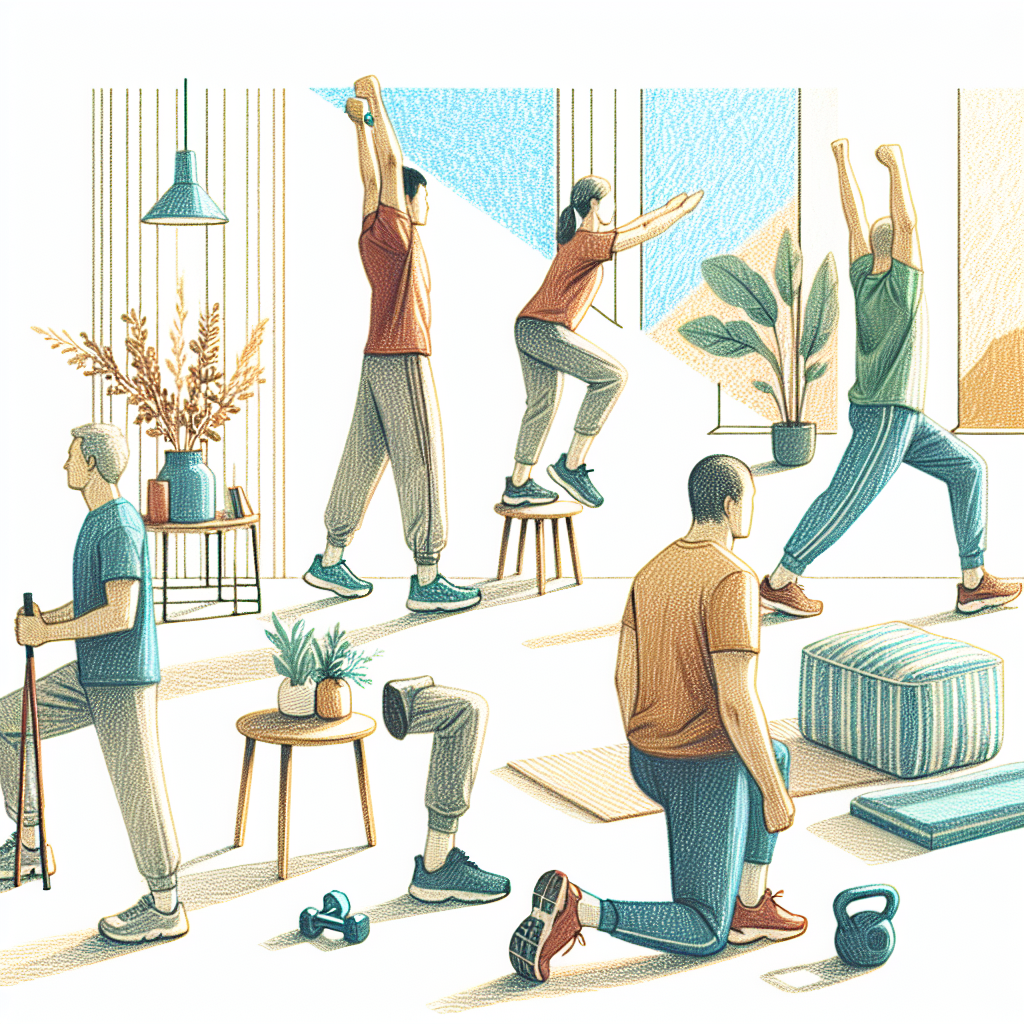
Best Leg Exercises Without Machines
Leg strength is crucial not just for athletes but for everyone aiming for balanced fitness and mobility. Engaging in effective leg exercises without machines can enhance muscle tone, increase endurance, and improve stability, all while offering the flexibility to work out virtually anywhere. This article explores various bodyweight exercises, provides guidance on execution, and emphasizes the significance of proper technique.
- Understanding the Benefits of Leg Exercises
- Effective Bodyweight Leg Exercises
- Practical Tips for Implementation
- When to Consult a Professional
- Common Misconceptions About Leg Workouts
- Frequently Asked Questions
- Conclusion
Understanding the Benefits of Leg Exercises
Leg exercises contribute to overall body strength, which is essential for daily activities. They help in improving circulation, enhancing joint flexibility, and boosting metabolic rate. Furthermore, strong legs can prevent injuries and stabilize your core, which benefits your overall posture. Working out your legs strengthens not only the major muscle groups but also supports functional movements, making them an integral part of any fitness regime.
Effective Bodyweight Leg Exercises
Here are some particularly effective exercises you can perform without any equipment:
1. Squats
Squats target the quadriceps, hamstrings, and gluteal muscles. They can be performed in various styles.
- Stand with feet shoulder-width apart.
- Lower your body as if sitting back into a chair.
- Keep your chest up and back straight.
- Lower down to a 90-degree angle or as far as you can comfortably go.
- Return to the starting position.
2. Lunges
Lunges work the glutes, hamstrings, and quads effectively.
- Stand upright and take a big step forward with one leg.
- Lower your hips until both knees are at 90-degree angles.
- Push back to the starting position.
- Alternate legs.
3. Glute Bridges
This exercise emphasizes the glute muscles and the hamstrings.
- Lie on your back with knees bent and feet flat on the floor.
- Lift your hips until your shoulders to your knees form a straight line.
- Hold for a moment and then lower your hips back down.
4. Step-Ups
Step-ups are straightforward yet effective.
- Find a sturdy step or platform.
- Step up with one foot, followed by the other.
- Step back down one foot at a time.
- Alternate the leading foot.
5. Calf Raises
This exercise focuses on the calf muscles, helping improve stability.
- Stand with your feet shoulder-width apart.
- Rise onto the balls of your feet, lifting your heels off the ground.
- Hold for a moment and lower back down.
Practical Tips for Implementation
To maximize your workouts, consider the following steps:
- Choose a dedicated workout space that allows you to move freely.
- Perform a warm-up routine to prepare your muscles.
- Incorporate a combination of the aforementioned exercises.
- Start with 3 sets of 10-15 repetitions for each exercise.
- Incorporate variations or progressions, such as jump squats or reverse lunges, as you become more comfortable.
- Allow for recovery days to prevent overtraining.
For a structured regimen, consider signing up for a 30-day exercise program which can be completed in just 6 minutes a day for remarkable results.
When to Consult a Professional
It is essential to consult a healthcare or fitness professional if you experience any of the following:
- Chronic pain in your legs or joints during or after exercise.
- Swelling or discomfort that does not subside after rest.
- Inability to perform basic movements due to pain or restriction.
- Experiencing dizziness or any unusual symptoms while exercising.
Common Misconceptions About Leg Workouts
Despite the many advantages of leg exercises, several myths persist:
Myth 1: You Need Weights for Effective Leg Workouts
Bodyweight exercises can yield significant benefits without the need for equipment.
Myth 2: Leg Exercises Are Only for Athletes
Leg exercises are crucial for everyone, promoting balance and mobility.
Myth 3: You Should Only Work Out Legs Once a Week
Incorporating leg exercises into your routine multiple times a week can yield better results.
Myth 4: More Reps Are Always Better
Quality trumps quantity; focus on proper form over the number of repetitions.
Myth 5: Leg Day Is Just About Quads and Hamstrings
Effective leg workouts should also target the calves, glutes, and inner/outer thighs.
Frequently Asked Questions
1. How often should I perform leg exercises?
It is recommended to include leg exercises 2-3 times per week, allowing for rest days in between.
2. Can beginner exercises be effective?
Absolutely! Bodyweight leg exercises are excellent for all fitness levels and can provide remarkable results.
3. What do I do if I feel pain during exercises?
Stop immediately and assess if the pain is serious. If it persists, consult a professional.
4. Are squats bad for my knees?
When done with proper form, squats can actually strengthen knee stability.
5. Is it normal to feel sore after a workout?
Yes, mild soreness indicates that your muscles are adapting. However, severe pain could be an indication of injury.
6. Can these exercises help in weight loss?
Leg exercises can boost metabolism and support weight loss when combined with a balanced diet and overall fitness plan.
Conclusion
- Leg exercises are vital for overall strength and functionality.
- Bodyweight workouts can deliver effective results without the need for equipment.
- Maintaining proper form is crucial to prevent injury.
- Consult a professional if you experience pain or have concerns.
- Explore structured programs for guided workouts.
Embrace the opportunity to enhance your leg strength and overall fitness through these effective exercises! Start your journey today by signing up for the 30-day exercise program.
Author: John Angel