
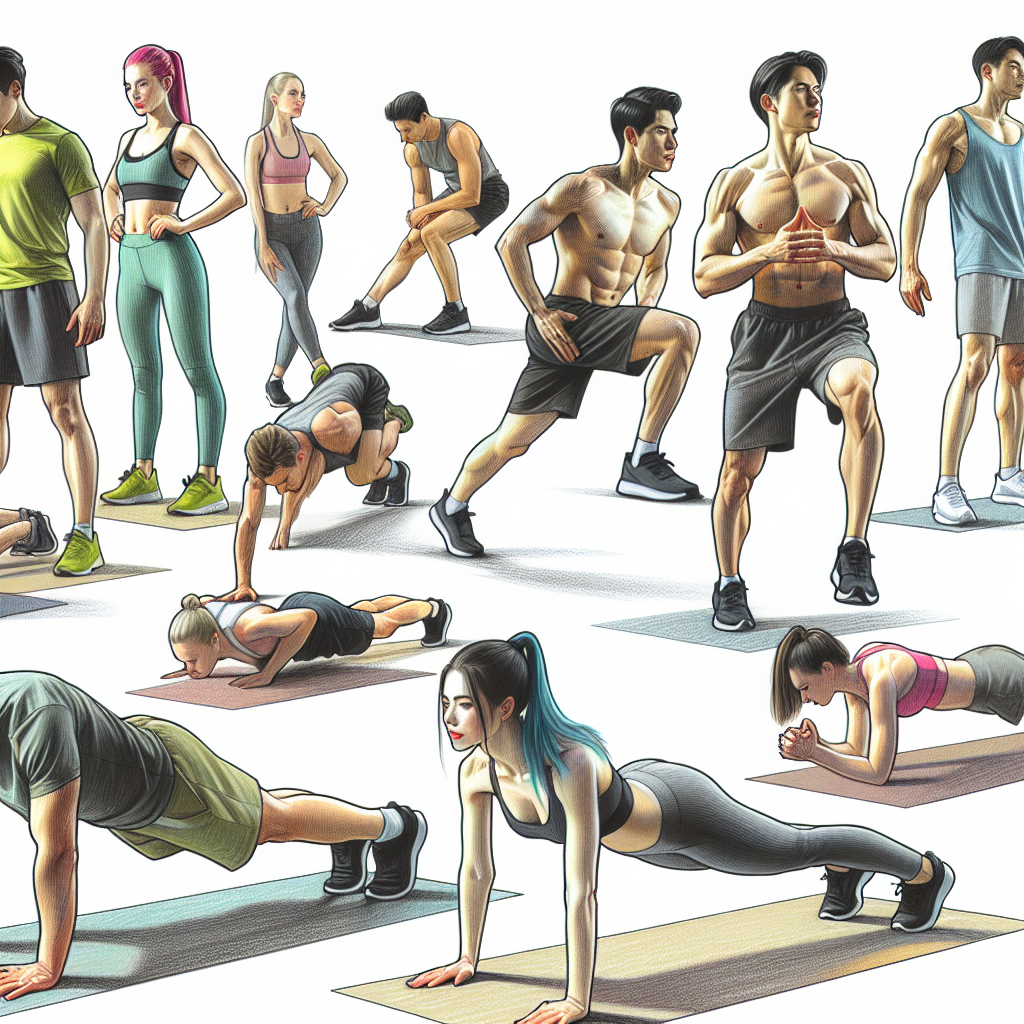
Best No Weight Exercises
The pursuit of fitness does not necessitate the use of weights or cumbersome equipment. No weight exercises provide an accessible pathway to enhance strength, flexibility, and cardiovascular fitness. These exercises can be performed anytime and anywhere, accommodating various fitness levels while minimizing the risk of injury. In this article, we will explore the most effective no weight exercises, their benefits, and practical advice for incorporating them into your daily routine.
- Understanding No Weight Exercises
- Key Benefits of No Weight Workouts
- Essential No Weight Exercises
- Creating Your No Weight Workout Routine
- When to Consult a Professional
- Common Myths about No Weight Exercises
- FAQ
- Conclusion
Understanding No Weight Exercises
No weight exercises are physical activities that leverage the body’s own mass as resistance to build strength, improve endurance, and enhance flexibility. These exercises are particularly appealing for beginners or anyone who may not have access to gym facilities or equipment. They can be easily adapted to suit your fitness level, and many can be performed with minimal time commitment.
Key Benefits of No Weight Workouts
- Accessibility: No need for specialized equipment.
- Flexibility: Exercises can be performed anywhere.
- Reduced Injury Risk: Lower impact on joints compared to weighted exercises.
- Enhancement of Core Strength: Many no weight exercises engage core muscles effectively.
- Time Efficiency: Short, intense workouts can yield significant results.
Essential No Weight Exercises
- Push-Ups: Targets the chest, shoulders, and triceps. Variations include knee push-ups and incline push-ups.
- Squats: Strengthens the legs and glutes. Variations include jump squats and sumo squats.
- Lunges: Works the legs and improves balance. Variations include walking lunges and reverse lunges.
- Planks: Excellent for core stability. Variations include side planks and forearm planks.
- Burpees: A full-body exercise that boosts cardiovascular endurance.
- Mountain Climbers: Engages multiple muscle groups while enhancing aerobic capacity.
Creating Your No Weight Workout Routine
To effectively incorporate no weight exercises into your fitness regimen, consider the following steps:
- Assess Your Fitness Level: Determine your starting point to select appropriate exercises.
- Choose a Variety of Exercises: Include a mix of strength, flexibility, and endurance activities.
- Set Realistic Goals: Define what you wish to achieve, such as improved strength or increased energy.
- Establish a Schedule: Aim for consistency; consider a daily routine or specific workout days.
- Stay Motivated: Set milestones and celebrate small victories to maintain enthusiasm.
- Try a Quick Routine: Consider a 30-day exercise program where you only need to exercise for 6 minutes daily. Register for free at this link.
When to Consult a Professional
While many can benefit from no weight exercises, certain situations may warrant professional guidance:
- If you have pre-existing medical conditions or injuries.
- Experience persistent pain during or after exercising.
- Are unsure how to perform exercises correctly.
- Seek guidance on creating personalized workout plans.
- Wish to enhance athletic performance or prepare for competitions.
Common Myths about No Weight Exercises
Several misconceptions exist regarding no weight exercises that can deter individuals from including them in their fitness routine. Here are a few:
- Myth 1: No weight exercises are less effective than weighted exercises.
- Myth 2: You need weights to build significant muscle mass.
- Myth 3: No weight workouts are only for beginners.
- Myth 4: You cannot get a good workout without gym equipment.
- Myth 5: All bodyweight exercises are easy and lack challenge.
FAQ
Can no weight exercises help in muscle building?
Yes, consistent bodyweight exercises can contribute to muscle growth, especially for beginners.
How often should I perform no weight exercises?
It’s generally recommended to engage in no weight exercises at least three to five times a week for optimal benefits.
Are no weight exercises suitable for all ages?
Yes, many no weight exercises can be adapted for different age groups and fitness levels.
Can I lose weight with no weight exercises?
Effective no weight exercises can aid weight loss when combined with a balanced diet and an active lifestyle.
How long should I work out each day?
Even 6 minutes of focused no weight exercises can yield significant results when done consistently.
Do I need to warm up before no weight exercises?
Yes, a brief warm-up is recommended to prepare your muscles and reduce injury risk.
Conclusion
- No weight exercises are a versatile and effective way to strengthen the body.
- They offer a range of benefits, including accessibility and reduced injury risk.
- A diverse routine can enhance motivation and stimulate progress.
- Professional guidance may be necessary for individuals with specific concerns.
- Be wary of common myths that may misrepresent the effectiveness of no weight training.
As you embark on your fitness journey, consider integrating no weight exercises into your routine. Explore the possibilities that come with bodyweight workouts and take a proactive step toward your health. For a quick, impactful fitness regimen, sign up for our free 30-day exercise program where you only need 6 minutes a day to see results at this link.
Author: John Angel