
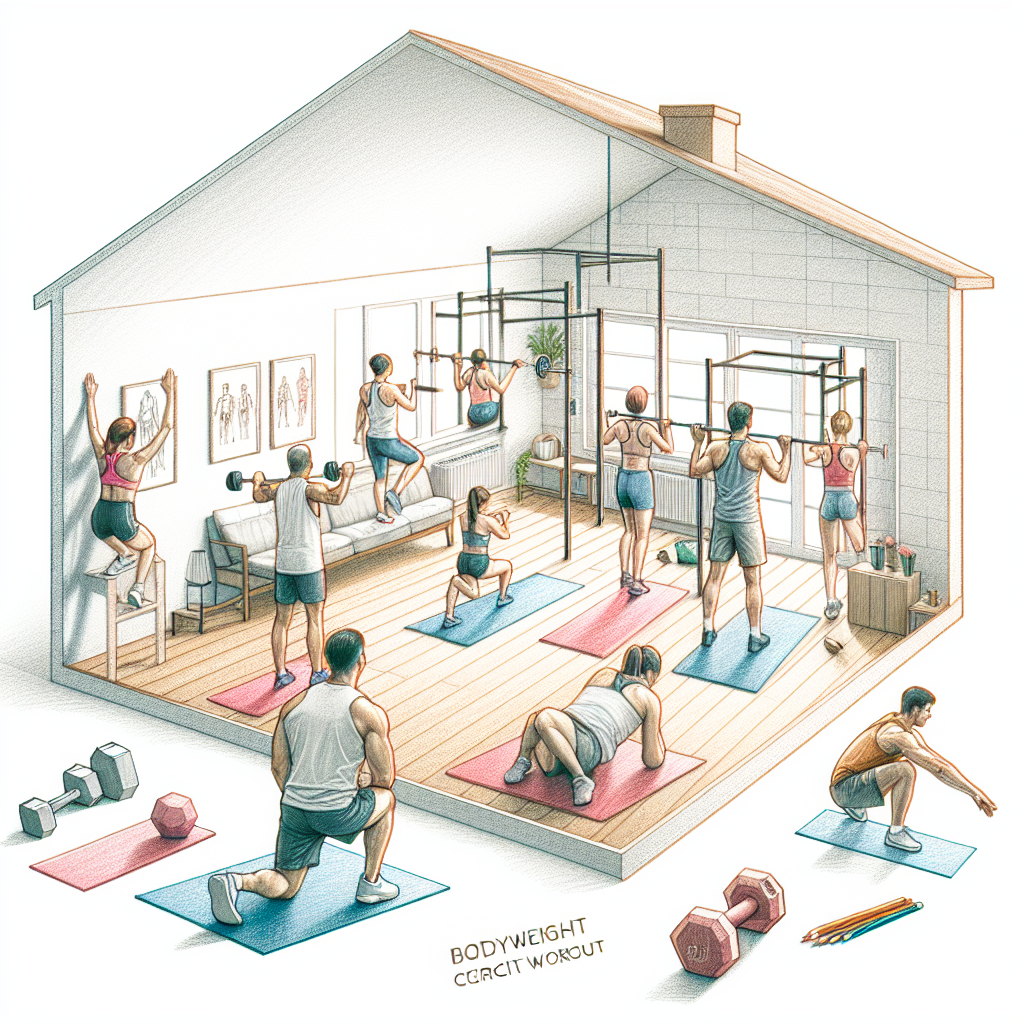
Bodyweight Circuit Workout: No Equipment Needed
In an era where convenience often dictates our choices, the benefits of a bodyweight circuit workout stand out as particularly advantageous. These workouts require no equipment, allowing individuals to exercise anytime and anywhere. This article will elucidate how a bodyweight circuit can provide a comprehensive workout regime that builds strength, endurance, and flexibility, all while enhancing cardiovascular health. Moreover, such an approach is accessible to people of all fitness levels.
- Understanding Bodyweight Workouts
- Benefits of No-Equipment Circuit Training
- Designing Your Circuit Routine
- Common Mistakes to Avoid
- When to Consult a Professional
- FAQ
Understanding Bodyweight Workouts
Bodyweight workouts leverage the individual’s own body mass for resistance. Unlike traditional weightlifting, these exercises focus on range of motion and control rather than added weight. This form of training includes a variety of movements such as push-ups, squats, and lunges, which can be performed in a circuit format for enhanced efficiency.
Benefits of No-Equipment Circuit Training
The advantages of engaging in bodyweight circuit workouts without equipment are manifold:
- Accessibility: No need for a gym membership or expensive equipment makes these workouts available to everyone.
- Time-efficient: Circuit training can be completed in a short time, allowing for adaptability in busy schedules.
- Improved Functional Strength: These workouts enhance everyday movements and overall fitness levels without overburdening the body.
- Increased Cardiovascular Fitness: By keeping the intensity high and transitioning quickly between exercises, heart health can be significantly improved.
Designing Your Circuit Routine
Creating a bodyweight circuit requires thoughtful planning to ensure a full-body workout. Below are the steps to design an effective routine:
- Choose Your Exercises: Select a mix of upper body, lower body, and core exercises. Example movements include:
- Push-ups
- Squats
- Plank
- Lunges
- Burpees
To discover more about quick and effective workouts, consider registering for a 30-day exercise program that condenses effective exercise into just six minutes a day. Find out more through this link: 30-Day Exercise Program.
Common Mistakes to Avoid
While embarking on a bodyweight circuit workout, certain pitfalls can hinder progress and effectiveness:
- Neglecting Form: Prioritize form over speed to avoid injuries.
- Inadequate Recovery: Allow time for muscles to recover; overtraining can lead to burnout.
- Not Progressing: Gradually increase the intensity or duration to prevent plateauing.
When to Consult a Professional
Consulting a qualified fitness professional is advisable under the following circumstances:
- If you have existing health issues, particularly cardiovascular or musculoskeletal concerns.
- When experiencing persistent pain during or after workouts.
- If unsure about correct form or technique for specific exercises.
- When seeking personalized guidance and tailored workout recommendations.
FAQ
Can beginners perform bodyweight circuits?
Yes, bodyweight circuits can be adjusted for all fitness levels, making them ideal for beginners.
How often should I do bodyweight circuit workouts?
It is generally recommended to engage in these workouts 3–4 times a week for optimal results.
Can I lose weight through bodyweight workouts?
Yes, when combined with a balanced diet, bodyweight workouts can contribute to weight loss.
What is the optimal duration for a bodyweight circuit session?
A typical session can last between 20 to 30 minutes, including warm-up and cool down.
Are bodyweight workouts effective for building muscle?
Yes, bodyweight exercises can effectively build muscle, particularly for beginners or those returning to fitness.
Do I need to eat differently when doing bodyweight workouts?
A balanced diet will support your fitness goals, helping with recovery and muscle growth.
Conclusion
- Bodyweight circuit workouts offer accessibility and efficiency, requiring no equipment.
- These workouts improve strength, flexibility, and cardiovascular fitness.
- Designing a circuit is straightforward, allowing customization for various fitness levels.
- Avoid common mistakes such as neglecting form and not allowing adequate recovery.
- Consult a professional if uncertain about exercise form or managing health concerns.
Embrace the convenience of bodyweight circuit workouts, and transform your fitness journey today. Begin with small, achievable goals and watch your progress unfold.
Author: John Angel