
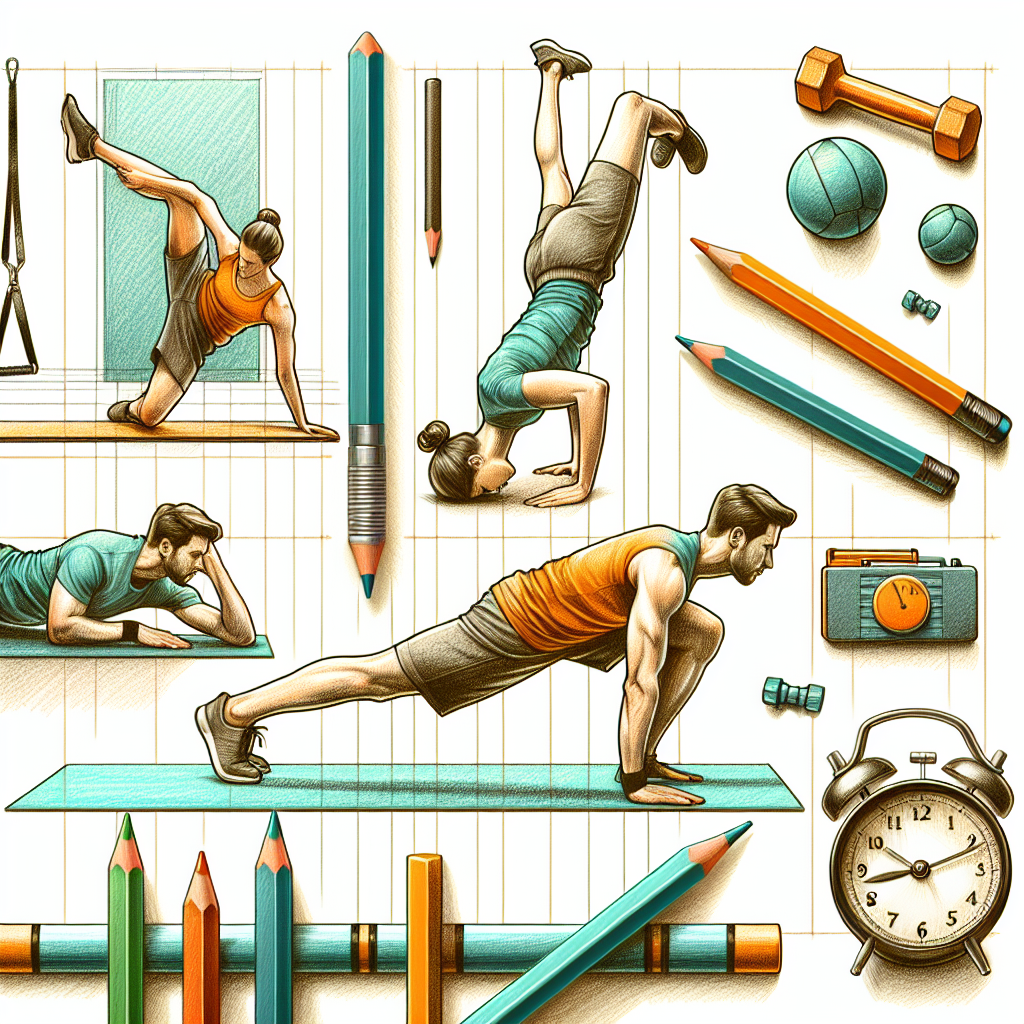
Workout at Home Without Equipment Plan
In today’s fast-paced world, maintaining physical fitness is crucial, yet many individuals find it challenging to make time for the gym. Fortunately, a workout plan you can execute at home without any equipment can provide the flexibility and effectiveness you need. This guide outlines a comprehensive approach that can help you achieve your fitness goals with just six minutes of exercise daily. As a bonus, explore a free 30-day exercise program that promises results akin to those of traditional gym workouts — register here.
- Understanding Home Workouts
- Benefits of Working Out at Home
- Essential Components of an Effective Home Workout Plan
- Sample Daily Workout Routines
- When to Consult a Professional
- Common Myths About Home Workouts
- FAQ
- Conclusion
Understanding Home Workouts
Home workouts entail exercising in your living space using your body weight to enhance strength, flexibility, and overall health. Unlike structured gym sessions, home workouts offer the advantage of convenience, enabling you to engage in physical activity regardless of your schedule. The absence of equipment allows for versatility, targeting different muscle groups simply through body movements.
Benefits of Working Out at Home
There are numerous advantages to incorporating home workouts into your routine:
- Cost-effective: Eliminates gym membership fees and travel expenses.
- Flexibility: Allows you to exercise at any time that suits you.
- Privacy: Offers a comfortable space to work out without distractions.
- Adaptability: Home workouts can easily be adjusted according to personal fitness levels.
- Consistency: Removing barriers can lead to a more consistent exercise routine.
Essential Components of an Effective Home Workout Plan
To create a successful home workout plan, consider the following components:
- Goal Setting: Define clear, achievable fitness goals (e.g., increasing endurance, building muscle).
- Variety: Include a mix of strength, cardio, and flexibility exercises to prevent boredom and promote overall fitness.
- Warm-Up and Cool Down: Begin each session with a warm-up and end with a cool-down to reduce injury risk.
- Progress Tracking: Regularly evaluate your progress to stay motivated and make necessary adjustments.
Sample Daily Workout Routines
The following routines are designed to be completed in just six minutes each day. These short yet effective sessions maximize results through high-intensity interval training (HIIT) principles:
Day 1: Full Body
- Jumping Jacks – 1 minute
- Push-Ups – 1 minute
- Bodyweight Squats – 1 minute
- Plank – 1 minute
- High Knees – 1 minute
- Burpees – 1 minute
Day 2: Core Focus
- Crunches – 1 minute
- Leg Raises – 1 minute
- Russian Twists – 1 minute
- Side Plank (30 seconds each side) – 1 minute
- Mountain Climbers – 1 minute
- Flutter Kicks – 1 minute
Day 3: Lower Body
- Squat Jumps – 1 minute
- Wall Sit – 1 minute
- Forward Lunges – 1 minute
- Calf Raises – 1 minute
- Sumo Squats – 1 minute
- Bridge – 1 minute
When to Consult a Professional
While home workouts can significantly benefit most individuals, certain circumstances warrant consulting a healthcare professional:
- If you experience persistent pain during any exercise.
- If you have existing health conditions that may affect your ability to exercise.
- If noticeable changes in your physical condition occur, such as unexplained fatigue or loss of motivation.
- Prior to starting a new exercise regimen if you have not been active for an extended period.
Common Myths About Home Workouts
Misconceptions about home workouts can discourage many from exploring this convenient option. Here are some common myths:
- Myth 1: Home workouts are less effective than gym sessions.
- Myth 2: You need expensive equipment for a good workout.
- Myth 3: Only long workouts yield results.
- Myth 4: The absence of a personal trainer means improper form.
FAQ
Can I achieve significant results by working out at home?
Yes, with consistency and proper planning, home workouts can be highly effective for attaining fitness goals.
How many times a week should I work out at home?
Aim for at least 3-5 sessions per week, depending on your fitness level and goals.
What are some effective warm-up exercises?
Dynamic stretches, such as arm circles, leg swings, and hip circles, are great for warming up.
How do I maintain motivation while working out at home?
Set specific goals, track your progress, and consider joining online fitness communities for support.
Can beginners use this workout plan?
Absolutely! Beginners can modify the exercises to suit their current fitness level.
How long does it take to see results from home workouts?
Results vary, but with regular effort, many individuals notice improvements within 4-6 weeks.
Conclusion
- Home workouts offer flexibility, convenience, and cost-effectiveness.
- Short, high-intensity sessions can yield results comparable to traditional gym workouts.
- Goal setting, variety, and consistency are crucial for a successful home workout plan.
- Be mindful of potential health issues and consult a professional when necessary.
- Dispelling common myths about home workouts can encourage more individuals to adopt this fitness approach.
Now that you have the knowledge and resources, take the first step towards a fitter you by exploring a free 30-day exercise program, where just six minutes of effort daily can lead to impressive results — register here.
Author: John Angel