Embarking on a fitness journey can be a daunting task, especially for beginners who may feel overwhelmed by the prospect of complicated equipment and rigorous routines. However, a workout routine that requires no equipment can be both effective and accessible. This guide aims to provide a practical foundation for individuals wishing to enhance their physical fitness without the need for a gym or extensive apparatus.
- Understanding the Importance of Bodyweight Exercises
- Creating a Structured Routine
- Essential Exercises for Beginners
- Common Myths and Mistakes
- When to Consult a Professional
- Frequently Asked Questions
Understanding the Importance of Bodyweight Exercises
Bodyweight exercises utilize the weight of your body as resistance, allowing anyone to perform them at any location. This type of training builds strength, endurance, flexibility, and balance. Additionally, bodyweight workouts can be tailored to suit all fitness levels, making them ideal for beginners. They also promote a functional fitness approach, where movements replicate real-life activities. Regular practice can yield significant improvements in overall fitness.
Creating a Structured Routine
To derive optimal benefits from bodyweight workouts, establishing a structured routine is essential. A well-planned routine not only enhances motivation but also facilitates consistency, which is crucial for progress. The following steps offer a roadmap for beginners:
- Set realistic fitness goals: Define what you hope to achieve, be it weight loss, muscle gain, or improved endurance.
- Schedule workouts: Aim for a consistent workout frequency, starting with 3 to 4 days per week.
- Track progress: Keep a journal or app to log workouts, noting improvements over time.
- Incorporate warm-ups and cool-downs: Always start with a warm-up to prevent injury and a cool-down to aid recovery.
- Stay hydrated and nourished: Proper nutrition supports overall fitness efforts.
Essential Exercises for Beginners
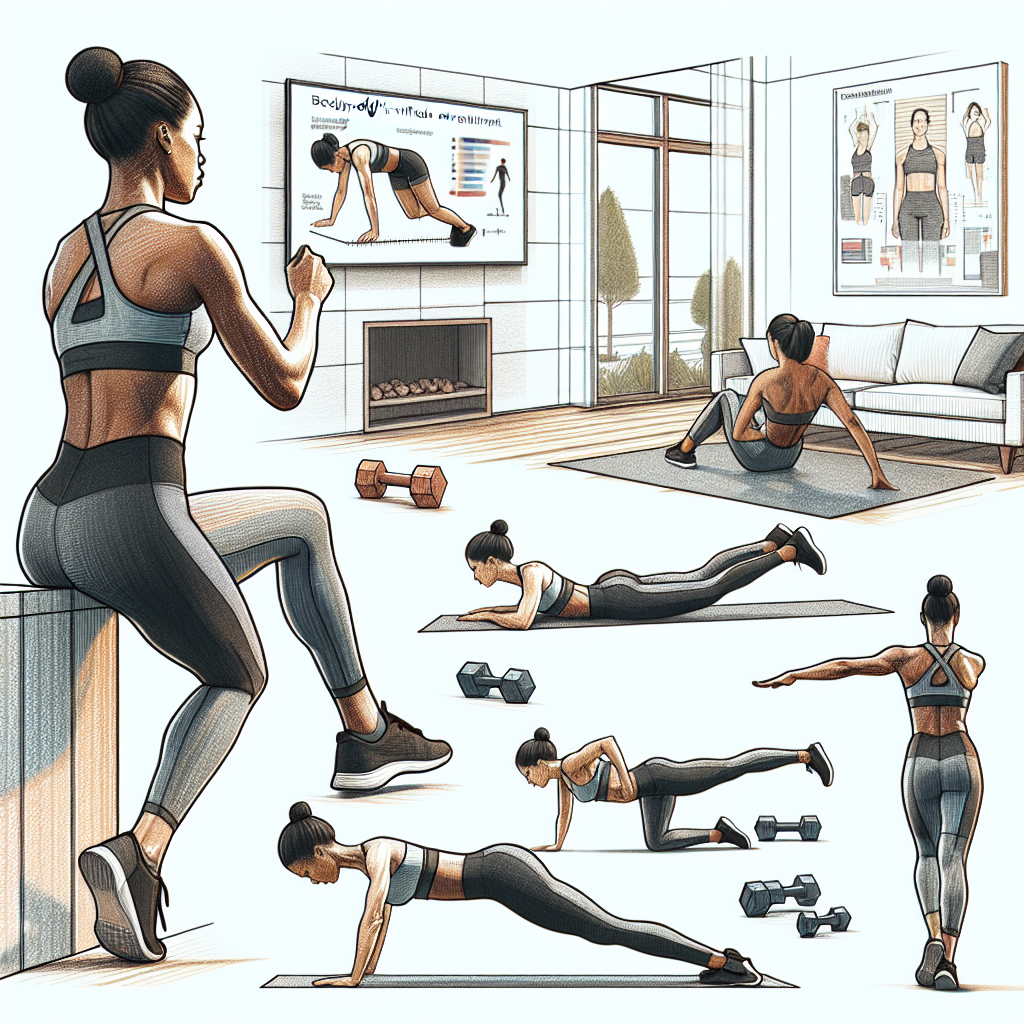
Here are some fundamental bodyweight exercises that can easily be integrated into your routine:
- Push-ups: Works the chest, shoulders, and triceps. Start with wall or knee push-ups if necessary.
- Squats: Targets the legs and glutes. Focus on proper form by keeping your back straight and knees behind your toes.
- Lunges: Engages multiple leg muscles. Ensure your front knee does not extend past your ankle.
- Plank: Strengthens the core. Hold the position for increased time as you progress.
- Mountain Climbers: Enhances cardiovascular fitness while working the core and legs.
- Burpees: A full-body movement that combines strength and cardio, suitable for advanced beginners.
For those looking for a compact and efficient routine, consider signing up for a 30-day exercise program where you only need to dedicate 6 minutes each day, achieving results comparable to going to the gym. You can register here: 30-Day Exercise Program.
Common Myths and Mistakes
Misconceptions surrounding bodyweight training can lead to setbacks and discourage participation. Here are several common myths:
- Myth 1: Bodyweight exercises are ineffective for building muscle.
- Myth 2: You need a gym to get fit.
- Myth 3: More is always better.
- Myth 4: Beginners should avoid high-intensity workouts.
Fact: When performed correctly and progressively overloaded, bodyweight exercises can significantly build muscle mass.
Fact: Fitness can be achieved virtually anywhere utilizing bodyweight movements.
Fact: Quality of movement and consistency often outweigh quantity in effectiveness.
Fact: Beginners can perform high-intensity exercises at a modified level to suit their capabilities.
When to Consult a Professional
While bodyweight workouts are generally safe, there are instances where seeking professional advice is warranted. Consider consulting a healthcare provider or certified fitness trainer if you experience:
- Persistent pain or discomfort during exercises.
- Unusual fatigue that doesn’t resolve with rest.
- Specific health conditions that limit physical activity, such as heart disease or joint issues.
- Concerns about exercise form or technique.
- Goals that extend beyond personal capabilities, requiring specialized guidance.
Frequently Asked Questions
1. How long should I work out each day as a beginner?
Initially, aim for 20-30 minutes per session, gradually increasing based on comfort and fitness levels.
2. How often should I perform bodyweight exercises?
Start with 3-4 days per week, allowing rest days for recovery and muscle growth.
3. Can bodyweight exercises lead to significant weight loss?
Yes, combined with a balanced diet, they can facilitate weight loss and improved body composition.
4. Do I need to warm up before workouts?
Absolutely. A warm-up increases blood flow to muscles and reduces the risk of injury.
5. Is it necessary to incorporate rest days?
Yes, rest days are vital for muscle recovery and growth. Aim for at least one or two per week.
6. Can I do these workouts at home?
Yes, bodyweight exercises are perfect for home workouts, requiring no special equipment.
Conclusion
- Bodyweight exercises are an effective way to achieve fitness goals without equipment.
- Creating a structured routine and setting realistic goals enhances consistency and progress.
- Common myths regarding bodyweight training can be misleading and should be addressed for better understanding.
- Consulting a professional may be necessary for long-term health and safety concerns.
- At your own pace, you can begin your fitness journey with minimal barriers to entry.
Start your fitness journey today through consistent practice and perhaps consider exploring a structured program that offers quick, effective workouts. For more information, check out the 30-Day Exercise Program. Your body will thank you later!
Author: John Angel