
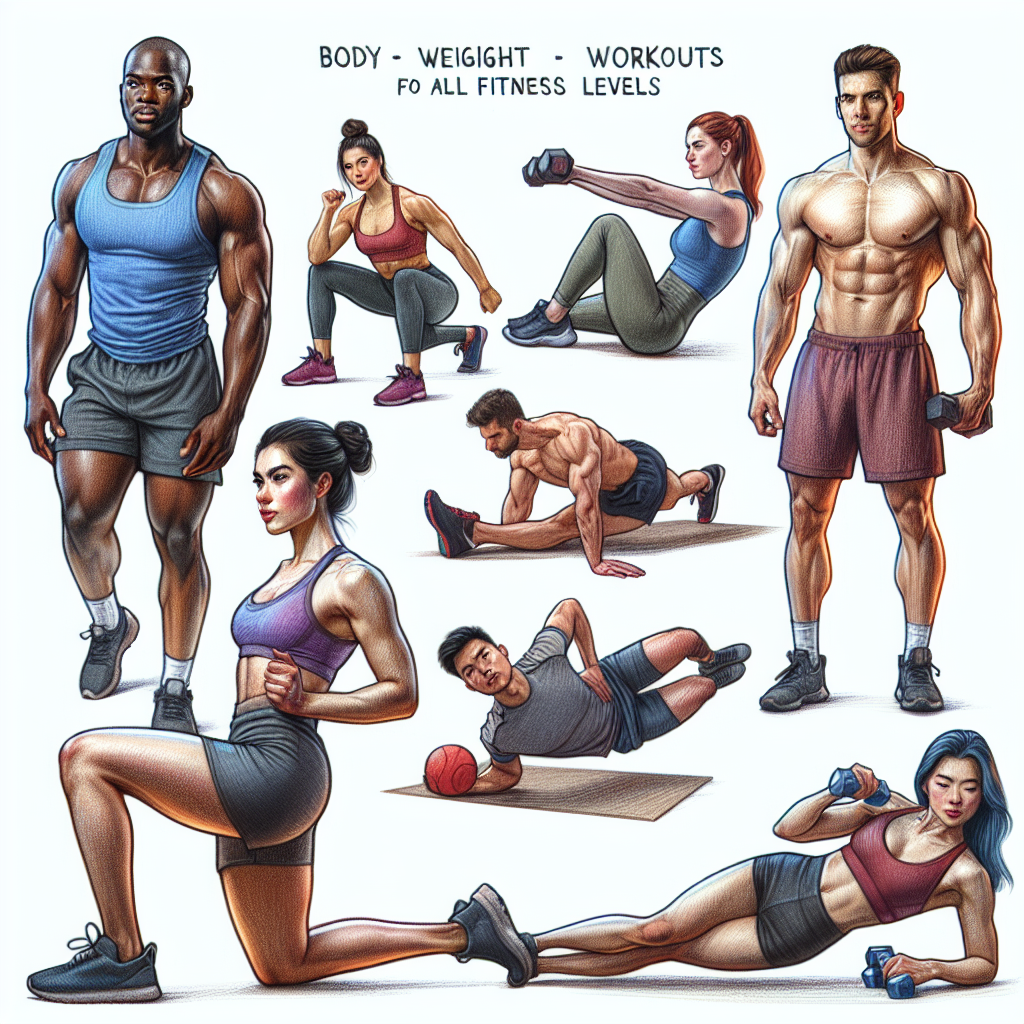
Workouts to Do Without Equipment
In the contemporary world, maintaining physical fitness often comes with the perception of needing specialized equipment or a gym membership. However, effective workouts can also be achieved without any machinery. Bodyweight exercises not only build strength and improve cardiovascular health but can also be conveniently performed anywhere. This article explores various bodyweight workouts, emphasizing their effectiveness for individuals seeking to enhance their fitness levels without the use of equipment.
- Introduction
- The Benefits of Bodyweight Exercises
- Types of Workouts You Can Do Without Equipment
- Practical Steps for Effective Workouts
- When to Consult a Professional
- Common Myths About Bodyweight Training
- Frequently Asked Questions
- Conclusion
The Benefits of Bodyweight Exercises
Bodyweight exercises offer numerous advantages, making them an appealing option for anyone interested in fitness. Firstly, these exercises enhance muscle strength and endurance without the need for weights. Further, they improve flexibility, coordination, and balance. Importantly, such routines can be adapted to different fitness levels, accommodating beginners as well as advanced practitioners. This versatility fosters a sense of accomplishment as one progresses through increasingly challenging variations.
Types of Workouts You Can Do Without Equipment
There are various types of workouts beneficial for overall fitness that require no equipment. Below are several effective bodyweight exercises:
- Push-Ups: Targets the chest, triceps, and shoulders.
- Squats: Engages the quadriceps, hamstrings, and gluteal muscles.
- Planks: Strengthens the core and stabilizes the spine.
- Lunges: Works the legs and improves balance.
- Burpees: Combines strength and cardio for a full-body workout.
- Mountain Climbers: Elevates heart rate while targeting multiple muscle groups.
Practical Steps for Effective Workouts
To effectively integrate bodyweight exercises into your routine, consider the following steps:
- Establish a Schedule: Dedicate specific times each week for your workouts.
- Set Achievable Goals: Start with manageable targets and progressively increase intensity.
- Warm Up: Engage in light aerobic activity to prepare your muscles and reduce injury risk.
- Incorporate Variety: Mix different exercises to ensure a balanced workout that challenges your body.
- Track Your Progress: Maintain a log to document improvements in strength and endurance.
- Cool Down: Conclude your workouts with stretching to promote flexibility and recovery.
For those seeking a structured approach, consider registering for a free 30-day exercise program where you will only need to exercise for six minutes each day but achieve results comparable to traditional gym workouts. [Join here](https://app.revolucnicviceni.cz/en/registration).
When to Consult a Professional
While bodyweight workouts are generally safe, there are scenarios when consulting a professional is advisable:
- Experiencing pain or discomfort while exercising that persists.
- Having existing injuries or medical conditions that may be exacerbated by physical activity.
- Uncertainty about proper technique or form that could lead to injury.
- Desiring a personalized workout plan tailored to specific fitness goals.
- Feeling overwhelmed or lacking motivation to continue exercising independently.
Common Myths About Bodyweight Training
Despite their effectiveness, several misconceptions surround bodyweight exercises. Here are a few common myths:
- Myth: Bodyweight exercises are only for beginners.
Fact: They can be modified to suit advanced levels. - Myth: You cannot build muscle without weights.
Fact: With progressive overload, bodyweight exercises can effectively build muscle. - Myth: Bodyweight workouts are less effective than gym workouts.
Fact: They can provide similar benefits when performed consistently and correctly.
Frequently Asked Questions
Can I lose weight with bodyweight exercises?
Yes, bodyweight exercises can aid in weight loss by burning calories and increasing muscle metabolism.
How often should I perform bodyweight workouts?
For optimal results, aim for at least three to five sessions per week.
Do bodyweight exercises improve flexibility?
Many bodyweight exercises, particularly those involving stretching, can enhance flexibility.
Are bodyweight exercises suitable for all ages?
Yes, bodyweight exercises can be adapted to suit individuals of all ages, but modifications may be needed for specific conditions.
How can I ensure proper form?
Consult instructional videos, guides, or a professional trainer to learn correct form for each exercise.
Can bodyweight workouts replace gym workouts?
While they can be as effective, your choice depends on personal preferences and fitness goals.
Conclusion
- Bodyweight exercises are versatile, effective, and convenient for fitness enthusiasts.
- They enhance strength, endurance, flexibility, and balance without the need for equipment.
- A structured approach incorporating variety, warmth, and cool-down can lead to improved results.
- Consult a professional if you experience any pain or have specific fitness goals.
- Don’t be deterred by myths; bodyweight exercises can yield excellent results for individuals of all levels.
Begin your journey toward a healthier, stronger you today. Consider trying the 30-day exercise program mentioned above to kickstart your fitness regimen.
Author: John Angel