Fitness Exercises Without Equipment
In today’s fast-paced world, finding time to visit a gym can be challenging. Fortunately, fitness exercises that require no equipment are highly effective and can be done anywhere. This type of exercise not only promotes strength and endurance but also supports flexibility and mental well-being. Whether you’re a beginner or someone looking to maintain fitness levels, these exercises will help you achieve remarkable results in a short period.
- Introduction
- Benefits of No-Equipment Exercises
- Essential Bodyweight Exercises
- Creating Your Own Routine
- When to Consult a Professional
- Myths and Misconceptions
- Frequently Asked Questions
- Conclusion
Benefits of No-Equipment Exercises
No-equipment workouts provide numerous advantages that appeal to various fitness levels. Here are some key benefits:
- Accessibility: You can perform these exercises anywhere—at home, in a park, or while traveling.
- Cost-effectiveness: No need for gym memberships or equipment purchases means significant savings.
- Versatility: You can easily modify bodyweight exercises to create diverse and challenging workouts.
- Time-efficient: With workouts like those found in the 30-day exercise program, you can gain the benefits of a full gym regimen with only six minutes of effort each day.
Essential Bodyweight Exercises
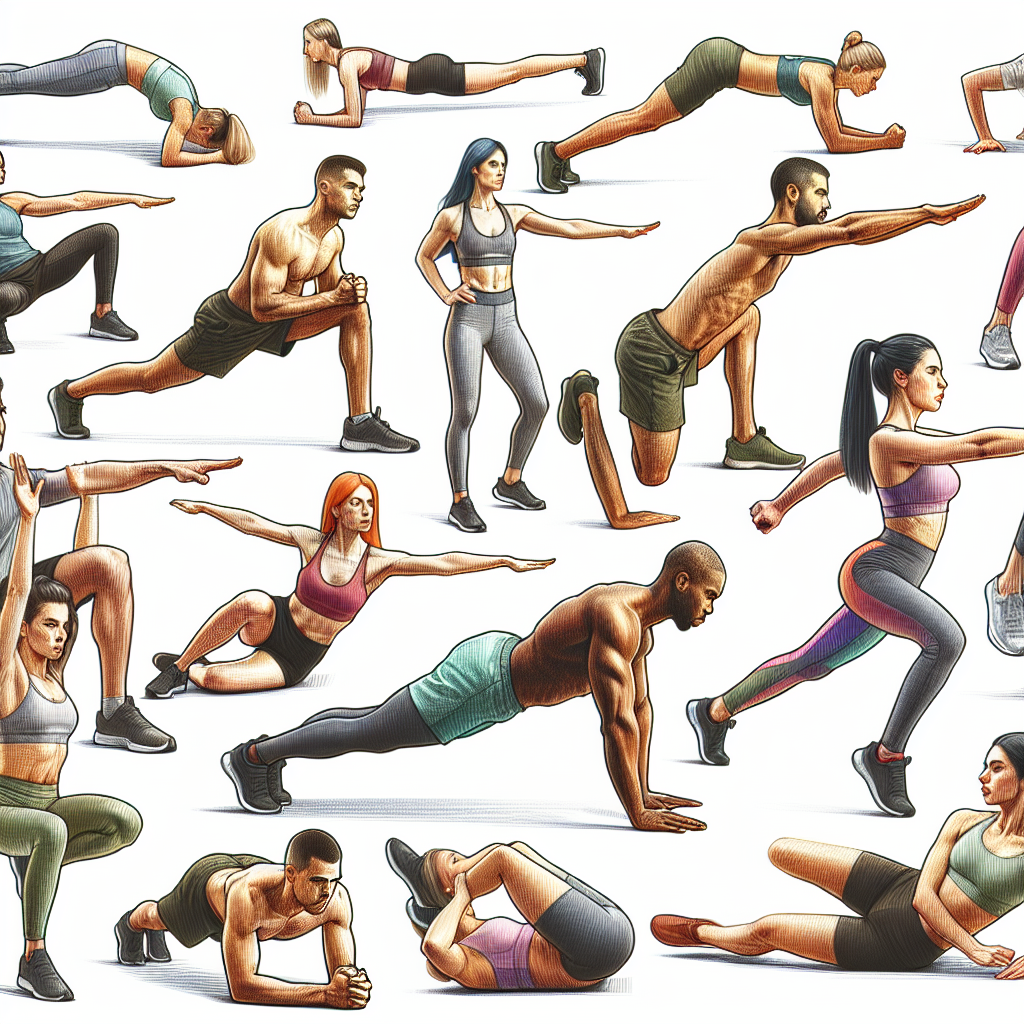
Here is a selection of effective bodyweight exercises that can form the foundation of your fitness routine:
- Push-Ups: Great for upper body strength; work the chest, shoulders, and triceps.
- Squats: Excellent for lower body and core strength, targeting the thighs and glutes.
- Planks: Ideal for building core stability and strength.
- Burpees: A full-body exercise that enhances cardiovascular fitness and muscular endurance.
- Lunges: Effective in increasing lower body strength and balance.
- Mountain Climbers: A dynamic exercise that combines strength training with cardiovascular conditioning.
Creating Your Own Routine
To optimize your time and results, consider the following steps to design your own no-equipment workout routine:
- Determine Your Goals: Identify whether you want to build strength, increase endurance, or improve flexibility.
- Select Exercises: Choose a mix of upper body, lower body, core, and cardiovascular exercises.
- Set a Duration: Aim for short bursts of high-intensity work, perhaps 30 seconds for each exercise with a rest of 15 seconds in between.
- Frequency: Aim to perform your routine at least three to five times per week.
- Track Your Progress: Keep a record of your workouts to monitor improvements and adjust the difficulty as needed.
When to Consult a Professional
While bodyweight exercises are generally safe, there are instances when consultation with a qualified professional is advisable:
- Experiencing persistent pain during or after exercises.
- Recovering from an injury and unsure about exercise appropriateness.
- Having pre-existing health conditions that may be affected by physical exertion.
- Seeking personalized advice on forming a comprehensive fitness program.
Myths and Misconceptions
Bodyweight exercises are often surrounded by misconceptions that can deter individuals from trying them. Here are some common myths:
- Myth 1: Bodyweight exercises are less effective than using weights. Truth: They can be equally effective and promote functional strength.
- Myth 2: Only advanced athletes can do bodyweight workouts. Truth: They are adaptable for all fitness levels.
- Myth 3: No-equipment workouts do not aid in muscle building. Truth: Bodyweight training can effectively build and tone muscles.
Frequently Asked Questions
Can beginners start with bodyweight exercises?
Yes, bodyweight exercises can be easily modified for beginners, allowing them to start gradually and build strength over time.
How often should I do bodyweight exercises?
Aim for three to five sessions per week to see substantial improvements in strength and endurance.
Do I need to warm up before starting?
Yes, warming up is essential to prepare your muscles and avoid injuries.
What if I don’t have time for long workouts?
Short, intense sessions can be very effective—consider the 30-day exercise program, which requires only six minutes daily.
Are bodyweight exercises safe for older adults?
Generally, yes, but it’s advisable for older adults to consult a healthcare provider before starting a new exercise program to address any personal health concerns.
Can these exercises help with weight loss?
Yes, when combined with a healthy diet, bodyweight exercises can effectively contribute to weight loss by increasing muscle mass and boosting metabolism.
Conclusion
- Bodyweight exercises are accessible and versatile.
- No-equipment workouts can be highly effective for strength and endurance.
- Creating a routine tailored to your fitness goals is achievable and rewarding.
- Consulting a professional is advised in case of health concerns.
- Despite common myths, bodyweight training offers significant benefits for all fitness levels.
For those looking to kickstart or enhance their fitness journey, consider joining a program like the 30-day exercise plan to experience the benefits of just six minutes of daily exercise. Start today for a healthier tomorrow!
Author: John Angel