
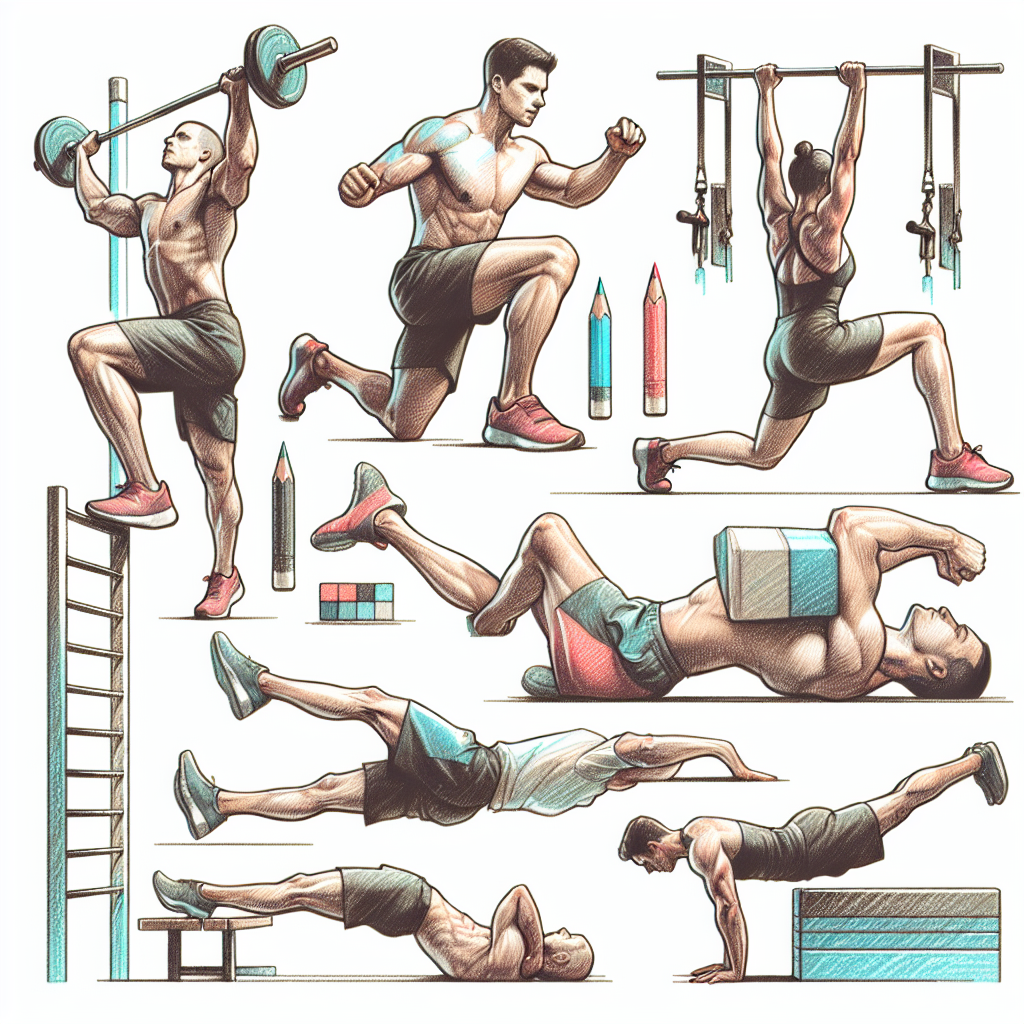
Strength Workout Without Equipment
Engaging in strength training does not necessarily require a gym or specialized equipment. With the right exercises, individuals can effectively build muscle and enhance their fitness levels using body weight alone. This article will explore various strength workouts that can be performed anywhere, providing both practical guidance and concrete advice. Moreover, a unique approach will be introduced, which allows for just six minutes of exercise daily while achieving results comparable to a traditional gym routine.
- Understanding Bodyweight Exercises
- Benefits of No-Equipment Strength Training
- Essential Bodyweight Exercises for Strength
- Creating a Simple Workout Routine
- Safety and Precautions
- When to Consult a Professional
- Common Myths about Bodyweight Training
- FAQ
Understanding Bodyweight Exercises
Bodyweight exercises are strength training movements that utilize the individual’s own weight as resistance. These exercises can target various muscle groups and promote functional strength, flexibility, and endurance. Common examples include push-ups, squats, and lunges. Unlike traditional weightlifting, bodyweight training can be performed at virtually any location, making it a highly accessible fitness option.
Benefits of No-Equipment Strength Training
- Accessibility: No need for a gym membership or equipment.
- Flexibility: Can be done anywhere and at any time.
- Cost-effective: No financial investment is required.
- Functional strength: Enhances strength relative to everyday movements.
- Increased core stability: Many exercises engage the core, improving overall balance.
Essential Bodyweight Exercises for Strength
Here is a collection of fundamental bodyweight exercises that can be incorporated into any workout routine:
- Push-ups: Targets the chest, shoulders, and triceps.
- Squats: Strengthens the legs and glutes while promoting hip flexibility.
- Lunges: Engages various leg muscles and improves unilateral strength.
- Planks: A full-body exercise focusing on core strength and stability.
- Burpees: Combines strength and cardio, enhancing overall fitness levels.
Creating a Simple Workout Routine
Designing a no-equipment strength workout can be straightforward. Here’s a sample six-minute routine that combines several effective exercises:
- Warm-up: 1 minute of dynamic stretches (e.g., arm circles, leg swings).
- Push-ups: 30 seconds.
- Bodyweight Squats: 30 seconds.
- Lunges: 30 seconds (15 seconds on each leg).
- Plank Hold: 30 seconds.
- Burpees: 30 seconds.
- Cool down: 1 minute of light stretching.
This routine can be repeated as desired, and modifications can be made based on individual fitness levels. For those seeking a structured approach with minimal time commitment, consider registering for a 30-day exercise program that delivers results through just six minutes of daily workouts.
Safety and Precautions
While bodyweight exercises are generally safe, it is crucial to practice good form to prevent injuries. Here are some safety tips:
- Maintain proper alignment during exercises to avoid strain.
- Warm up adequately before starting the workout.
- Listen to your body; if pain occurs, stop the exercise.
- Start at a beginner level if you are new to strength training, gradually progressing as you build strength.
When to Consult a Professional
Consultation with a healthcare or fitness professional is advisable under the following circumstances:
- If injury or chronic pain is experienced during workouts.
- When there are existing health conditions that may affect physical activity.
- If there is uncertainty regarding the suitability of certain exercises.
- When a structured workout program requires personalization beyond basic adjustments.
Common Myths about Bodyweight Training
Bodyweight training is often misunderstood. Here are some prevalent myths:
- Myth 1: Bodyweight exercises are only for beginners.
- Myth 2: You won’t achieve significant gains without weights.
- Myth 3: Bodyweight training only builds endurance, not strength.
- Myth 4: Bodyweight workouts are too easy to be effective.
- Myth 5: You need to work out for an hour to see results.
In reality, bodyweight exercises can be tailored to any fitness level, making them highly effective for strength development.
FAQ
Can I build muscle with bodyweight exercises?
Yes, you can effectively build muscle through bodyweight exercises by increasing repetitions, sets, or intensity over time.
How often should I do bodyweight workouts?
For best results, aim for strength workouts at least three times a week, allowing your muscles time to recover.
Is a warm-up necessary?
A warm-up is crucial as it prepares your body for exercise and reduces the risk of injury.
Can beginners perform bodyweight exercises?
Absolutely; bodyweight exercises can be modified to suit all fitness levels, making them ideal for beginners.
What if I can’t do a push-up or a squat?
Start with modified versions, such as knee push-ups or shallow squats, and gradually increase difficulty as you build strength.
How do I know if I’m performing the exercises correctly?
Focus on form and alignment; consider consulting video demonstrations or seeking feedback from a qualified trainer if unsure.
Conclusion
- Bodyweight exercises are effective for building strength without the need for equipment.
- These workouts are accessible, flexible, and economical.
- A well-structured routine can yield substantial results even with minimal time investment.
- Safety should be a priority; proper form is crucial to prevent injury.
- Consult a professional when unsure about exercise suitability or in case of injury.
Begin your journey towards strength and fitness with no equipment required. For a guided approach, be sure to check out the 30-day exercise program designed for efficiency and effectiveness.
Author: John Angel