
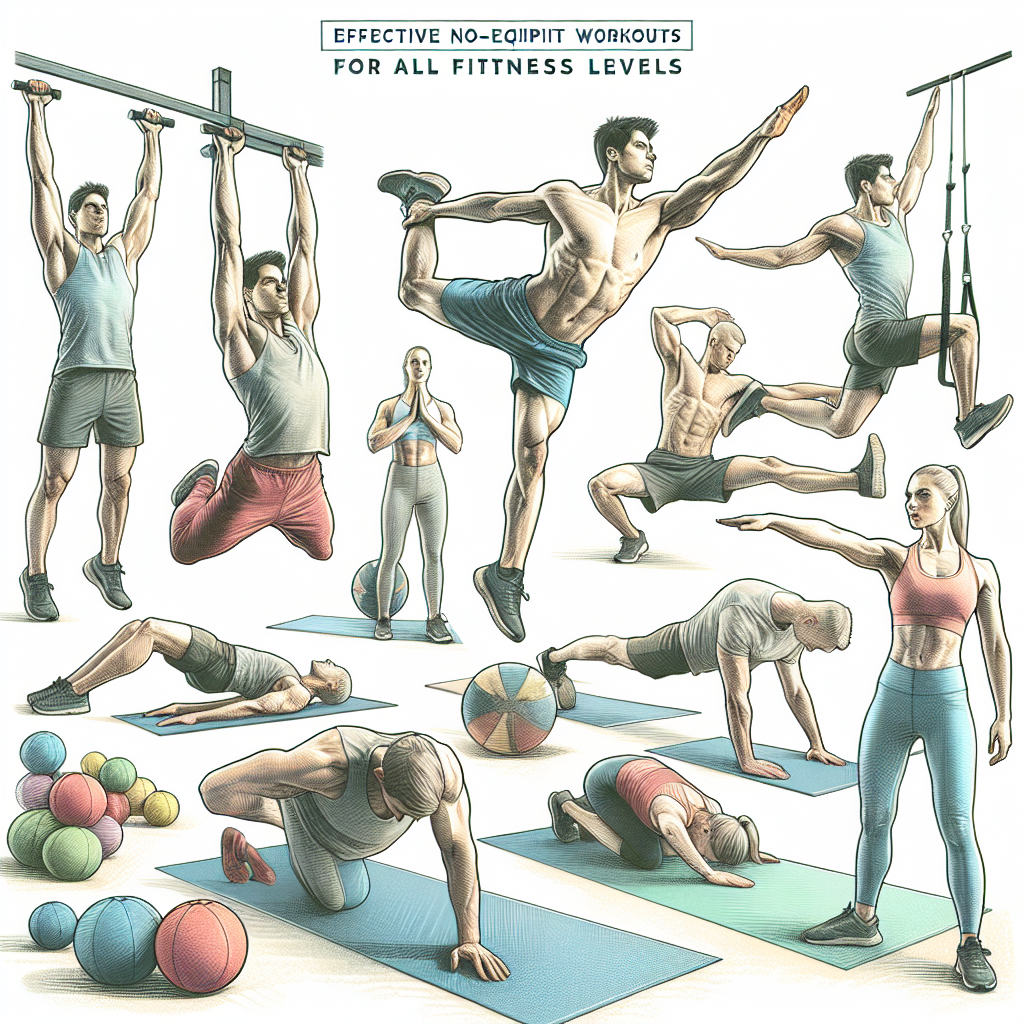
In today’s fast-paced world, many individuals struggle to find time for regular workouts. The good news is that effective workouts can be accomplished without any equipment, making it accessible for everyone, regardless of their circumstances. This article explores quick and productive exercises that require no financial investment or gym membership. By engaging in these efficient routines, you can improve your fitness and health in a matter of minutes each day.
- Understanding No-Equipment Workouts
- Types of No-Equipment Workouts
- Creating a Daily Routine
- When to Consult a Professional
- Common Misconceptions
- FAQs
- Conclusion
Understanding No-Equipment Workouts
No-equipment workouts leverage your body weight to build strength, flexibility, and endurance. Exercises such as push-ups, squats, and lunges engage large muscle groups and can maintain or even enhance physical fitness levels. This type of training is particularly beneficial for beginners, as it lays a solid foundation for more advanced workouts and can be performed virtually anywhere.
Types of No-Equipment Workouts
Calisthenics
Calisthenics involves using body weight to perform various exercises. Common calisthenics include:
- Push-ups
- Pull-ups (using a door frame or similar structure)
- Squats
- Burpees
- Lunges
Yoga and Pilates
These disciplines foster strength, flexibility, and balance. Many positions and movements can be done without any equipment, focusing on breath control and body alignment.
High-Intensity Interval Training (HIIT)
HIIT workouts alternate between short bursts of intense exercise and brief periods of rest or low-intensity work. This method is celebrated for its ability to increase calorie burn in a compact timeframe.
Creating a Daily Routine
Consistency is key when it comes to fitness. Here’s how to create a feasible routine:
- Set Clear Goals: Define what you wish to achieve—whether it’s weight loss, muscle gain, or enhancing endurance.
- Choose a Time: Designate a specific time each day for your workout, even if it’s only 6 minutes. For an effective program, you might explore options like this 30-day exercise program.
- Mix It Up: Vary your workouts by combining different styles such as calisthenics, yoga, and HIIT.
- Track Your Progress: Keep a log of your workouts and progress to stay motivated and accountable.
- Rest and Recover: Allow your body to recover; incorporate rest days to prevent injury.
When to Consult a Professional
While no-equipment workouts are safe for many, certain signs may indicate that it’s wise to consult a healthcare professional or certified trainer. Consider seeking guidance if:
- You experience persistent pain during or after workouts.
- You have existing health issues that may be impacted by physical activity.
- You feel uncertain about performing workouts safely and effectively.
- You have difficulties maintaining motivation or have concerns about your fitness journey.
Common Misconceptions
Myth: No-Equipment Workouts Are Less Effective
Many believe that workouts without equipment yield minimal results. However, body-weight exercises can lead to significant gains in strength and endurance when performed correctly.
Myth: You Need to Work Out for Hours
Short, intense workouts can be highly effective. The key lies in the quality of the workout rather than the duration.
Myth: Only Cardio Counts as Exercise
While cardiovascular fitness is important, strength training—and exercises that involve both—are vital for overall health.
FAQs
What are some effective no-equipment exercises?
Effective exercises include push-ups, squats, lunges, planks, and burpees.
Can I build muscle with no-equipment workouts?
Yes, consistent body-weight exercises can help build muscle and increase strength.
How often should I do no-equipment workouts?
A minimum of 3-5 times a week is recommended for optimal results.
Can beginners start with no-equipment workouts?
Absolutely! These workouts are beginner-friendly and can be tailored to different fitness levels.
What should I do if I feel pain during exercises?
If you experience pain, stop immediately. Consult a professional if the pain persists.
How can I stay motivated to work out at home?
Setting clear goals, tracking progress, and finding a workout buddy can help maintain motivation.
Conclusion
- No-equipment workouts are accessible and effective for all fitness levels.
- Mixing exercises can help engage different muscle groups and prevent boredom.
- Consult a professional when in doubt about safety or health concerns.
- Myths about no-equipment routines should not deter you from starting your fitness journey.
- Short workouts, when done consistently, can lead to significant results.
Begin your no-equipment workout journey today and make a commitment to your health and fitness. If you’re looking for a structured approach, consider this 30-day exercise program that only requires 6 minutes of your time each day!
Author: John Angel