
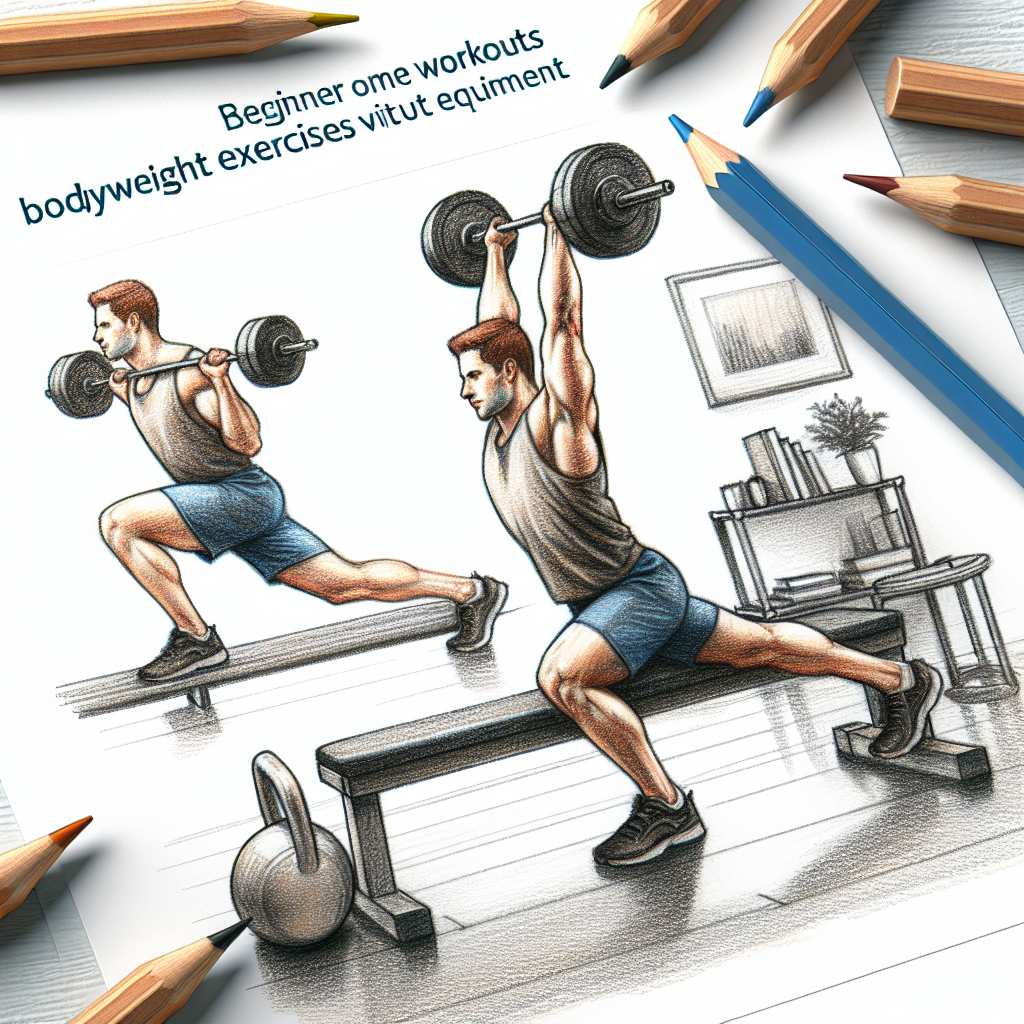
Engaging in a workout regimen at home without any equipment is an increasingly popular choice for many seeking to improve their fitness levels. This approach allows individuals to exercise in a comfortable environment, often leading to a more sustainable routine. Furthermore, a beginner workout at home can effectively build strength, enhance flexibility, and boost cardiovascular health without the need for gym memberships or specialized tools. By dedicating just a few minutes a day, anyone can achieve significant results.
- Understanding Bodyweight Exercises
- The Benefits of Working Out at Home
- Beginner-Friendly Exercises
- Creating a Simple Home Workout Routine
- Consulting a Professional: When and Why
- Myths and Common Misconceptions
- Frequently Asked Questions
- Conclusion and Final Thoughts
Understanding Bodyweight Exercises
Bodyweight exercises utilize one’s own weight for resistance instead of relying on external equipment. This method is particularly suitable for beginners, as it can be tailored to individual fitness levels and requires no financial investment in equipment.
The Benefits of Working Out at Home
Working out at home offers numerous advantages, including:
- Convenience: There are no commuting times or gym hours to consider.
- Cost-Effective: Eliminates the need for expensive gym memberships or equipment.
- Privacy: Allows individuals to exercise in a comfortable space without feeling self-conscious.
- Flexibility: You can create a schedule that works best for you.
- Improved Consistency: Reduced barriers lead to a more consistent workout routine.
Beginner-Friendly Exercises
Below are several beginner-friendly exercises you can perform at home without any equipment:
- Bodyweight Squats: Stand with feet shoulder-width apart and squat down as if sitting in a chair, then return to standing.
- Push-ups: Start in a plank position, lower your body until your chest nearly touches the ground, and push back up.
- Lunges: Step forward with one leg and lower your hips until both knees are bent at about a 90-degree angle.
- Plank: Hold a stable position on your forearms and toes, keeping your body straight for as long as possible.
- Jumping Jacks: Stand upright, then jump while spreading your legs and arms, returning to the start position.
- Mountain Climbers: Start in a plank position and alternately drive your knees toward your chest at a steady pace.
Creating a Simple Home Workout Routine
For beginners, establishing a structured yet manageable workout plan can significantly enhance effectiveness. Consider the following steps to create your routine:
- Decide on the number of days you can commit to exercising each week.
- Select 3-5 beginner exercises from the list provided above.
- Determine how long you will perform each exercise (start with 30 seconds to 1 minute per exercise).
- Incorporate a brief warm-up and cool-down to prevent injuries.
- To enhance motivation, join a free 30-day exercise program for just 6 minutes a day, which can yield results comparable to traditional gym workouts. Register at this link.
Consulting a Professional: When and Why
While home workouts are generally beneficial, certain circumstances may warrant consulting a fitness professional. Seek guidance if:
- You are unsure how to perform specific exercises safely.
- You experience any pain or discomfort that persists during or after workouts.
- You have pre-existing health conditions or injuries that may be aggravated by exercise.
- You desire tailored advice based on your individual goals or limitations.
Myths and Common Misconceptions
Several misconceptions about at-home workouts may deter individuals from starting. Below are a few common myths debunked:
- Myth 1: You need a gym to get fit. Fact: Many effective workouts can be done at home with bodyweight exercises.
- Myth 2: No pain, no gain. Fact: Discomfort is normal, but pain is a signal to stop and reassess your form.
- Myth 3: You must exercise for hours to see results. Fact: Short, intense workouts can be just as effective as longer sessions.
Frequently Asked Questions
Can I effectively lose weight with no equipment at home?
Yes, you can lose weight by engaging in bodyweight exercises and maintaining a balanced diet.
How often should I work out as a beginner?
Starting with 3-4 times a week is advisable, gradually increasing the frequency as your fitness improves.
Can I build muscle without weights?
Absolutely! Bodyweight exercises can help build muscle by using the resistance of your own body weight.
How long should my workouts be?
Start with 15-30 minutes per session, focusing on intensity rather than duration.
Are warm-ups really necessary?
Yes, warming up prepares your body for exercise and helps prevent injuries.
What’s a suitable cool-down routine?
Gentle stretching and deep-breathing exercises can help your body transition after a workout.
Conclusion and Final Thoughts
- Bodyweight exercises offer an excellent entry point for beginners.
- Working out at home provides flexibility, convenience, and cost savings.
- Establishing a structured routine enhances your likelihood of consistency and success.
- Consult a fitness professional if you face any concerns.
- Dispelling myths surrounding home workouts prepares you for a successful journey.
Ready to embark on your fitness journey without the need for equipment? Start small, stay consistent, and reap the benefits of at-home workouts today!
Author: John Angel