
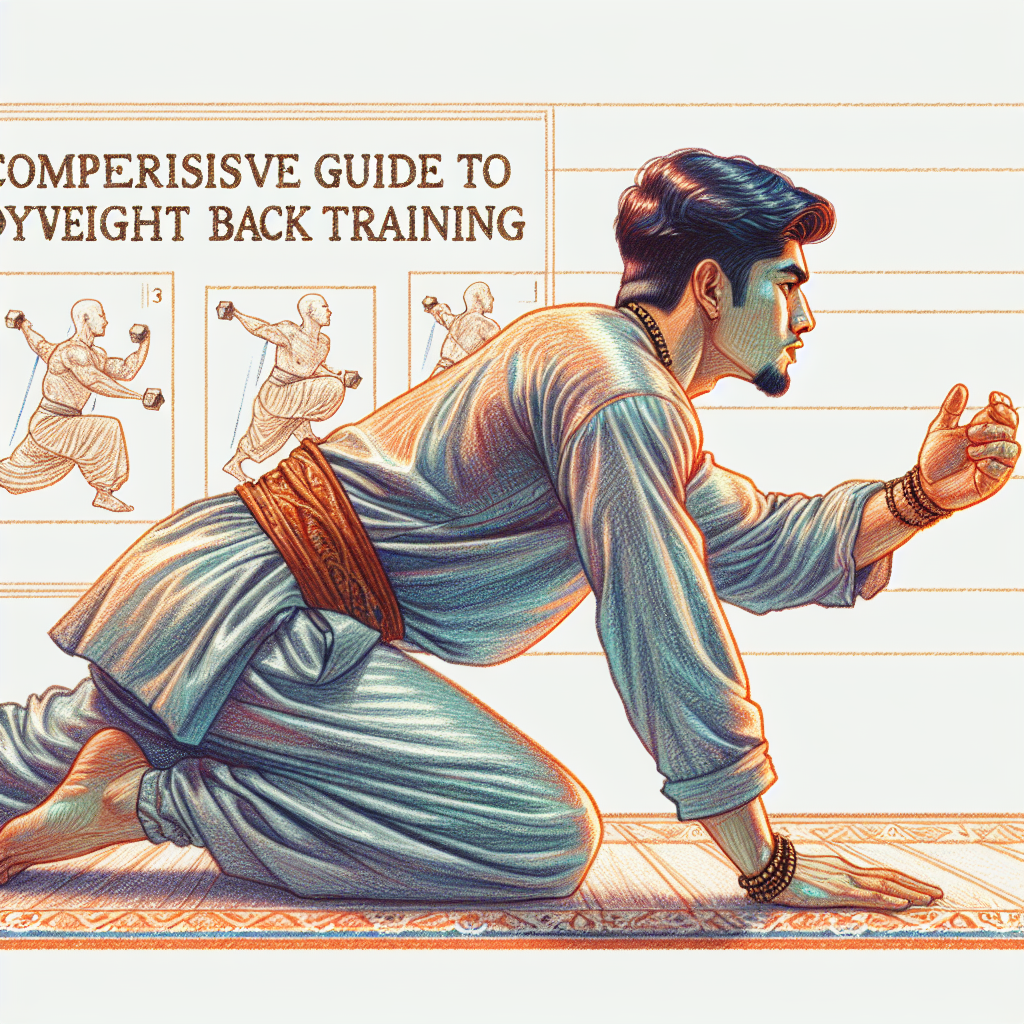
Back Training Without Equipment: A Comprehensive Guide
Back training is crucial for maintaining a healthy posture, preventing injuries, and enhancing overall physical performance. However, many people assume that effective back workouts require expensive equipment or gym access. In reality, there are numerous effective exercises you can perform at home, requiring no more than your body weight. This article will explore various back training techniques that require no equipment, enabling you to strengthen this pivotal muscle group efficiently.
- Understanding the Importance of Back Training
- Essential Bodyweight Exercises for Back Strength
- Creating a Structured Routine
- Addressing Common Misconceptions
- When to Consult a Professional
- FAQs About Back Training
Understanding the Importance of Back Training
The back is a complex and vital structure that plays an integral role in daily activities. It supports the spine, facilitates movement, and is vital for maintaining proper posture. Strengthening the back can enhance athletic performance, reduce the risk of injury, and alleviate chronic pain conditions. Moreover, a strong back contributes significantly to overall core stability, which is essential for safe and effective movement.
Essential Bodyweight Exercises for Back Strength
Here are some effective bodyweight exercises that specifically target back musculature:
- Superman Exercise: Lie face down on a mat, extend your arms in front and lift your arms and legs simultaneously, holding for a few seconds before lowering.
- Bird-Dog: Start on all fours, extend your right arm and left leg simultaneously, and hold for a few seconds before switching sides.
- Plank: Get into a push-up position and hold, keeping your body straight from head to heels. This also engages your core and strengthens your back muscles.
- Reverse Snow Angel: Lie face down and lift your arms and legs slightly off the ground, moving your arms back and forth like making a snow angel.
- Bridge: Lie on your back, bend your knees, and lift your hips off the ground, squeezing your glutes at the top position.
- Pull-Up Variations: If you have access to a sturdy beam, variations of pull-ups can provide excellent back training without any equipment.
Creating a Structured Routine
For optimal results, it is advisable to integrate these exercises into a structured training routine. Here’s a sample regimen you can follow:
- Warm-up with light stretching for 5-10 minutes.
- Perform each exercise for 30 seconds, resting for 15 seconds in between.
- Repeat the circuit 3-4 times, depending on your fitness level.
- Cool down with gentle stretches focusing on the back and shoulders.
The above routine can be tailored and adjusted according to your fitness level. For those seeking a more guided approach, consider checking out this 30-day exercise program which provides daily routines requiring just 6 minutes of your time while yielding gym-like results.
Addressing Common Misconceptions
Despite the myriad benefits of back training, there are common myths that can deter individuals from pursuing it:
- Myth 1: You need weights to strengthen your back. Bodyweight exercises can be equally effective.
- Myth 2: Back exercises are only for athletes. Individuals of all fitness levels can benefit.
- Myth 3: Back pain indicates a need to stop all exercises. In many cases, strengthening the back can alleviate pain.
- Myth 4: You can spot-reduce back fat. Targeting specific areas is a common misconception; overall fat reduction is required.
When to Consult a Professional
While training and strengthening your back can offer significant benefits, there are instances when you should consult a healthcare professional:
- If you experience chronic or severe back pain.
- If you have a pre-existing medical condition affecting your back.
- If you notice numbness, weakness in your limbs, or other alarming symptoms.
- If your pain persists despite home exercises.
- If you are unsure about performing specific exercises safely.
FAQs About Back Training
What is the best way to strengthen my back without equipment?
Bodyweight exercises such as the Superman, Bird-Dog, and Plank are excellent for building back strength without equipment.
How often should I train my back?
You can train your back 2-3 times a week, allowing at least one day of rest in between to promote recovery.
Can I train my back if I have an injury?
It is advised to consult a healthcare professional before resuming training if you have a back injury or chronic pain.
How do I know if I’m doing the exercises correctly?
Consider using mirrors or recording yourself, or consult with a trained fitness professional for guidance on form.
Are there any specific stretches I should do after training?
Post-training stretches like the Cat-Cow Stretch and Child’s Pose can help alleviate tension in the back muscles.
Can I see results with just 6-minute workouts?
Yes, consistent 6-minute high-intensity workouts can yield significant results, akin to longer gym sessions, particularly if they are part of a comprehensive fitness program.
Conclusion
- Back training is essential for overall health and injury prevention.
- Effective back exercises can be performed without any equipment.
- Creating a structured routine enhances efficiency and results.
- Consult a healthcare professional if you experience any concerning symptoms.
- Consistency is key to achieving desired results in back strength.
Ready to strengthen your back without the need for a gym? Start incorporating bodyweight exercises into your routine today, and consider registering for this innovative 30-day exercise program to make the most of your training in just 6 minutes each day.
Author: John Angel