Calisthenics: No Equipment Full Body Workout
Calisthenics is an effective and versatile form of exercise that utilizes body weight to build strength, flexibility, and overall fitness. This workout format requires no special equipment, making it accessible to individuals at all fitness levels. By incorporating calisthenics into your routine, you can achieve comprehensive full-body conditioning in a short amount of time. This article will provide you with a structured approach to performing a full-body workout with minimal space and no equipment, allowing you to enhance your physical capabilities efficiently.
- Understanding Calisthenics
- Benefits of a No-Equipment Full Body Workout
- Core Calisthenics Exercises
- Sample Workout Routine
- When to Consult a Professional
- Common Myths and Mistakes
- FAQ
- Conclusion
Understanding Calisthenics
Calisthenics refers to exercises that rely on body weight as resistance. These movements are designed to enhance muscular strength, endurance, and flexibility while improving cardiovascular fitness. Typical exercises include push-ups, pull-ups, squats, and planks, which engage multiple muscle groups simultaneously. The beauty of calisthenics lies in its versatility—it can be performed anywhere, making it an ideal solution for those with limited access to fitness equipment.
Benefits of a No-Equipment Full Body Workout
Engaging in a calisthenics workout offers numerous benefits:
- Accessibility: No special equipment is required, allowing you to work out at home, in a park, or virtually anywhere.
- Time Efficiency: These workouts can be completed in a short period, making it easier to fit exercise into a busy schedule.
- Cost-Effective: With no gym memberships or equipment purchases necessary, calisthenics is a budget-friendly fitness option.
- Comprehensive Fitness: A full-body workout improves strength, flexibility, and cardiovascular health.
- Scalability: Exercises can be modified to fit individual fitness levels, from beginners to advanced practitioners.
Core Calisthenics Exercises
To effectively work your entire body, consider incorporating the following core exercises into your routine:
Push-Ups
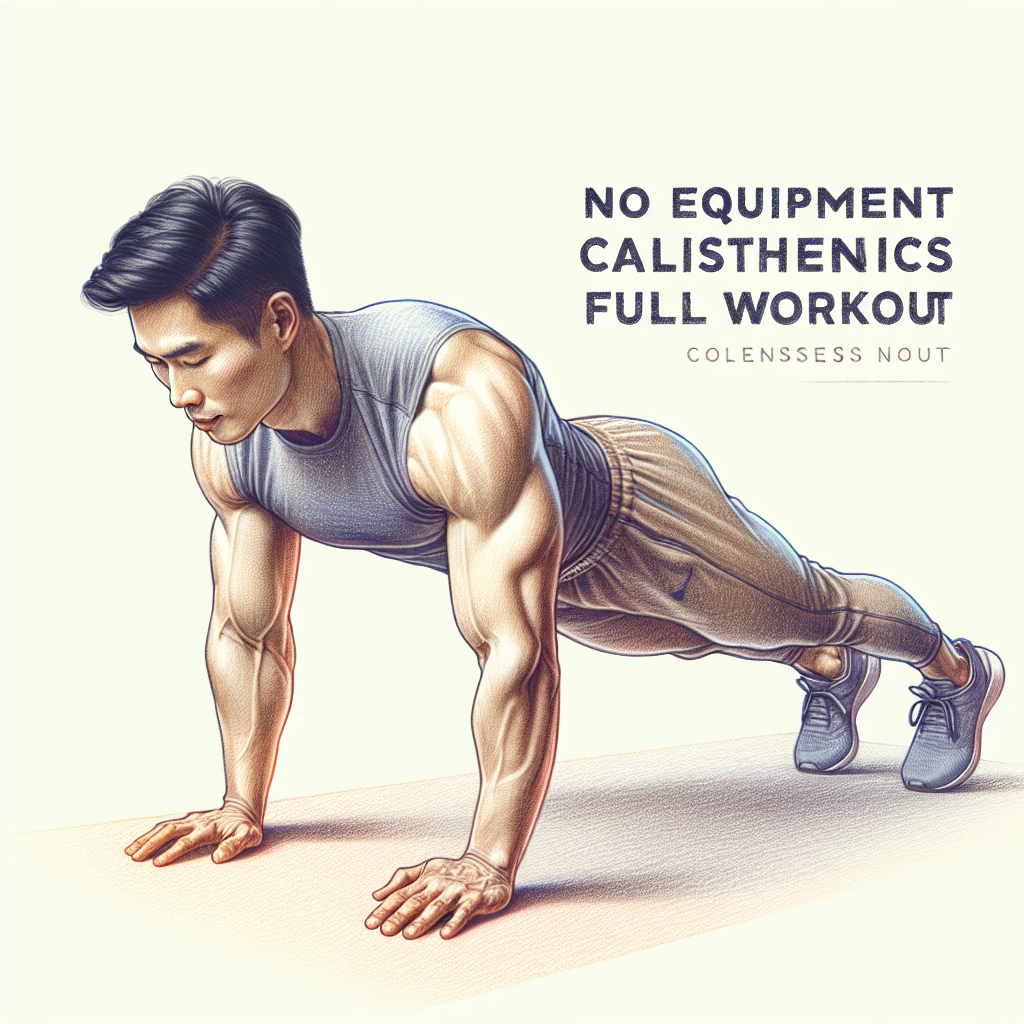
Push-ups target the chest, shoulders, and triceps. They can be modified to knee push-ups for beginners or elevated push-ups for more challenge.
Squats
Squats strengthen the legs, glutes, and core. Proper form is crucial to prevent injury and maximize effectiveness.
Planks
Planks enhance core stability and endurance. Variations include side planks and plank reaches to challenge different muscle areas.
Lunges
Lunges work the lower body and improve balance. Forward, reverse, and lateral lunges each provide unique benefits.
Burpees
Burpees combine strength and cardiovascular fitness, providing a full-body workout in one dynamic movement.
Sample Workout Routine
The following routine provides a balanced full-body workout, requiring approximately 20 to 30 minutes to complete. Aim to perform each exercise for 30 seconds, followed by 30 seconds of rest. Repeat the circuit 3 to 5 times.
- Push-Ups
- Squats
- Planks
- Lunges (alternating legs)
- Burpees
This foundational routine can be adjusted based on your fitness level. For a more intensified program, consider registering for a 30-day exercise challenge that requires just 6 minutes a day yet delivers results comparable to a gym regimen. You can register for this free program here.
When to Consult a Professional
While calisthenics is generally safe, there are instances when seeking professional advice is warranted:
- If you experience pain that does not subside during rest.
- If you have existing health conditions affecting your ability to exercise.
- If you are unsure about exercise techniques or modifications.
- For tailored advice on setting and reaching fitness goals.
Common Myths and Mistakes
As with any fitness regimen, misinformation can lead to unnecessary complications or discouragement. Here are common myths related to calisthenics:
- Myth: You cannot build muscle with body-weight exercises. Fact: Calisthenics is effective for muscle building, especially when exercises are performed with progressive overload.
- Myth: Calisthenics is just for beginners. Fact: Advanced variations can challenge even the most experienced athletes.
- Myth: You need gym equipment to achieve fitness goals. Fact: Calisthenics can be equally effective as weight training for strength and endurance.
FAQ
What is calisthenics?
Calisthenics involves exercises that primarily use body weight for resistance to enhance fitness without the need for equipment.
Is calisthenics effective for weight loss?
Yes, calisthenics can be an effective weight loss tool, especially when combined with a balanced diet.
How often should I practice calisthenics?
For optimal results, aim for 3 to 5 sessions per week, focusing on variety in exercises and intensity.
Can I do calisthenics at home?
Absolutely! Calisthenics can be performed in virtually any setting, making it ideal for home workouts.
Are there advanced calisthenics exercises?
Yes, advanced exercises include muscle-ups, one-arm push-ups, and handstand push-ups, which require significant strength and skill.
Is it necessary to warm up before a calisthenics workout?
Yes, warming up is essential to prepare your muscles and reduce the risk of injury.
Conclusion
- Calisthenics offers a versatile approach to strength training using only body weight.
- This form of exercise is accessible, time-efficient, and cost-effective.
- Core movements such as push-ups, squats, and planks can be tailored to all fitness levels.
- Consulting a professional is advisable when experiencing discomfort or when uncertain about exercise techniques.
- Dispelling myths about body weight training can enhance your understanding and commitment to fitness.
Even if you assume you lack the time or resources for a workout, a dedicated calisthenics practice can yield significant results. Begin by exploring the suggested exercises, and consider joining a program that encourages daily habits for lasting change. Start your journey today!
Author: John Angel