
Introduction
In an increasingly busy world, the notion of dedicating time to fitness can feel daunting. However, circuit exercises that require no equipment can deliver substantial fitness benefits in minimal time. By integrating high-intensity movements targeting multiple muscle groups, individuals can effectively enhance strength, endurance, and overall physical fitness with just a few minutes each day. Here, we explore the diverse world of no-equipment circuit exercises, presenting practical approaches that cater to all fitness levels.
- Understanding Circuit Training
- Benefits of No-Equipment Exercises
- Effective Circuit Exercises to Try
- Practicing Safe Exercise
- When to Seek Professional Guidance
- Common Misconceptions
- FAQ
- Conclusion
Understanding Circuit Training
Circuit training consists of a series of exercises performed in sequence with minimal rest in between. This method not only aids in enhancing cardiovascular fitness but also builds muscular strength and endurance. In a no-equipment scenario, circuit training offers the flexibility to perform a variety of exercises in any space, making it accessible for everyone.
Benefits of No-Equipment Exercises
No-equipment exercises provide numerous advantages, particularly for those with limited time or resources. The key benefits include:
- Accessibility: No need for a gym membership or specialized equipment.
- Time Efficiency: Quick workouts can be as short as 6 minutes yet yield significant results.
- Versatility: Exercises can be tailored to various fitness levels and preferences.
- Body Weight Utilization: These workouts focus on functional movements that leverage your body weight, enhancing strength and coordination.
Effective Circuit Exercises to Try
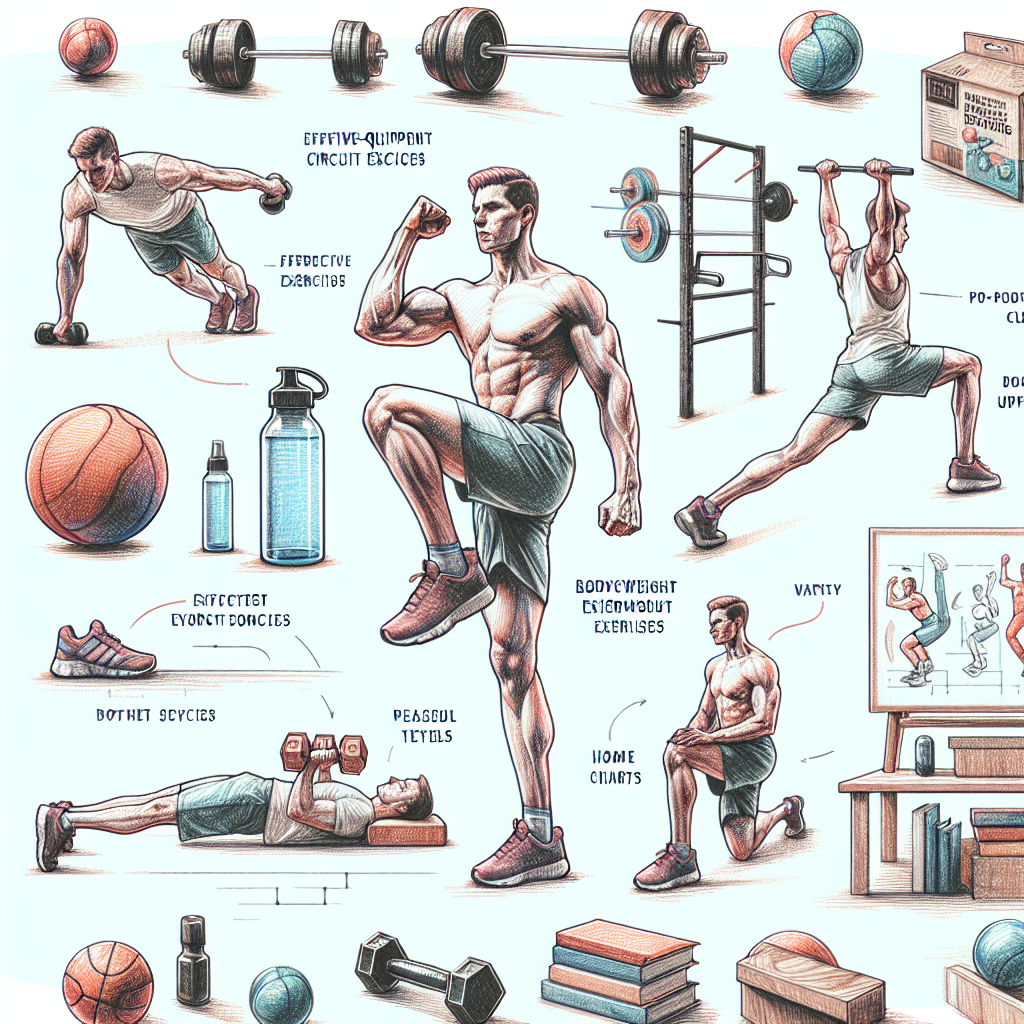
Below are several no-equipment exercises that can be formulated into circuits. Consider performing each exercise for 30 seconds, followed by a 15-second rest before moving to the next.
- Bodyweight Squats: Stand with feet shoulder-width apart and lower into a squat position, ensuring your knees do not extend beyond your toes.
- Push-Ups: Maintain a plank position and lower your body towards the ground before pressing back up. Modify by performing on your knees if needed.
- Burpees: Begin standing, drop into a squat with your hands on the ground, kick your feet back to a plank, then return to squat and jump up.
- Mountain Climbers: In a plank position, alternate bringing your knees towards your chest quickly.
- Plank: Hold a plank position on your forearms and toes, engaging your core for stability.
- Lunges: Step forward with one leg and lower your hips until both knees are bent at 90-degree angles.
For a guided routine that lasts just 6 minutes each day but offers results comparable to longer traditional workouts, consider registering for a free 30-day exercise program here.
Practicing Safe Exercise
Safety is paramount in any fitness regimen. To minimize the risk of injury, consider the following tips:
- Warm up adequately before starting your circuit.
- Focus on maintaining proper form; quality over quantity is crucial.
- Listen to your body. If something feels wrong, stop the exercise.
- Stay hydrated and take breaks as necessary.
When to Seek Professional Guidance
While exercise is beneficial for health, certain circumstances warrant professional advice. Consult a healthcare professional if you experience:
- Persistent pain during or after exercise.
- Severe fatigue not related to typical exertion.
- Any pre-existing conditions that might complicate your ability to exercise (e.g., heart conditions, severe joint issues).
- Unexplained shortness of breath or dizziness.
Common Misconceptions
There are several prevalent myths surrounding no-equipment workouts:
- Myth: Bodyweight exercises are ineffective. Truth: Bodyweight training can build significant strength and endurance when performed correctly.
- Myth: More time equals better results. Truth: Short, intense workouts can be more effective due to the higher intensity and focus on multiple muscle groups.
- Myth: You need a gym to get fit. Truth: With commitment, bodyweight exercises can yield excellent results without the need for a gym.
FAQ
What is circuit training?
Circuit training involves performing a series of exercises in succession with minimal rest, combining strength and cardiovascular workouts.
Can I build muscle with no-equipment exercises?
Yes, you can build muscle using bodyweight exercises by increasing the number of repetitions and varying your routines.
How often should I do no-equipment workouts?
For optimal results, aim for at least three to four sessions per week, depending on your fitness level.
Do I need to warm up before my workout?
Yes, warming up is essential to prepare your muscles and reduce the risk of injury.
Can beginners perform circuit exercises?
Absolutely. Beginners can modify exercises to suit their level and gradually increase their intensity as they improve.
What should I do if I feel pain during a workout?
If you feel pain, stop the exercise immediately. Consult a healthcare professional if the pain persists.
Conclusion
- Utilizing no-equipment circuit exercises is an effective way to enhance your fitness regimen.
- These workouts are time-efficient and can be done virtually anywhere.
- Proper warm-up and form are crucial to avoid injuries.
- Understanding when to seek professional advice can ensure your safety and health.
- Many misconceptions about home workouts can deter individuals from their fitness goals—it’s time to challenge those beliefs.
Explore the world of no-equipment circuit exercises and dedicate a few minutes each day to your health. Embrace the journey and enjoy the benefits that consistent activity can bring.
Author: John Angel