
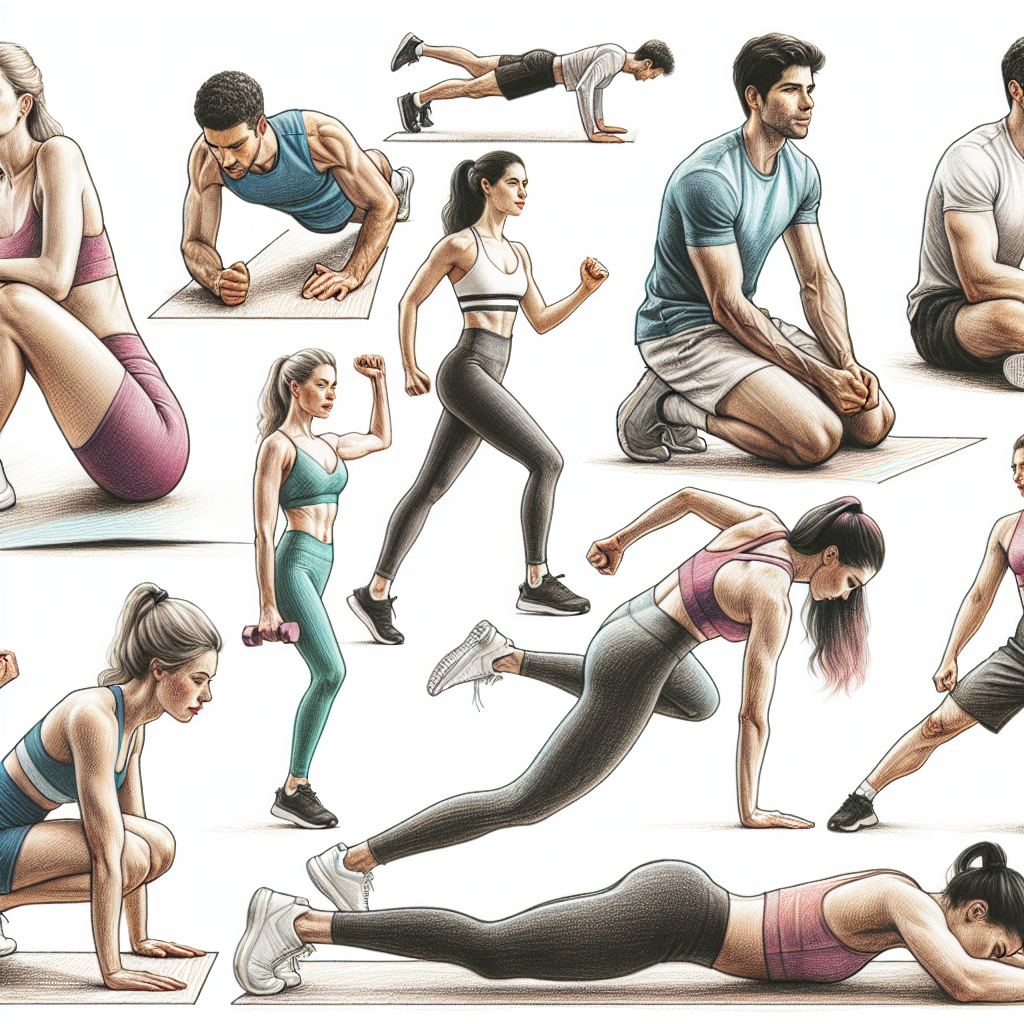
In today’s fast-paced world, finding time for fitness can be challenging. Fortunately, a full-body bodyweight workout requires no equipment and can be done anywhere, making it a practical solution for busy individuals. This article explores the benefits of bodyweight exercises, outlines an effective workout routine, and addresses common misconceptions. Additionally, you will find guidance on when to seek professional advice and a selection of frequently asked questions.
- Introduction
- The Benefits of Bodyweight Workouts
- Effective Full Body Bodyweight Workout
- The Importance of Warm-up and Cool-down
- When to Consult a Professional
- Common Mistakes in Bodyweight Training
- FAQs
- Conclusion
The Benefits of Bodyweight Workouts
Bodyweight workouts offer an array of benefits that make them an excellent choice for individuals looking to enhance their fitness without the constraints of gym memberships or equipment. These benefits include:
- Convenience: You can perform bodyweight exercises anywhere—at home, in a park, or while traveling.
- Cost-effectiveness: No need for equipment or gym fees.
- Improved functionality: Bodyweight exercises enhance your strength, balance, and flexibility.
- Adaptability: These workouts can be easily modified to suit various fitness levels.
- Promotes body awareness: Enhances your understanding of your body’s movements and capabilities.
Effective Full Body Bodyweight Workout
An effective full-body workout should engage multiple muscle groups and can be done in as little as 20-30 minutes. Below is a sample routine that incorporates various exercises.
Warm-up (5 minutes)
- Jumping jacks – 1 minute
- Arm circles – 1 minute
- Leg swings – 1 minute
- Bodyweight squats – 1 minute
- Dynamic stretches – 1 minute
Main Workout (15-20 minutes)
Perform each exercise for 30 seconds, followed by a 15-second rest. Complete three rounds.
- Push-ups
- Bodyweight squats
- Plank (hold position)
- Lunges (alternating legs)
- Mountain climbers
- Burpees
- Glute bridges
- Side planks (alternating sides)
Cool-down (5 minutes)
- Standing quadriceps stretch – 1 minute
- Hamstring stretch – 1 minute
- Shoulder stretches – 1 minute
- Child’s pose – 1 minute
- Deep breathing exercises – 1 minute
The Importance of Warm-up and Cool-down
Warming up and cooling down are critical components of any workout, including bodyweight routines. They help prepare your muscles and joints for physical activity, reducing the risk of injury. A proper warm-up increases blood flow and flexibility, while a cool-down aids in recovery and promotes muscle relaxation.
When to Consult a Professional
While bodyweight exercises can generally be performed safely, it’s vital to consult a healthcare professional if you experience any of the following:
- Severe or persistent pain during exercise
- Previous injuries that may be aggravated by physical activity
- Pre-existing medical conditions (e.g., heart disease, arthritis)
- Symptoms of dizziness or shortness of breath
- Changes in balance or coordination
Common Mistakes in Bodyweight Training
Understanding and avoiding common pitfalls during workouts can significantly enhance the effectiveness of bodyweight training:
- Poor Form: Neglecting proper technique can lead to injuries. Always prioritize form over quantity.
- Skipping Warm-up or Cool-down: Failing to include these phases may result in unnecessary strain.
- Overtraining: Overloading yourself with too many exercises without adequate rest can lead to fatigue or injury.
- Lack of Variety: Sticking to the same routine can stall progress. Regularly switch your exercises to target different muscle groups.
- Ignoring Listening to Your Body: If you’re experiencing pain, don’t push through it. Adapt or modify exercises to suit your level.
FAQs
1. How often should I do bodyweight workouts?
It is recommended to include bodyweight workouts 3-4 times per week, allowing for rest days in between to promote recovery.
2. Can I build muscle with bodyweight exercises?
Yes, bodyweight exercises can effectively build muscle when performed with sufficient intensity and progressive variations.
3. Are bodyweight workouts suitable for beginners?
Absolutely! Bodyweight workouts can be easily adjusted to accommodate all fitness levels, including beginners.
4. Do I need a specific diet to see results from bodyweight training?
A balanced diet rich in nutrients will support your fitness goals but is not strictly necessary for benefits from bodyweight training.
5. How long does it take to see results from bodyweight exercises?
Results can vary, but with consistent practice and a good diet, you may notice changes in strength and endurance within a few weeks.
6. Can I combine bodyweight workouts with other training styles?
Yes, bodyweight workouts can be easily integrated with other training styles, such as cardio, yoga, or weightlifting, for a balanced fitness regimen.
Conclusion
- Bodyweight workouts are a convenient and cost-effective fitness solution.
- They engage multiple muscle groups, leading to improved strength and flexibility.
- Prioritize proper form and include warm-up and cool-down phases.
- Consult a professional when facing any health concerns related to exercise.
- Be mindful of common mistakes to maximize your workout effectiveness.
Ready to embark on your fitness journey? You might also consider joining an effective 30-day exercise program where you only exercise for 6 minutes every day but achieve results comparable to a full gym workout. Sign up for free here.
Author: John Angel