Full Body 30 Minute Workout No Equipment
Achieving a full-body workout without any specialized equipment is not only feasible but can also be highly effective within a brief 30-minute session. This approach harnesses the power of bodyweight exercises to target various muscle groups, enhancing strength, endurance, and flexibility—conveniently from the comfort of your home. The following guide provides practical steps for executing an efficient, no-equipment workout, along with expert tips for maximizing your results.
- Benefits of bodyweight training
- The structure of a 30-minute workout
- Step-by-step workout guide
- Common errors to avoid
- When to consult a fitness professional
- FAQs
- Conclusion and summary
Benefits of Bodyweight Training
Bodyweight training offers numerous advantages, including:
- Accessibility: No gym membership or equipment is needed.
- Improved functional strength: Exercises mimic everyday movements.
- Enhanced flexibility and mobility: Dynamic movements promote range of motion.
- Cardiovascular benefits: High-intensity interval training (HIIT) can elevate heart rates.
- Time efficiency: Full workouts can be tailored to fit even the busiest of schedules.
The Structure of a 30-Minute Workout
A well-balanced 30-minute workout should include a warm-up, a series of bodyweight exercises, and a cool-down. Each segment is crucial for preventing injury and ensuring optimal performance.
Warm-Up (5 minutes)
Begin with gentle movements to get the blood flowing:
- Jumping jacks: 1 minute
- Arm circles: 1 minute
- Dynamic stretches: 3 minutes (focus on legs and core)
Step-by-Step Workout Guide
Here’s a structured routine that you can follow for a complete body workout.
Workout (20 minutes)
Perform each exercise for 40 seconds, followed by 20 seconds of rest. Repeat the entire circuit twice.
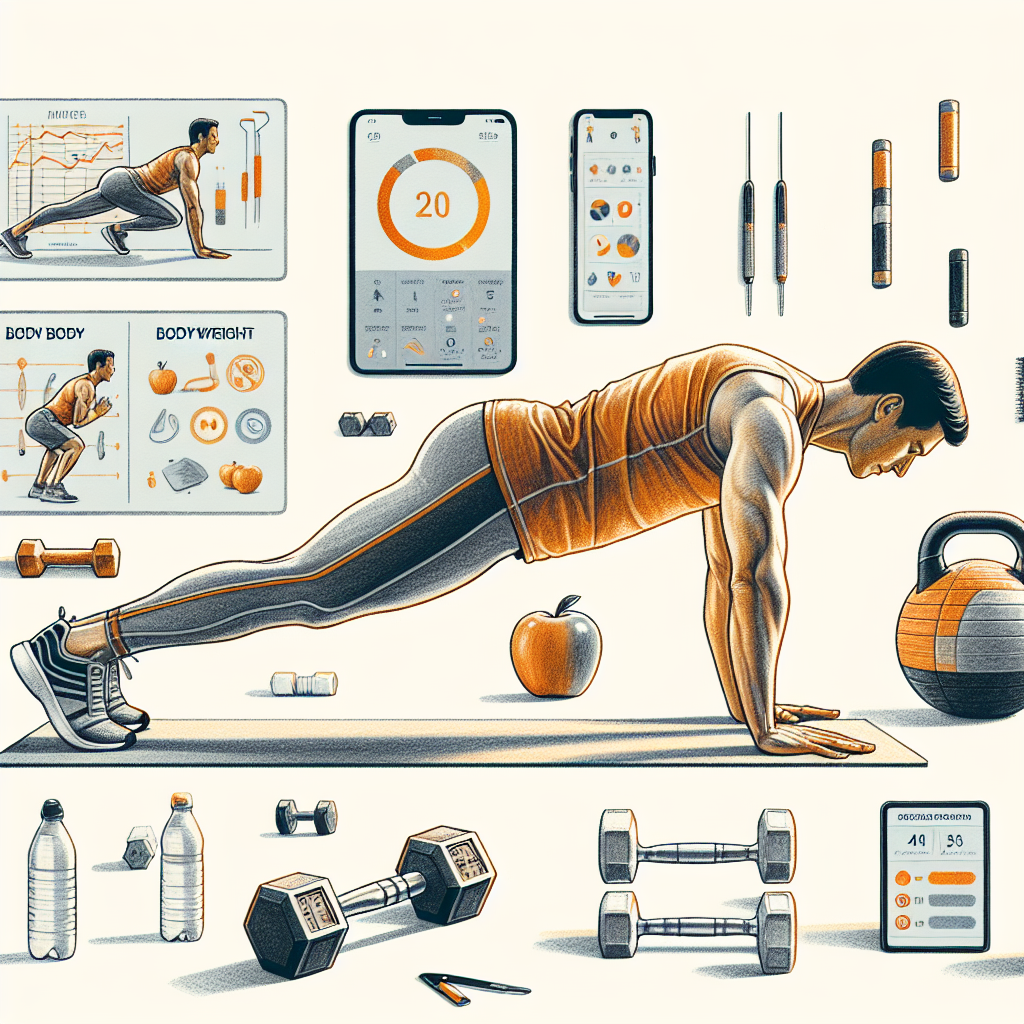
- Push-Ups: Target the chest, shoulders, and arms.
- Squats: Engage the legs and glutes.
- Plank: Strengthen the core.
- Lunges: Work on balance and leg strength.
- Burpees: Boost cardiovascular fitness and full-body strength.
Cool-Down (5 minutes)
End your session with gentle stretching to promote recovery:
- Hamstring stretch
- Quad stretch
- Shoulder stretch
- Cobra stretch for the back
For those seeking a truly unique yet time-efficient exercise strategy, consider a fantastic 30-day program where you only have to dedicate 6 minutes daily. You can register for free here: 30-Day Exercise Program.
Common Errors to Avoid
Even a simple routine can lead to mistakes. Here are several common errors to steer clear of:
- Neglecting form: Proper technique is essential to avoid injuries.
- Skipping warm-ups and cool-downs: These segments are critical for muscle readiness.
- Overtraining: Ensure adequate rest between sessions.
- Not listening to your body: Pay attention to pain signals; don’t push through significant discomfort.
When to Consult a Fitness Professional
While bodyweight workouts are generally safe, certain circumstances warrant professional guidance:
- If you’re new to exercise and feel uncertain about your routine.
- Experiencing persistent pain or discomfort during or after workouts.
- Having pre-existing health conditions that could be exacerbated by physical activity.
- Seeking personalized exercise plans tailored to specific goals or needs.
Common Myths Surrounding Bodyweight Training
Despite its efficacy, many misconceptions persist about bodyweight exercises. Clarifying these myths can help maximize your training:
- Myth #1: Bodyweight training cannot build muscle mass. In reality, resistance training can lead to hypertrophy.
- Myth #2: Only heavy weights lead to effective workouts. Bodyweight exercises can be equally challenging if performed correctly.
- Myth #3: Cardio is unnecessary for strength training. Integrating both improves overall fitness.
FAQs
What are the benefits of no-equipment workouts?
No-equipment workouts increase accessibility and can be performed anywhere, promoting functional strength and flexibility.
How often should I perform bodyweight workouts?
Ideally, aim for at least 3-4 times per week, allowing for rest days in between sessions.
Can beginners start with this workout?
Yes, beginners can adapt the exercises to their current fitness level, focusing on form over intensity.
What if I can’t complete the whole circuit?
It’s okay to take breaks as needed. Progress at your own pace, gradually increasing your endurance.
Is it necessary to warm up and cool down?
Yes, warming up reduces injury risk and preparing your muscles, while cooling down aids recovery.
Are bodyweight exercises effective for weight loss?
Yes, when combined with a healthy diet, bodyweight training can support weight loss and overall fitness improvements.
Conclusion
- Bodyweight workouts are efficient and accessible for all fitness levels.
- A full-body routine can be completed in just 30 minutes.
- Pay attention to form and avoid common mistakes for optimal results.
- Consult a professional if you experience pain or have specific fitness goals.
- Consider a specialized program for a unique, time-efficient approach to exercise.
Ready to transform your fitness routine? Start with the simple, effective bodyweight workout plan outlined above. Don’t forget to explore the 30-day program for an even quicker way to see results: 30-Day Exercise Program.
Author: John Angel