
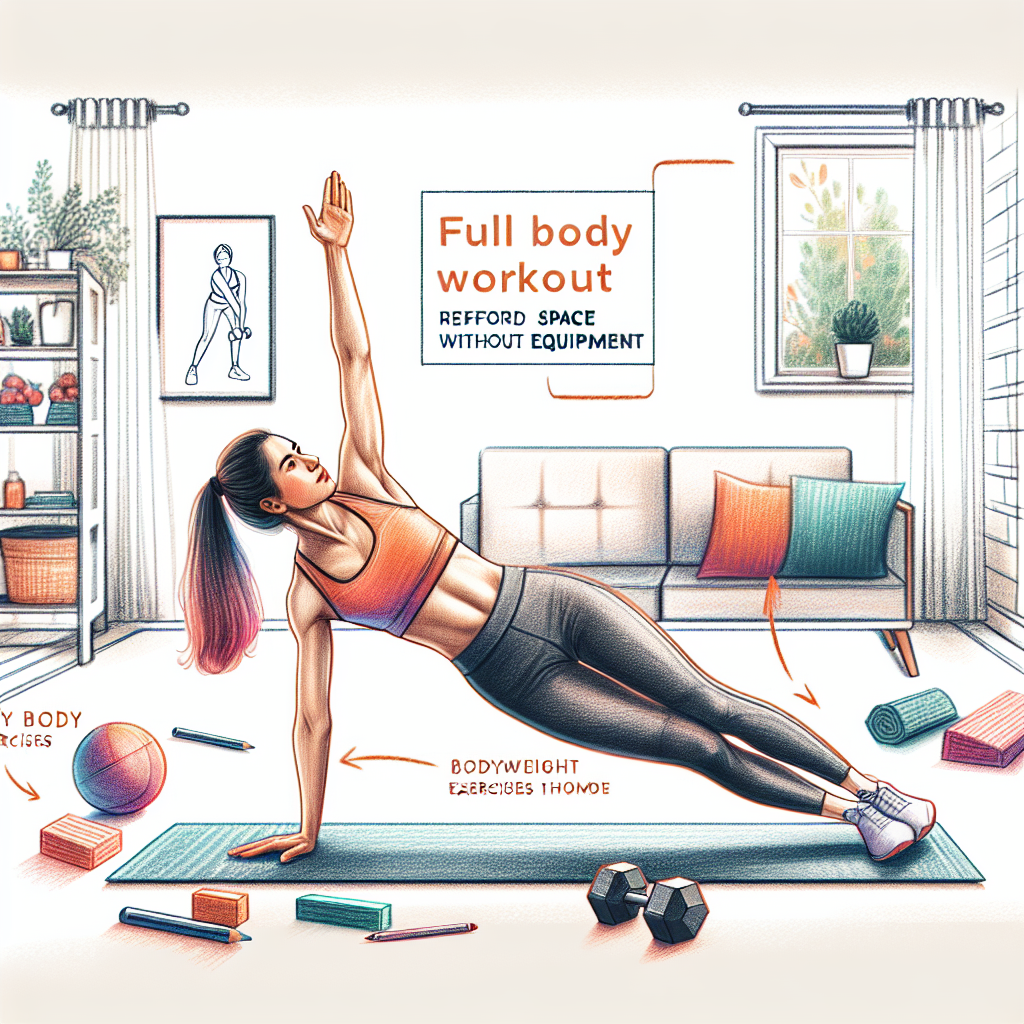
Full Body Exercise Without Equipment
In a world increasingly driven by convenience, full-body exercises that require no equipment are gaining popularity due to their accessibility and effectiveness. Engaging in a well-rounded body workout utilizing your own body weight can yield significant fitness results, making it a viable alternative to gym-based routines. This article aims to provide practical guidance on performing full-body exercises without any equipment, ideal for those looking to improve their fitness levels with minimal investment of time and resources.
- Understanding Full-Body Workouts
- Benefits of No-Equipment Exercises
- Effective Exercises for Full Body Engagement
- Creating a Routine: Step-by-Step Guide
- When to Seek Professional Advice
- Common Misconceptions About Bodyweight Training
- FAQ
- Conclusion
Understanding Full-Body Workouts
Full-body workouts engage multiple muscle groups in a single session, promoting balanced strength, flexibility, and endurance. These workouts often incorporate movements that mimic daily activities, providing functional fitness benefits that enhance overall well-being. Unlike isolated exercises that focus on specific muscle groups, full-body workouts work synergistically to improve body coordination and efficiency.
Benefits of No-Equipment Exercises
Exercising without equipment offers numerous advantages:
- Accessibility: No need for a gym membership or specialized equipment; you can perform these exercises anywhere.
- Cost-effectiveness: Eliminating the need for equipment reduces costs associated with fitness activities.
- Flexibility: These workouts can be integrated into even the busiest of schedules, allowing for quick sessions.
- Engagement: Bodyweight exercises engage multiple muscle groups, promoting more comprehensive fitness gains.
Effective Exercises for Full Body Engagement
Here are some of the most effective no-equipment exercises for a full-body workout:
- Push-Ups: Effective for strengthening the chest, shoulders, and triceps.
- Squats: Target the quadriceps, hamstrings, and glutes.
- Planks: Excellent for core stability and overall strength.
- Lunges: Focus on leg strength and balance.
- Burpees: A powerful cardio workout that combines squats and push-ups.
Creating a Routine: Step-by-Step Guide
To develop a structured full-body routine without equipment, follow these steps:
- Warm-Up: Begin with 5 minutes of light cardio, such as jogging in place or jumping jacks, to prepare your body.
- Select Exercises: Choose a variety of exercises that target different muscle groups as previously mentioned.
- Set Duration: Aim for 20-30 minutes of continuous exercise, adjusting time according to your fitness level.
- Cool Down: Finish with stretching exercises focusing on the muscles worked.
- Consistency: Perform this routine 3-5 times a week for optimal results.
For a program designed to achieve significant results in just 6 minutes a day, consider this 30-day exercise program.
When to Seek Professional Advice
It is advisable to consult a fitness professional if you experience any of the following:
- Persistent Pain: Pain that continues beyond typical muscle soreness could indicate an injury.
- Medical Conditions: Pre-existing medical conditions may require tailored advice from a professional.
- Difficulty Breathing: Experiencing shortness of breath beyond normal exertion may necessitate professional evaluation.
Common Misconceptions About Bodyweight Training
Several myths surround the efficacy of bodyweight exercises:
- Myth 1: Bodyweight exercises are less effective than weight training.
- Myth 2: You need equipment to build significant muscle mass.
- Myth 3: Bodyweight exercises cannot provide a cardiovascular workout.
- Myth 4: You cannot achieve progression or intensity without weights.
FAQ
1. Can beginners perform these exercises without prior experience?
Yes, beginners can successfully perform these exercises, starting with modified versions to build strength progressively.
2. How often should I perform full-body workouts?
Aim for 3-5 times a week, allowing rest days for recovery between sessions.
3. What if I lack space at home?
Many exercises can be performed in small spaces. Focus on movements that require minimal room, such as squats and planks.
4. Is it safe to perform these exercises every day?
It is generally safe for most individuals, but be sure to listen to your body and allow rest when needed.
5. Do I need a nutrition plan to see results?
While exercise is crucial, a balanced diet can enhance your results significantly.
6. Can I do these exercises outdoors or in the park?
Absolutely! Bodyweight exercises are highly adaptable and perfect for outdoor or park settings.
Conclusion
- Full-body workouts without equipment are accessible and effective.
- Engaging in these exercises provides multiple fitness benefits and promotes overall well-being.
- Creating a routine is simple and can be done anywhere.
- Consult a professional if you experience pain or have health concerns.
- Don’t believe the myths; bodyweight training can be highly effective.
Embark on your bodyweight training journey today and consider enrolling in this 30-day exercise program that delivers results in just 6 minutes daily!
Author: John Angel