Embarking on a fitness journey can often feel daunting, especially for beginners. However, a full-body no-equipment workout routine offers an accessible and efficient path to build strength, improve flexibility, and enhance overall fitness. In this article, we will outline an effective workout routine that requires no equipment, making it suitable for anyone, regardless of fitness level. Additionally, we will provide guidance on when to consult a professional, debunk some common myths, and answer frequently asked questions.
- Understanding Full-Body No-Equipment Workouts
- The Beginner’s Workout Routine
- Steps to Follow for Effective Workouts
- Consulting a Professional: When and Why
- Common Myths and Mistakes
- Frequently Asked Questions
- Conclusion: Key Takeaways
Understanding Full-Body No-Equipment Workouts
A full-body no-equipment workout aims to engage all major muscle groups without the need for any specialized tools. This form of exercise utilizes body weight to achieve resistance, fostering strength, stability, and endurance. The simplicity of these workouts makes them a perfect choice for beginners, as they can be performed anywhere, freeing individuals from gym constraints and associated costs.
The Beginner’s Workout Routine
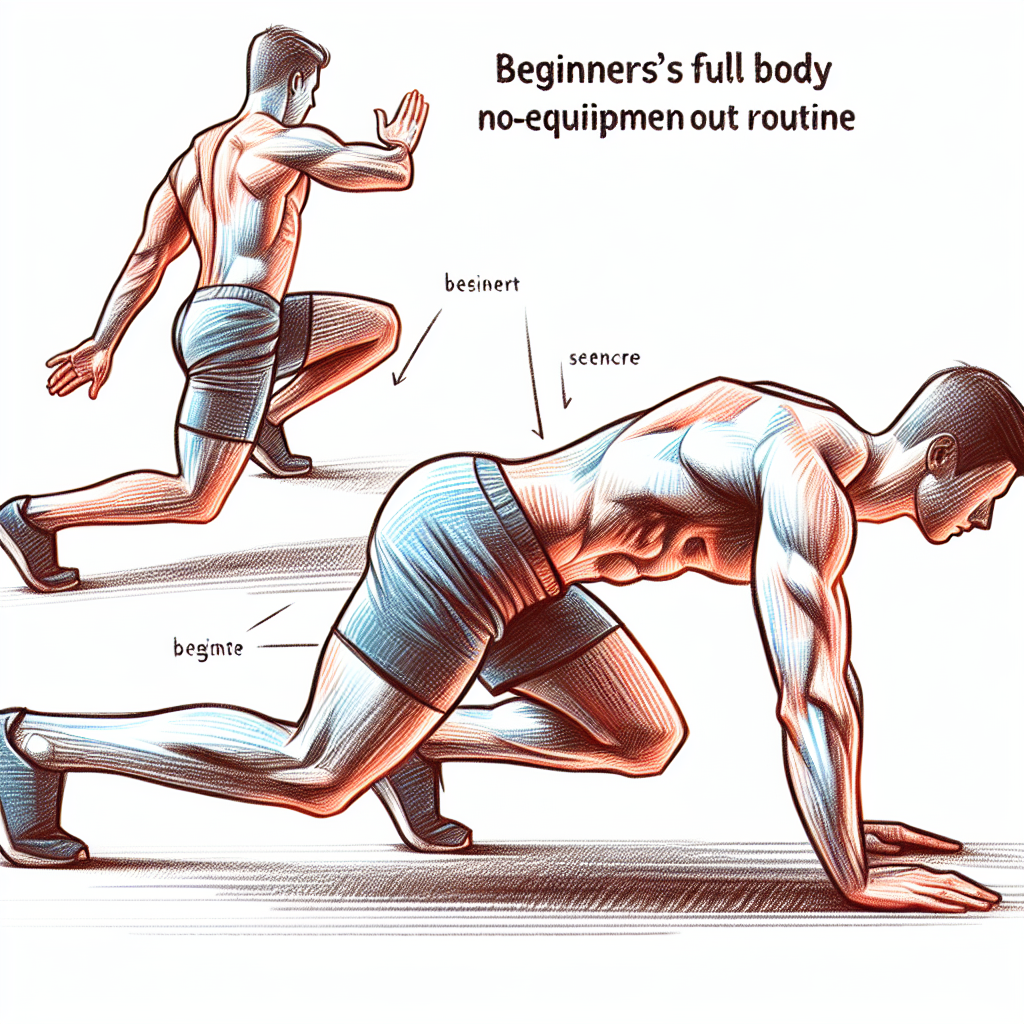
This workout routine includes a series of exercises that target various muscle groups. Each exercise can be performed in a high-repetition format or for a set amount of time, depending on individual fitness levels. Here’s a simple 6-exercise routine:
- Bodyweight Squats
- Push-Ups (knee or standard)
- Lunges
- Plank
- Glute Bridges
- Mountain Climbers
Steps to Follow for Effective Workouts
For a successful full-body workout, follow these practical steps:
- Warm-Up: Start with 5-10 minutes of light cardio, such as jogging in place or jumping jacks.
- Exercise: Perform each of the exercises listed above for 30-60 seconds or 10-15 repetitions, depending on your fitness level.
- Rest: Take about 30 seconds to rest between exercises to allow your muscles to recover.
- Cool Down: After completing your workout, spend 5-10 minutes stretching to improve flexibility and reduce soreness.
- Frequency: Aim to perform this workout 3-4 times per week for optimal benefits.
- Consistency: Maintaining consistency is key to seeing improvements over time.
For those interested in maximizing their progress with minimal time commitment, consider a 30-day exercise program where you can achieve results in just six minutes daily.
Consulting a Professional: When and Why
Engaging in a new fitness routine is exciting, yet it’s crucial to be mindful of your body’s signals. If you experience any of the following, consider consulting a qualified fitness professional:
- Persistent pain, especially joint pain
- Severe shortness of breath during exercises
- Unexplained dizziness or fainting
- Limited mobility or extreme fatigue
- Signs of injury
Common Myths and Mistakes
In the realm of fitness, numerous misconceptions can derail your progress. Here are a few common myths to be aware of:
- Sweating Equals Fat Loss: Many believe that sweating extensively indicates effective exercise; however, sweat is merely a cooling mechanism and does not equate to calorie burning.
- More Exercise Equals Better Results: This is untrue; overtraining can lead to burnout or injuries. Adequate rest and recovery are vital.
- Bodyweight Workouts are Less Effective: Bodyweight exercises can be incredibly effective when done correctly, often challenging strength and endurance just as much as weight training.
- You Need Equipment to Build Muscle: Building muscle can effectively occur with bodyweight exercises, especially when focusing on proper form and technique.
Frequently Asked Questions
Can beginners perform this workout routine?
Yes, this workout is designed for beginners and can be adjusted to suit any fitness level.
How long should sessions last?
Sessions can last 20-30 minutes, depending on the number of repetitions and rest time between exercises.
What if I cannot perform certain exercises?
Modify exercises to your level; for example, perform knee push-ups instead of standard push-ups.
What should I eat before and after workouts?
Opt for light snacks before workouts to fuel your energy, and focus on protein-rich foods afterward to aid recovery.
How do I stay motivated?
Set achievable goals, track your progress, and consider finding a workout buddy to enhance motivation.
Can I lose weight with this routine?
Yes, when combined with a balanced diet, this routine can aid weight loss by increasing physical activity levels.
Conclusion: Key Takeaways
- A full-body no-equipment workout efficiently engages various muscle groups.
- Consistency and dedication are vital for progress in fitness journeys.
- Always listen to your body and consult professionals when in doubt.
- Debunking fitness myths can help you stay focused on effective practices.
- Consider structured exercise programs to maximize results in limited time.
Embarking on your fitness journey can be rewarding and achievable, even with limited time and resources. Consider integrating a no-equipment routine into your lifestyle and explore innovative programs designed to enhance your experience.
Author: John Angel