Full Body Workout for Weight Loss Without Equipment
In today’s fast-paced world, maintaining a healthy lifestyle may seem challenging, especially when access to a gym or workout equipment is limited. However, achieving weight loss through effective full-body workouts without equipment is entirely possible. Engaging in bodyweight exercises can provide substantial health benefits, including burning calories, improving cardiovascular health, and enhancing muscle tone. This article will guide you through a series of exercises and practical tips for a full-body workout that fits seamlessly into your daily routine.
- Understanding Full-Body Workouts
- The Benefits of Bodyweight Exercises
- Effective Full-Body Exercises
- Creating a Workout Routine
- When to Consult a Professional
- Common Myths and Mistakes
- Frequently Asked Questions
- Conclusion
Understanding Full-Body Workouts
A full-body workout targets multiple muscle groups in one session, making it an efficient way to improve strength and endurance while supporting weight loss. By incorporating various exercises that engage the legs, core, and upper body, you create a balanced routine that challenges your body and helps you achieve your fitness goals.
The Benefits of Bodyweight Exercises
Bodyweight exercises offer unique advantages, making them suitable for anyone, regardless of fitness level. Some key benefits include:
- Accessibility: No equipment or gym membership is required.
- Versatility: Can be performed anywhere—at home, in a park, or while traveling.
- Scalability: Easily adjusted to fit different fitness levels.
- Improved Body Control: Enhances balance, coordination, and flexibility.
- Cost-Effectiveness: Eliminates the need for expensive gym equipment or subscriptions.
Effective Full-Body Exercises
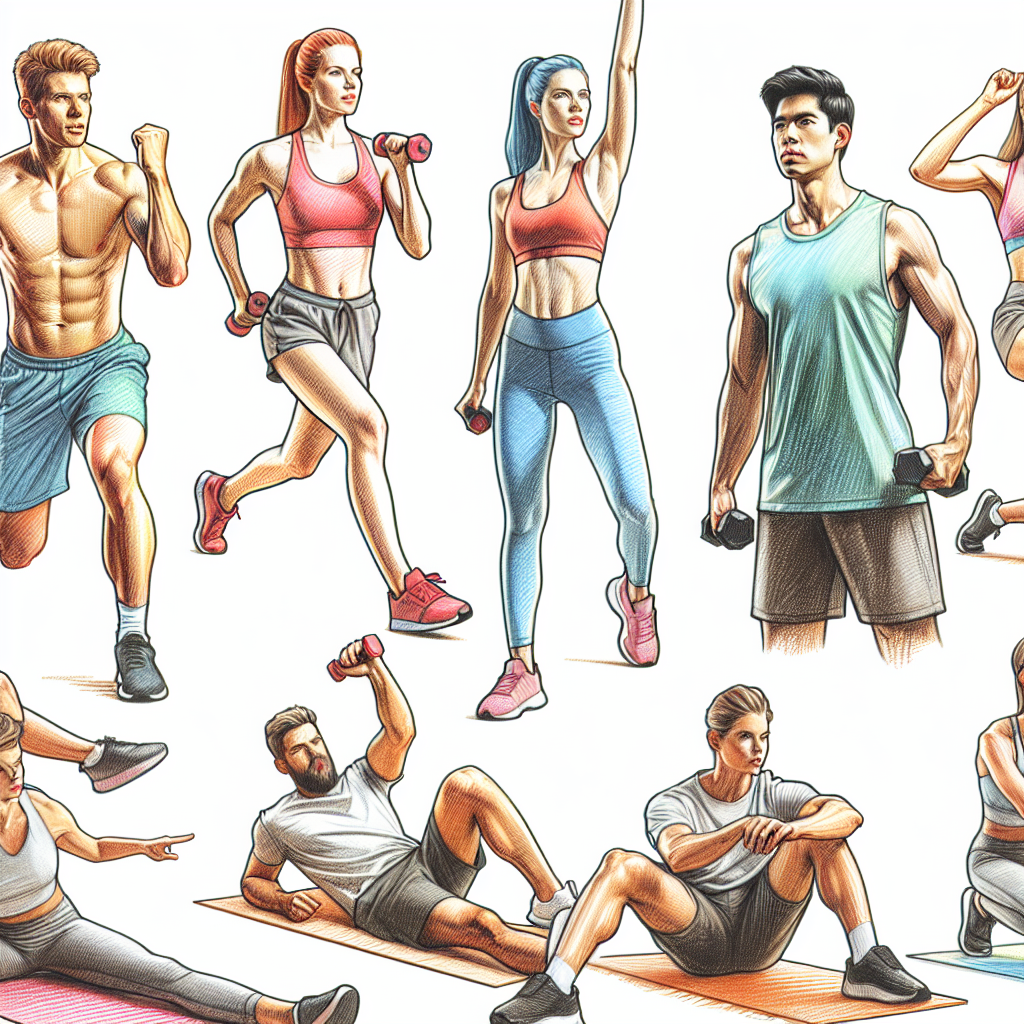
Incorporating a variety of exercises into your routine will maximize your results. Below are several effective bodyweight exercises designed for weight loss:
- Push-Ups: Strengthens the chest, shoulders, and triceps. Aim for 3 sets of 8-12 repetitions.
- Squats: Targets the legs and glutes. Perform 3 sets of 10-15 repetitions.
- Planks: Builds core strength and stability. Hold for 30-60 seconds for 3 sets.
- Lunges: Engages the lower body and improves balance. Complete 3 sets of 10 repetitions per leg.
- Burpees: A full-body exercise that enhances cardiovascular fitness. Perform 3 sets of 5-10 repetitions.
- Mountain Climbers: A dynamic exercise that boosts heart rate and core strength. Aim for 30-45 seconds for 3 sets.
Creating a Workout Routine
To develop a successful workout routine, consider the following steps:
- Choose a specific time of day to exercise regularly.
- Select 5-6 bodyweight exercises targeting different muscle groups.
- Start with a warm-up (e.g., jumping jacks or dynamic stretches).
- Perform each exercise in a circuit format, with minimal rest between sets.
- Finish with a cool-down and static stretching to aid recovery.
- For time-constrained individuals, consider registering for a 30-day exercise program where you can achieve significant results by exercising just 6 minutes a day. For more details, visit this link.
When to Consult a Professional
While bodyweight exercises are generally safe for most individuals, consulting a qualified professional is advisable under certain circumstances:
- If you have pre-existing health conditions or concerns (e.g., heart disease, diabetes).
- When experiencing pain or discomfort during workouts that persists.
- If you’re unsure about proper form or technique for preventing injury.
- When seeking personalized guidance to cater to specific fitness goals.
Common Myths and Mistakes
Despite the effectiveness of bodyweight workouts, several myths and misconceptions can hinder progress:
- Myth: You cannot build muscle without weights. Fact: Bodyweight exercises can build strength and muscle density.
- Myth: Cardio is the only way to lose weight. Fact: Strength training also plays a vital role in weight loss.
- Mistake: Rushing through exercises. Tip: Focus on form and controlled movements for better results.
- Mistake: Neglecting recovery. Tip: Allow adequate rest and incorporate stretching post-workout.
Frequently Asked Questions
Can I lose weight with bodyweight exercises alone?
Yes, bodyweight exercises can effectively aid in weight loss, especially when combined with a balanced diet.
How often should I perform full-body workouts?
It is generally recommended to incorporate full-body workouts 3-4 times a week, allowing rest days in between.
Will bodyweight exercises build muscle?
Yes, they can build muscle by using your body’s resistance, although results may be different compared to traditional weightlifting.
What is a good warm-up before starting a workout?
A warm-up could include 5-10 minutes of light cardio, such as jogging in place or jumping jacks, followed by dynamic stretching.
Can beginners perform these exercises?
Absolutely! Bodyweight exercises can be modified to suit different fitness levels, making them accessible for beginners.
How can I stay motivated to workout regularly?
Setting specific goals, tracking progress, and finding workout partners can enhance motivation levels.
Conclusion
- Full-body workouts without equipment are effective for weight loss.
- Bodyweight exercises enhance strength, endurance, and overall fitness.
- Creating a consistent workout routine is key to achieving your goals.
- Consult a professional if you have health concerns or seek tailored guidance.
- Avoid myths and misconceptions for better workout outcomes.
Start your fitness journey today by implementing these practical tips and exercises into your routine. For a guided approach, consider registering for a 30-day exercise program that effectively utilizes just 6 minutes of your day for remarkable results. Explore more at this link.
Author: John Angel