
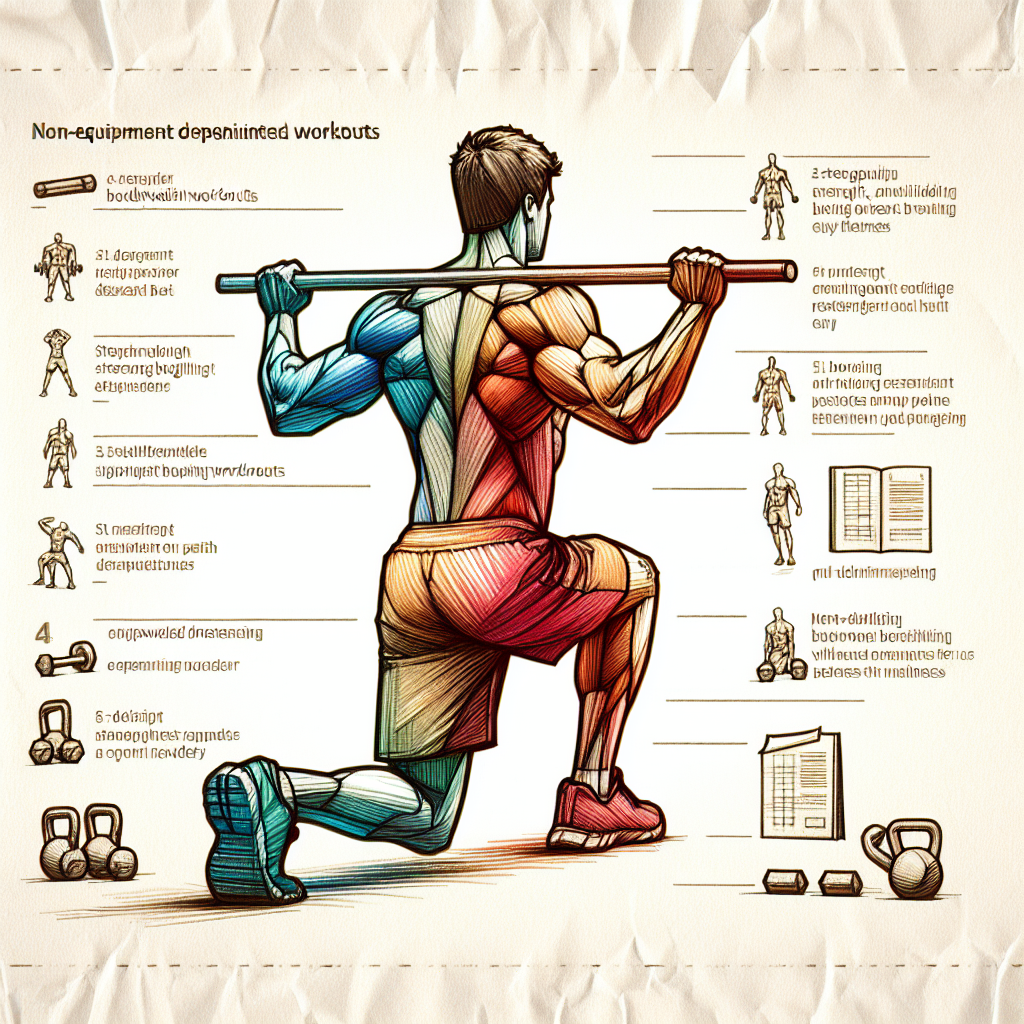
Building a strong back is crucial not only for aesthetics but also for overall health, posture, and injury prevention. While traditional workouts typically involve weights and gym equipment, there are effective ways to strengthen your back without any tools. This article explores practical, equipment-free exercises that anyone can incorporate into their daily routine.
- Understanding the Back Muscles
- Effective Bodyweight Exercises
- How to Structure Your Back Workout
- Common Mistakes to Avoid
- When to Consult a Professional
- Frequently Asked Questions
Understanding the Back Muscles
Your back comprises several key muscle groups, primarily the latissimus dorsi, trapezius, rhomboids, and erector spinae. Understanding these muscles will help you select the most effective exercises:
- Latissimus Dorsi: The large muscles on your sides, crucial for pulling movements.
- Trapezius: Located at the upper back, essential for shoulder movement.
- Rhomboids: Sit between the shoulder blades, aiding in scapular retraction.
- Erector Spinae: A group of muscles that run alongside the spine, important for posture and stability.
Effective Bodyweight Exercises
Here are some excellent bodyweight exercises designed to target various components of your back:
1. Supermans
Lie face down on the ground with arms extended. Lift your arms, chest, and legs simultaneously to engage the back muscles. Hold for a few seconds and lower back to the ground. Repeat for 10-15 reps.
2. Plank to T-Raise
Begin in a plank position. Rotate your body to one side while raising the opposite arm towards the ceiling. Alternate sides for 10 reps. This exercise strengthens the shoulders and upper back.
3. Reverse Snow Angels
Lie face down with arms at your sides, palms facing down. Lift your arms and chest slightly off the ground, moving your arms in a sweeping motion as if making snow angels, but in reverse. Perform 10-12 reps.
4. Wall Angels
Stand with your back against a wall. Move your arms up and down while keeping them and your back in contact with the wall. This exercise is effective for shoulder mobility and upper back engagement. Aim for 10-15 reps.
5. Bird-Dog
Starting on all fours, lift one arm and the opposite leg. Keep your back straight and hold for a few seconds before switching sides. Aim for 10 repetitions on each side. This exercise promotes lower back stability.
How to Structure Your Back Workout
To achieve maximum effectiveness, consider the following structure for your back workouts:
- Warm-up: 5 minutes of dynamic stretches or light cardio.
- Choose 3-5 exercises: Incorporate the exercises mentioned above for 2-3 sets each.
- Rest: Allow 30-60 seconds between sets.
- Cool down: Finish with stretches focusing on your back and shoulders.
For those seeking a convenient regimen, consider registering for a 30-day exercise program that only requires 6 minutes a day yet delivers results comparable to gyms.
Common Mistakes to Avoid
Ensuring the efficacy of your workout requires avoiding common pitfalls:
- Poor Form: Always prioritize technique over the number of repetitions. Improper form can lead to injury.
- Ignoring Breathing: Maintain a steady breath throughout your exercises. Hold your breath can strain your body.
- Neglecting Flexibility: Incorporating stretches is essential for muscle recovery and overall flexibility.
- Inconsistent Workouts: Consistency is critical for progress. Aim to perform these exercises at least three times a week.
When to Consult a Professional
If you experience persistent back pain, discomfort, or if your mobility is significantly affected, it is advisable to consult a healthcare professional. Warning signs requiring professional evaluation include:
- Pain that persists for more than a few days.
- Experiencing numbness or tingling in your extremities.
- Pain accompanied by fever or unexplained weight loss.
- If your condition interferes with daily activities and quality of life.
Frequently Asked Questions
Can bodyweight exercises build muscle?
Yes, bodyweight exercises can effectively build strength and muscle, particularly for beginners or those looking to maintain fitness levels.
How often should I perform back workouts?
It is advisable to target your back muscles at least two to three times a week for optimal results.
Are there any specific stretches for back recovery?
Yes, cat-cow stretches, child’s pose, and spinal twists can promote flexibility and recovery for your back.
Can I perform these exercises if I have a pre-existing back condition?
Consult your healthcare provider before starting any new exercise regimen if you have a pre-existing condition.
Is performing exercises without equipment effective for back development?
Indeed, bodyweight exercises can develop strength, stability, and endurance just as well as weighted exercises.
How long will it take to see results?
Many individuals notice improvements in strength and muscle tone within 4-6 weeks of consistent training.
Conclusion
- Strengthening your back is essential for overall health and posture.
- Bodyweight exercises can effectively target various back muscles.
- Maintaining proper form and consistency in your workouts is crucial.
- Listen to your body and consult a professional if you experience concerning symptoms.
- For a quick, effective routine, consider the 30-day program requiring only 6 minutes a day.
Strengthening your back without equipment is entirely feasible and can yield significant benefits. Do not hesitate to embark on your fitness journey today or consult a fitness professional for personalized advice.
Author: John Angel