
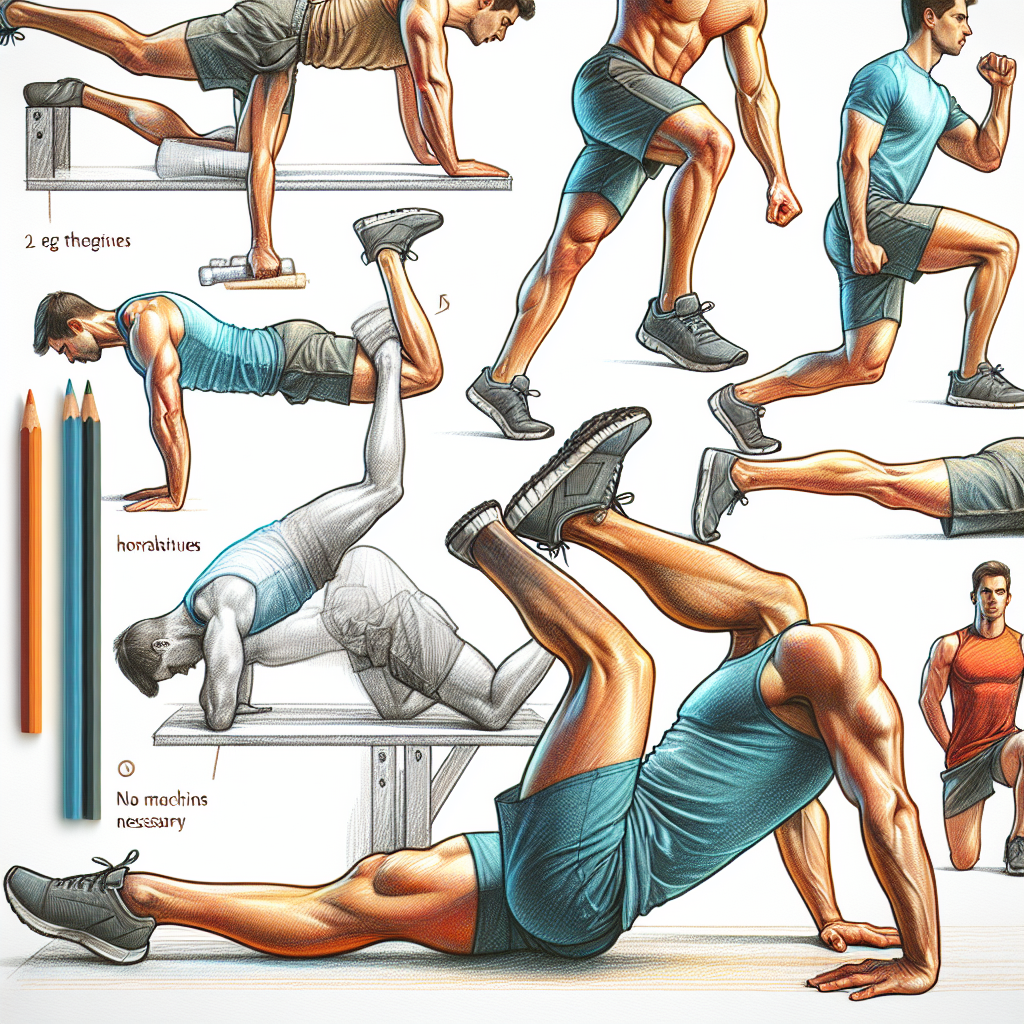
Leg Exercise Without Machines: The Key to Stronger Legs
In an era where gym memberships and complex equipment dominate the fitness landscape, it is vital to recognize that effective leg exercises can be performed without machines. This elegant simplicity not only allows for a more accessible workout but also eliminates barriers such as cost and space. Focusing on bodyweight exercises can yield significant benefits, improving muscle strength, endurance, and flexibility—all fundamental components for overall health. In this article, we delve into various leg exercises, provide practical steps to incorporate them into your routine, and discuss when professional guidance may be necessary.
- Understanding the Importance of Leg Workouts
- Effective Bodyweight Exercises
- Practical Steps to Execute Leg Exercises
- When to Consult a Professional
- Common Myths and Misconceptions
- Frequently Asked Questions
- Conclusion
Understanding the Importance of Leg Workouts
Leg workouts are often undervalued in general fitness regimens despite being crucial for developing a strong foundation. Strong legs facilitate better performance in athletes and everyday activities alike. They support the body’s weight, enhance balance, and contribute to overall mobility. Moreover, focusing on legs promotes better posture and spinal alignment, which can alleviate back pain and improve everyday function. Regularly engaging in leg exercises without machines not only saves time but also enhances muscle engagement across various movements.
Effective Bodyweight Exercises
Squats
Squats are a cornerstone of leg workouts. They effectively target the quadriceps, hamstrings, and glutes. A proper squat engages the core, thus also benefiting overall stability.
Lunges
Lunges work on the same muscle groups as squats but introduce an element of balance and coordination. They can be performed in various directions—forward, backward, or sideways—to engage different leg muscles.
Calf Raises
This exercise targets the muscles in the lower leg. Calf raises can be performed on flat ground or elevated surfaces to increase difficulty and range of motion.
Step-Ups
Using a sturdy surface, step-ups effectively engage the quadriceps and glutes. This exercise simulates functional movement patterns, making it highly relevant for everyday life.
Glute Bridges
This movement is excellent for targeting the glutes and hamstrings. Glute bridges can also improve hip mobility and aid in alleviating lower back tension.
Practical Steps to Execute Leg Exercises
Incorporating leg exercises into your daily routine need not be complicated. Here’s a straightforward plan to get started:
- Choose a space where you feel comfortable, whether indoors or outdoors.
- Warm up with dynamic stretches, such as leg swings and walking lunges, to prepare your muscles.
- Perform 3 sets of 10-15 repetitions for each exercise mentioned above, resting for 30-60 seconds between sets.
- Gradually progress by adding variations, increasing repetitions, or incorporating short bursts of cardio, such as jumping jacks.
- Cool down with gentle stretches focusing on the legs and back to enhance flexibility.
For those looking to simplify their workout routine, consider registering for a 30-day exercise program where you only need to commit 6 minutes a day to effectively strengthen your legs and overall body.
When to Consult a Professional
While most individuals can safely engage in leg exercises without machines, there are instances when professional guidance is advisable. If you experience any of the following, consider consulting a qualified fitness or healthcare professional:
- Persistent pain or discomfort during exercises
- Significant imbalance or loss of mobility
- History of injuries that may affect your ability to perform specific movements
- Questions regarding proper form or technique
Common Myths and Misconceptions
Myth: Bodyweight Exercises Are Not Effective
Contrary to popular belief, bodyweight exercises can lead to substantial strength gains. Unweighted movements often engage multiple muscle groups, making them highly efficient.
Myth: You Can Only Build Muscle in a Gym
Many assume that gym settings are the only way to build muscle. In reality, bodyweight exercises can be equally effective when done correctly with proper progression.
Myth: Flexibility Is Not Necessary
Another common misconception is that flexibility is unimportant. Proper flexibility complements leg strength, enhancing mobility and reducing injury risk.
Frequently Asked Questions
Can I build muscle without weights?
Yes, bodyweight exercises can effectively build muscle by incorporating resistance and proper progression.
How often should I do leg exercises?
It is generally recommended to exercise your legs 2-3 times a week, allowing for recovery in between sessions.
Will bodyweight exercises make me bulky?
Bodyweight exercises are primarily useful for toning and building functional strength, making bulkiness unlikely without specific dietary practices.
Can seniors benefit from leg exercises?
Absolutely. Leg exercises can enhance mobility, balance, and strength in seniors, promoting overall quality of life.
Is it necessary to warm up before exercising?
A proper warm-up is critical to prepare your muscles and minimize the risk of injury.
Can leg exercises aid weight loss?
Leg exercises, particularly when combined with cardiovascular activities, can support weight loss by increasing overall caloric expenditure.
Conclusion
- Leg exercises are essential for overall strength and mobility.
- Bodyweight exercises can be highly effective without the need for machines.
- Implementing a structured approach makes it easy to incorporate leg workouts.
- Consulting with professionals is wise when pain or injury occurs.
- Dispelling common myths can encourage more people to engage in leg workouts.
To enhance your fitness journey and discover a more efficient approach to leg exercises, consider exploring a 30-day exercise program. Start today and feel the difference!
Author: John Angel