
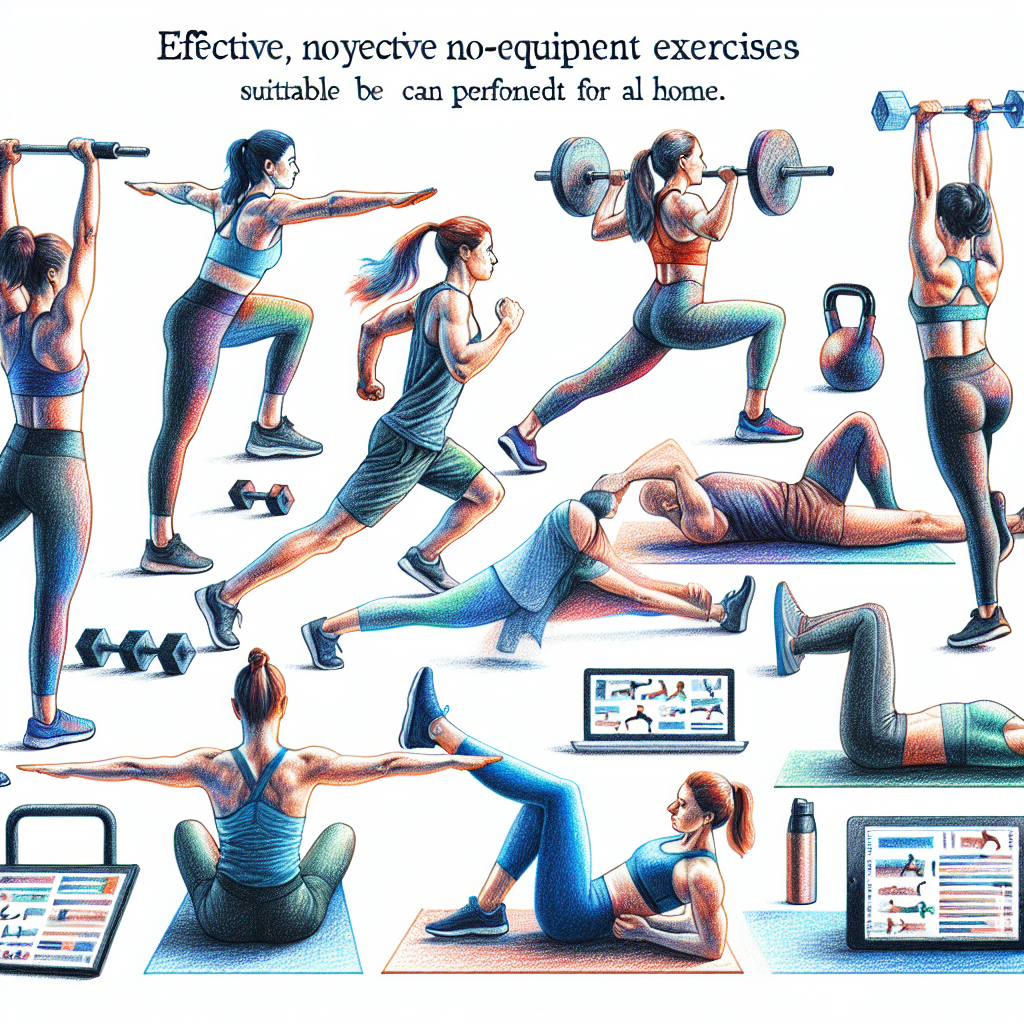
Introduction
In an increasingly busy world, finding time for exercise can be a challenge. However, the idea that one needs equipment or a gym membership to achieve fitness goals is a common misconception. No equipment exercises provide an accessible and effective way to improve physical well-being, requiring only your body weight and a small amount of time. This article will explore the benefits of bodyweight workouts, provide practical exercise routines, and highlight how just six minutes of daily exercise can yield significant results. For those interested in a structured approach, consider joining a 30-day exercise program that emphasizes simplicity and efficiency.
- Understanding the Benefits of No Equipment Exercises
- Essential Bodyweight Exercises
- Creating a Structured Workout Plan
- Common Myths and Mistakes
- When to Consult a Professional
- Frequently Asked Questions
- Conclusion and Summary
Understanding the Benefits of No Equipment Exercises
No equipment exercises offer numerous benefits suitable for individuals of all fitness levels. Here are some key advantages:
- Accessibility: These exercises can be performed anywhere, whether at home, in a park, or during a break at work.
- Cost-effectiveness: Without the need for gym memberships or expensive equipment, bodyweight workouts are budget-friendly.
- Flexibility: You can easily fit short workouts into your busy schedule without the constraints of gym hours.
- Functional Strength: These exercises often mirror everyday movements, improving overall functional fitness.
- Reduced Risk of Injury: Lower resistance levels can contribute to a decreased likelihood of injury, especially for beginners.
Essential Bodyweight Exercises
Implementing a variety of bodyweight exercises ensures a balanced workout routine. Here are some foundational movements:
Squats
Squats work on the lower body, particularly the quads, hamstrings, and glutes.
Push-ups
Push-ups are excellent for strengthening the chest, shoulders, and triceps.
Lunges
Lunges promote balance and strength in the legs and core.
Planks
Planks engage the entire core and promote stability.
Burpees
This full-body exercise enhances cardiovascular health and builds endurance.
Creating a Structured Workout Plan
A well-structured workout plan allows for progressive overload and consistent improvement. Here is a simple guideline:
- Warm-up: Spend the first 1-2 minutes performing dynamic stretches or light movements like arm circles, leg swings, or jogging in place.
- Core Routine (4 minutes): Choose 2-3 exercises (e.g., squats, push-ups, planks) and aim for 30 seconds of work followed by 15 seconds of rest. Repeat until the 4 minutes are up.
- Cool-down: Relax your muscles with 1-2 minutes of static stretching, focusing on the areas worked.
When to Consult a Professional
While no equipment exercises are generally safe, the following scenarios warrant a consultation with a healthcare or fitness professional:
- If you experience persistent pain during or after exercising.
- For individuals with pre-existing health conditions, such as heart disease or joint issues.
- If you are unsure of proper exercise techniques that may lead to injury.
- For personalized workout plans to address specific fitness goals.
Common Myths and Mistakes
Understanding the common myths surrounding bodyweight exercises can improve effectiveness:
- Myth: Bodyweight exercises are not challenging. Fact: These exercises can be modified to increase intensity and provide substantial challenges.
- Mistake: Neglecting form. Always prioritize correct form to avoid injuries.
- Myth: You can’t build muscle without weights. Fact: Consistent bodyweight training can build muscle effectively, especially for beginners.
- Mistake: Lack of variety. Failing to incorporate different exercises can lead to plateaus. Regularly change your routine to keep improving.
Frequently Asked Questions
Can I lose weight with no equipment exercises?
Yes, bodyweight exercises can contribute to weight loss when combined with a healthy diet and adequate caloric deficit.
How often should I do no equipment exercises?
Aim for at least 3-5 times a week for optimal results, allowing time for recovery.
Can beginners do these exercises?
Absolutely; bodyweight exercises can be modified to suit beginners while helping them build strength and confidence.
How long will it take to see results?
Results vary by individual, but consistent effort can yield visible progress within 4-6 weeks.
Are no equipment exercises sufficient for building muscle?
Yes, when performed with intensity and variation, bodyweight exercises are effective for building and maintaining muscle mass.
What should I do if I experience pain during these exercises?
Stop immediately and consult with a healthcare professional if you experience sharp or persistent pain.
Conclusion and Summary
- No equipment exercises are accessible, cost-effective, and flexible.
- Variety is essential for a balanced workout routine; include different exercises for better results.
- Safeguard against injury by focusing on form and recognizing when to consult a professional.
- Dispelling common myths helps to clarify the efficacy of bodyweight workouts.
- Regular practice can lead to significant health and fitness improvements.
For anyone looking to improve their fitness efficiently, consider challenging yourself to join a 30-day exercise program where you exercise for just six minutes a day but achieve results similar to those from a gym. Embrace the simplicity of no equipment workouts and transform your routine today!
Author: John Angel