
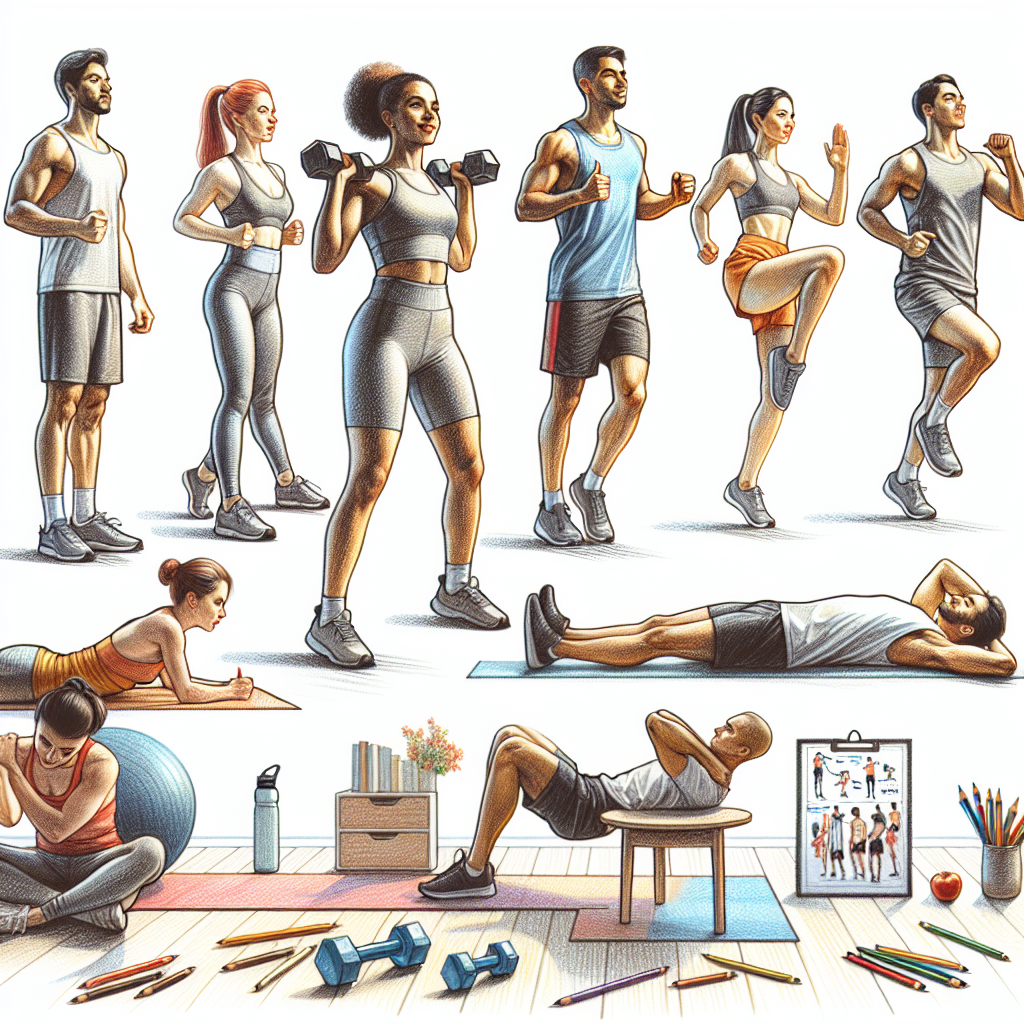
Strength Training at Home Without Equipment for Beginners
Strength training is a fundamental aspect of physical fitness that can be accomplished effectively at home, even without any equipment. For beginners, starting a strength training regimen can feel daunting; however, the convenience and accessibility of home workouts can make it not only beneficial but also enjoyable. This article will guide you through the essentials of strength training at home, providing practical exercises and valuable tips to kickstart your fitness journey.
- Understanding Bodyweight Exercises
- Creating a Workout Routine
- Best Exercises for Beginners
- Common Mistakes and Misconceptions
- When to Consult a Professional
- FAQs
- Conclusion
Understanding Bodyweight Exercises
Bodyweight exercises use your own weight as resistance, making them an ideal choice for beginners. These exercises are effective in building strength, improving coordination, and enhancing flexibility without requiring any additional items. They can be performed anywhere, making them highly versatile.
Examples of Bodyweight Exercises
- Push-ups
- Squats
- Planks
- Lunges
- Burpees
Each of these exercises targets multiple muscle groups, allowing for a comprehensive workout. Moreover, they can be modified to suit varying fitness levels, enabling beginners to ease into the routine safely.
Creating a Workout Routine
Establishing a structured workout plan is critical for consistency and progress. A simple routine can be tailored to fit your schedule, and even brief sessions can yield significant results. For beginners, focusing on full-body workouts 2 to 3 times a week is advisable.
Sample Weekly Routine
- Monday:
- Push-ups: 3 sets of 5-10 reps
- Bodyweight Squats: 3 sets of 10-15 reps
- Plank: 3 sets of 20-30 seconds
- Wednesday:
- Lunges: 3 sets of 8-10 reps (each leg)
- Burpees: 3 sets of 5-10 reps
- Side Planks: 3 sets of 15-30 seconds (each side)
- Friday:
- Repeat Monday’s workout
This routine allows your body to recover while still engaging in regular strength training, which is essential for beginners.
Best Exercises for Beginners
Here are five effective strength training exercises to incorporate into your routine, along with their benefits:
- Push-ups: Strengthen the chest, shoulders, and triceps.
- Squats: Target the lower body, focusing on quads, hamstrings, and glutes.
- Planks: Improve core stability and strength.
- Lunges: Enhance balance and coordination while working the legs.
- Burpees: Provide a full-body workout while improving cardiovascular fitness.
Integrating these exercises can lead to improved strength and overall fitness, setting a solid foundation for future progress.
Common Mistakes and Misconceptions
Even beginners may encounter some misconceptions regarding strength training. Here are common mistakes to avoid:
- Neglecting Form: Proper form is crucial to prevent injuries and maximize effectiveness. Beginners should prioritize learning correct techniques.
- Skipping Warm-ups: Warm-ups are essential to prepare the muscles for exertion and reduce injury risk.
- Overtraining: It’s vital to allow time for recovery between workouts, especially when starting.
- Believing All Exercises Are Equal: Incorporating a mix of exercises can prevent plateaus and enhance overall fitness.
Understanding these common pitfalls can help beginners navigate their strength training journey more effectively.
When to Consult a Professional
Consulting a fitness professional may be necessary under certain conditions:
- If you experience persistent pain or discomfort during workouts.
- If you have a pre-existing medical condition that may affect your exercise routine.
- If you are unsure about the proper technique for various exercises.
- If you’re looking to achieve specific fitness goals that require personalized guidance.
Engaging with a qualified trainer can provide tailored advice and ensure safety during workouts.
FAQs
What are bodyweight exercises?
Bodyweight exercises utilize your own body weight as resistance. They are effective for strength training and can be performed anywhere.
How often should I do strength training at home?
Beginners can benefit from performing strength training 2 to 3 times a week, allowing for recovery days in between sessions.
Can I gain muscle without weights?
Yes, bodyweight exercises can effectively build muscle and strength without any equipment.
What is a good warm-up before starting strength training?
A good warm-up includes dynamic stretches, such as arm circles, leg swings, and gentle jogging, to prepare the body for exertion.
How long should my workouts be?
For beginners, workouts as short as 20-30 minutes can be effective, especially when focused on high-quality movements.
Is it okay to feel sore after workouts?
Mild soreness is normal after strength training, especially for beginners. However, significant pain could indicate injury, in which case you should consult a professional.
Conclusion
- Strength training at home is feasible for beginners using bodyweight exercises.
- A structured routine helps establish consistency and ensures progress.
- Learning proper techniques is essential to prevent injuries.
- Variety in exercises keeps workouts engaging and effective.
- Consult a professional if you encounter persistent issues or seek personalized guidance.
As you embark on your strength training journey, consider joining a free 30-day exercise program where you only need to dedicate 6 minutes each day to see results comparable to a gym routine: Sign up here. Remember, consistency and proper form are key to success.
Author: John Angel