
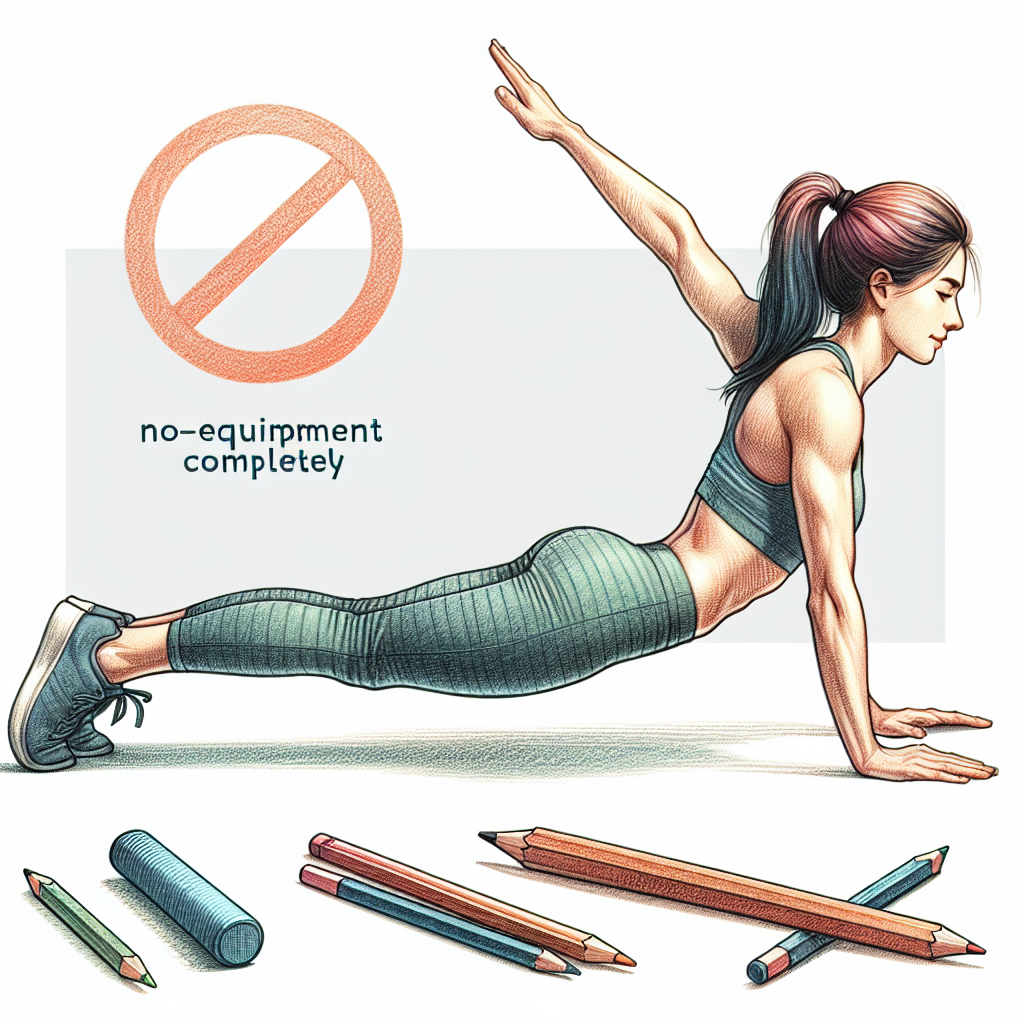
Workout Plan with No Equipment
In today’s fast-paced world, finding time to visit a gym or invest in expensive workout equipment can be challenging. Fortunately, an effective workout plan can be achieved without any equipment, utilizing the body’s own weight to build strength, endurance, and flexibility. This article will guide you through a comprehensive no-equipment workout plan that can deliver impressive results and fit seamlessly into your daily routine.
- Understanding Bodyweight Exercises
- Recommended No-Equipment Workout Routine
- Benefits of Working Out Without Equipment
- Common Myths and Mistakes
- When to Consult a Professional
- FAQ
- Conclusion
Understanding Bodyweight Exercises
Bodyweight exercises are physical activities that utilize an individual’s weight as resistance against gravity. These exercises offer a variety of benefits, including improved muscle tone, increased flexibility, and enhanced cardiovascular fitness. Furthermore, because they require no equipment, bodyweight exercises are highly accessible to individuals of all fitness levels.
The Fundamentals of Body Weight Training
To effectively engage in bodyweight training, it is essential to understand the following key principles:
- Form and Technique: Focus on maintaining proper form to maximize effectiveness and reduce the risk of injury.
- Progression: Start at an easier level and gradually increase the difficulty by adding repetitions, sets, or advanced variations.
- Consistency: Regular exercise is critical for achieving noticeable results.
Recommended No-Equipment Workout Routine
The following workout routine targets multiple muscle groups and can be completed in a short amount of time. Aim to perform each exercise for 30 seconds, followed by a 30-second rest. Repeat the circuit 2-3 times, depending on your fitness level.
- Push-Ups: Targets the chest, shoulders, and triceps.
- Bodyweight Squats: Engages the quads, hamstrings, and glutes.
- Plank: Strengthens the core and stabilizing muscles.
- Jumping Jacks: Improves cardiovascular fitness and coordination.
- Lunges: Works the legs and helps with balance.
- Burpees: A full-body exercise that builds power and endurance.
For an added boost, consider enrolling in a free 30-day exercise program where you can achieve results in just 6 minutes a day, maximizing your time and effort without equipment. You can register for this program here.
Benefits of Working Out Without Equipment
Engaging in a no-equipment workout plan comes with numerous advantages:
- Accessibility: No need for a gym membership or equipment purchase.
- Flexibility: Exercise anywhere—at home, in a park, or while traveling.
- Focus on Form: Enhances body awareness and improves technique, often missed when using weights.
- Cost-Effective: Allows you to stay fit without financial burden.
Common Myths and Mistakes
Despite the numerous benefits of bodyweight training, several misconceptions can deter individuals from engaging in these exercises:
Myth 1: Bodyweight Exercises Are Ineffective for Building Strength
While weights can enhance muscle growth, bodyweight exercises can also effectively build strength and endurance when performed correctly and progressively.
Myth 2: You Need a Gym for Serious Workouts
A functional and effective workout can be achieved anywhere, as long as you commit to your routine.
Myth 3: Bodyweight Workouts Are Only for Beginners
Bodyweight exercises can be scaled for any fitness level, from beginners to advanced trainers, by adjusting the intensity.
Common Mistakes
Some common mistakes include neglecting the importance of warm-ups, rushing through workouts without proper form, and not tracking progress. Being aware of these pitfalls enables individuals to maximize their workout effectiveness.
When to Consult a Professional
While starting a workout plan is beneficial for most individuals, there are instances when professional guidance should be sought:
- If you experience persistent pain or discomfort during exercises.
- If you have underlying health conditions such as heart disease or joint issues.
- If you are unsure about the suitability of specific exercises for your fitness level.
In such cases, consulting with a healthcare provider or a certified fitness professional may provide valuable insights and tailored recommendations.
FAQ
1. How often should I do bodyweight exercises?
It is recommended to engage in bodyweight exercises at least three times per week for optimal results.
2. Can beginners do bodyweight exercises?
Yes, bodyweight exercises can easily be modified to suit beginners as well as advanced individuals.
3. How can I track my progress?
Keep a workout journal or use a fitness app to record repetitions, sets, and any personal achievements in your workouts.
4. Are bodyweight exercises good for weight loss?
Bodyweight exercises can indeed support weight loss by increasing calorie expenditure and improving overall fitness.
5. What should I do if I can’t do a full push-up?
You can modify the push-up by performing it on your knees or against a wall until you build enough strength to do a full push-up.
6. Do I need to warm-up before a bodyweight workout?
Yes, warming up is crucial to prepare your muscles and reduce the risk of injury.
Conclusion
- Bodyweight exercises are a versatile and effective way to stay fit without equipment.
- Consistency and proper technique are crucial for achieving results.
- Common myths about bodyweight training often limit people’s willingness to engage in this form of fitness.
- Consult with health professionals if you experience discomfort or have underlying health conditions.
- Consider incorporating a structured program to guide your workouts and ensure results.
To start your journey towards a healthier lifestyle today, consider joining a 30-day workout program that emphasizes efficiency, allowing you to exercise for just 6 minutes daily and achieve significant results. Register here to learn more.
Author: John Angel