
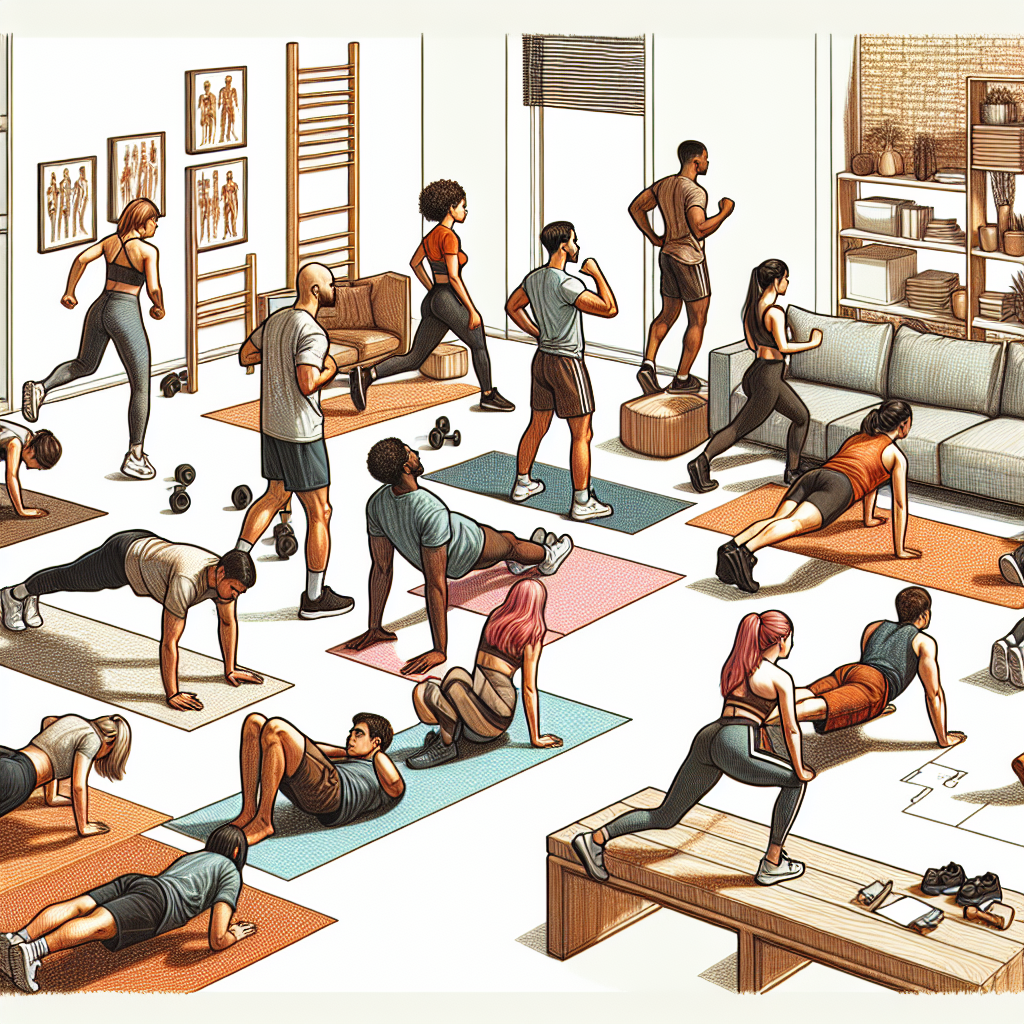
Workouts to Do at Home Without Equipment
Staying fit does not necessitate expensive gym memberships or elaborate equipment. Home workouts provide flexibility, convenience, and the ability to tailor routines according to personal preferences. This article explores effective bodyweight exercises that can be performed in the comfort of your home. Additionally, we’ll discuss ways to maximize results in minimal time, including an efficient six-minute exercise program that can lead to significant improvements in fitness levels.
- Introduction
- Benefits of Bodyweight Workouts
- Essential Exercises for Home Fitness
- Creating a Structured Routine
- When to Consult a Professional
- Common Myths About Home Workouts
- Frequently Asked Questions
- Conclusion
Benefits of Bodyweight Workouts
Bodyweight workouts offer a myriad of advantages, making them an ideal choice for any fitness enthusiast. Here are some key benefits:
- Convenience: No travel time or gym hours limit your workout flexibility.
- Cost-effective: No need for costly equipment; your body is your gym.
- Versatility: Numerous exercises can target different muscle groups simultaneously.
- Improved Functional Fitness: Enhances everyday movement patterns, promoting better overall health.
Essential Exercises for Home Fitness
When considering a home workout routine, certain bodyweight exercises stand out for their effectiveness. Below is a list of key exercises that can be incorporated into any fitness plan.
1. Push-Ups
Targeting the chest, shoulders, and triceps, push-ups are foundational. To perform:
- Start in a plank position with hands shoulder-width apart.
- Lower your body until your chest nearly touches the floor.
- Push back to the starting position.
2. Squats
Squats primarily engage the legs and glutes. To do a squat:
- Stand with feet shoulder-width apart.
- Lower your body as if sitting back into a chair, keeping your chest up.
- Return to standing.
3. Plank
The plank is excellent for core strength. Follow these steps:
- Begin in a forearm plank position.
- Hold your body in a straight line from head to heels.
- Maintain the position for as long as possible.
4. Lunges
Lunges work the legs and improve balance. To execute:
- Stand upright, then take a step forward with one leg.
- Lower your hips until both knees are bent at about a 90-degree angle.
- Return to the starting position and alternate legs.
5. Burpees
Burpees combine strength and cardio, maximizing calorie burn. To perform:
- Begin in a standing position.
- Drop into a squat, placing hands on the floor, and jump feet back into a plank.
- Perform a push-up, jump feet back towards hands, and leap into the air.
Creating a Structured Routine
A well-structured workout routine can amplify the effectiveness of your home exercises. Consider the following steps to design a balanced fitness program:
- Frequency: Aim for at least three to five workout sessions per week.
- Variety: Include exercises targeting different muscle groups to avoid plateaus.
- Intensity: Gradually increase exercise complexity or duration as you progress.
- Rest: Allow for recovery days to prevent injury.
The optional 30-day exercise program at this link emphasizes just six minutes of daily exercise, yet delivers results comparable to traditional gym workouts.
When to Consult a Professional
Although home workouts can be highly effective, certain circumstances warrant the attention of a professional. Seek guidance from a fitness expert or healthcare provider if:
- You have existing medical conditions or concerns.
- You experience persistent pain or discomfort during exercise.
- You are unsure how to perform an exercise safely and effectively.
- You wish to tailor a fitness program for specific goals.
Common Myths About Home Workouts
Various misconceptions about home workouts may hinder your fitness journey. Here are some prevalent myths addressed:
- Myth 1: Bodyweight exercises are less effective than weight training.
- Myth 2: You need gym equipment to build muscle.
- Myth 3: Home workouts are only for beginners.
- Myth 4: They are not suitable for weight loss.
Frequently Asked Questions
Can I get fit without any equipment?
Yes, bodyweight exercises can be extremely effective for building strength and endurance.
How long should I work out at home?
Ideally, aim for at least 20 to 30 minutes, depending on your fitness level.
Will this routine help me lose weight?
Combined with a balanced diet, bodyweight exercises can promote weight loss.
How do I stay motivated while working out at home?
Set specific goals, track your progress, and incorporate variety into your workouts.
Can beginners do bodyweight workouts?
Absolutely, everyone from beginners to advanced fitness enthusiasts can benefit from bodyweight exercises.
How often should I change my workout routine?
To prevent plateaus, consider updating your routine every 4 to 6 weeks.
Conclusion
- Bodyweight workouts provide a convenient and cost-effective fitness solution.
- Essential exercises like push-ups, squats, and planks can develop strength and endurance.
- A structured routine enhances the effectiveness of home workouts.
- Consult a professional if experiencing pain or uncertainty regarding exercises.
- Dispelling myths surrounding home fitness can boost confidence and motivation.
Take charge of your fitness journey today. Embrace the freedom of working out at home and consider registering for the free 30-day exercise program that promises results in just six minutes daily. Start transforming your health and well-being effectively!
Author: John Angel