
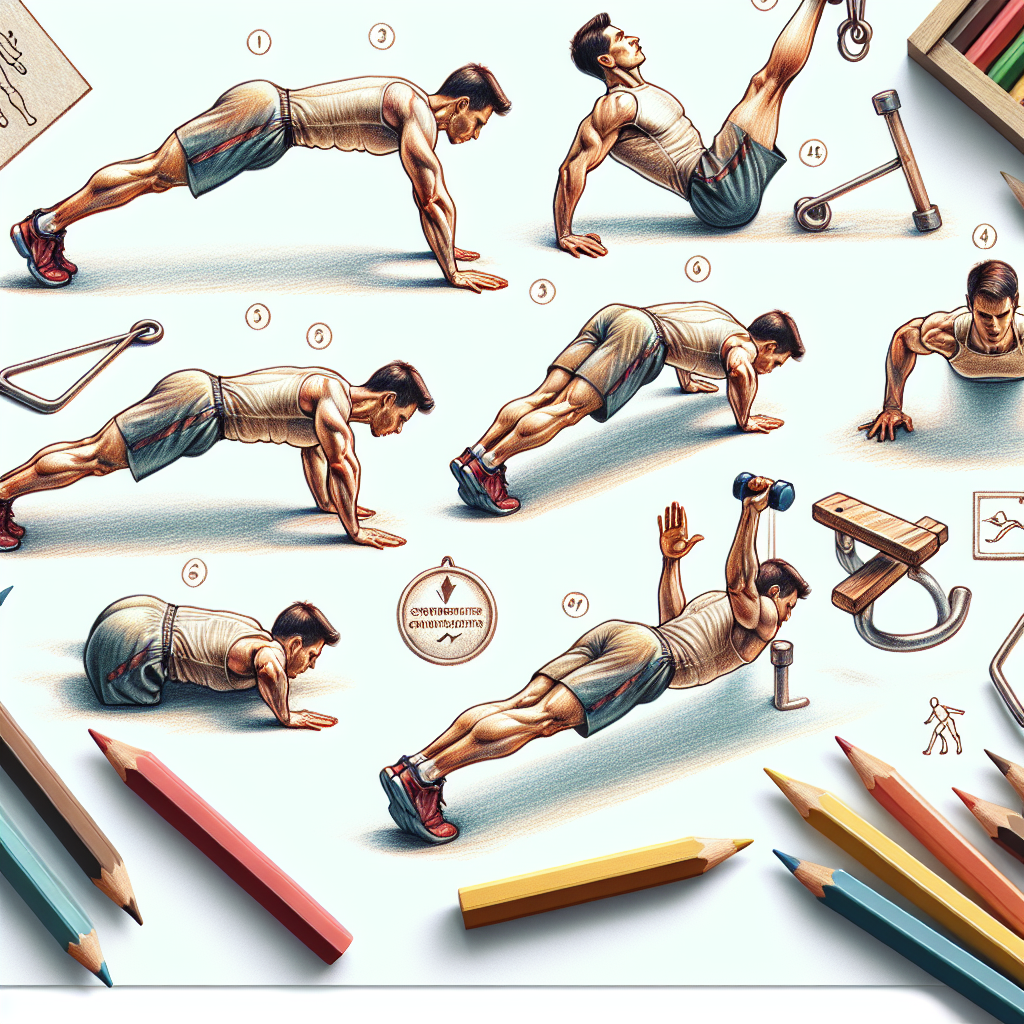
In today’s fast-paced world, finding time and resources for a regular workout can often feel overwhelming. Fortunately, engaging in effective workouts without any equipment is entirely achievable and offers numerous health benefits. These workouts can be performed anywhere, at any time, making them a convenient solution for busy individuals. In this article, we will explore various bodyweight exercises, their benefits, and how to integrate them into your daily routine for optimal results.
- Introduction
- The Benefits of No-Equipment Workouts
- Essential Bodyweight Exercises
- Creating a Structured Workout Routine
- Common Mistakes to Avoid
- Consulting a Professional
- Frequently Asked Questions
- Conclusion
The Benefits of No-Equipment Workouts
No-equipment workouts provide exceptional flexibility and convenience. Here are several advantages:
- Accessibility: These workouts can be performed anywhere, eliminating the need for a gym membership.
- Cost-effective: You save money since no equipment is required.
- Time-efficient: Quick workouts can be seamlessly inserted into a busy schedule.
- Improved Functionality: Many exercises enhance overall body strength and stability, which is beneficial for daily activities.
- Progress Tracking: It is easy to monitor your advancement through repetitions and durations.
Essential Bodyweight Exercises
Incorporating a variety of exercises into your routine can help develop strength, flexibility, and stamina. Here are some essential bodyweight exercises:
1. Push-Ups
Push-ups are excellent for upper body strength, targeting the chest, shoulders, and triceps. Start in a plank position and lower your body until your chest nearly touches the floor, then push back up.
2. Squats
This fundamental exercise improves lower body strength, particularly the quadriceps and hamstrings. Stand with feet hip-width apart, bend your knees, and lower your body as if sitting in a chair, then return to standing.
3. Planks
Planks engage the core muscles effectively. Maintain a position similar to a push-up, keeping your body straight from head to heels for as long as possible.
4. Lunges
Lunges focus on legs and glutes. Step forward with one leg, lowering your hips until both knees are bent at about a 90-degree angle, then return to the starting position.
5. Mountain Climbers
This dynamic exercise elevates heart rate while working the core, chest, and legs. Start in a push-up position and rapidly draw one knee towards your chest, alternating legs.
6. Burpees
A full-body exercise that combines squats, push-ups, and jumps. Start in a standing position, move into a squat and kick your feet back into a push-up position, return to the squat, and leap upwards.
Creating a Structured Workout Routine
Achieving optimal results requires a structured approach to your workouts. Follow these outlined steps:
- Set Goals: Determine realistic fitness goals, such as increasing strength or improving endurance.
- Schedule Workouts: Designate specific days and times for your workouts to build consistency.
- Warm-up: Always include a warm-up session to prepare your muscles and prevent injury. Simple mobility exercises suffice.
- Mix Exercises: Combine various exercises to engage different muscle groups effectively.
- Rest Days: Allow time for recovery to promote muscle growth and repair.
- Track Progress: Maintain a log of your exercises, duration, and repetitions to visualize your improvements.
For those seeking a minimal commitment, consider registering for a 30-day exercise program, where you only need to commit six minutes a day for results equivalent to traditional gym workouts.
Common Mistakes to Avoid
When starting a no-equipment workout routine, avoid these common pitfalls:
- Poor Form: Incorrect exercise form can lead to injuries. Focus on technique rather than speed or quantity.
- Neglecting Balance: Ensure your routine includes exercises for all muscle groups to prevent imbalances.
- Skipping Warm-ups: Warm-ups are crucial for reducing injury risk. Always allocate time for them.
- Not Listening to Your Body: If you feel pain, adjust your routine or seek professional guidance.
- Inconsistency: Regularity is key. Create a routine that fits into your lifestyle to maintain progress.
When to Consult a Professional
While no-equipment workouts are generally safe, certain situations may warrant professional advice:
- If you experience persistent pain during or after exercise.
- If you have pre-existing health conditions that could be exacerbated by physical activity.
- If you are unsure about your exercise form or routine.
- If you’re aiming for specific fitness goals but are not seeing results.
- If you are new to exercise, and want guidance on best practices.
Frequently Asked Questions
Can no-equipment workouts be as effective as gym workouts?
Yes, when performed correctly and with sufficient intensity, no-equipment workouts can yield comparable results to traditional gym workouts.
How long should I work out without equipment?
Even short workouts of 10 to 15 minutes can be effective, especially if they incorporate high-intensity intervals or circuit training.
Are bodyweight exercises suitable for beginners?
Absolutely. Bodyweight exercises can be adapted to any fitness level, making them great for beginners.
How often should I do no-equipment workouts?
Aim for at least three to four times a week to see significant improvements in your fitness level.
Can I lose weight with no-equipment workouts?
Yes, when combined with a balanced diet, bodyweight workouts can contribute to weight loss.
Do I need to warm-up before bodyweight exercises?
Yes, warming up is crucial to prepare your body for exercise and reduce the risk of injury.
Conclusion
- No-equipment workouts are an accessible and efficient way to improve your fitness.
- Bodyweight exercises can build strength, flexibility, and stamina.
- Creating a structured routine enhances consistency and results.
- Awareness of common mistakes can prevent injury and promote success.
- Consulting a professional is advisable when experiencing pain or unsure about exercise form.
To embark on your fitness journey, consider joining a 30-day exercise program that requires just six minutes of dedication each day for impactful results.
Author: John Angel