Full Body Workout Plan Without Equipment
Embarking on a fitness journey without the need for gym equipment is both empowering and practical. A full-body workout plan that relies solely on bodyweight exercises can offer numerous benefits, including enhanced cardiovascular health, improved muscle tone, and increased flexibility, all while fitting seamlessly into a busy lifestyle. This article outlines an effective workout routine you can perform anywhere, along with guidance on proper technique and a few tips to keep you motivated.
- Understanding Bodyweight Training
- Essential Warm-Up and Cool Down
- Complete Bodyweight Workout Plan
- Common Myths About Bodyweight Training
- When to Consult a Professional
- Frequently Asked Questions
- Conclusion
Understanding Bodyweight Training
Bodyweight training refers to exercises that use the individual’s own weight as resistance. This form of exercise utilizes muscle groups effectively, leading to strength and endurance improvements without the need for traditional gym equipment. Exercises can range from simple movements such as squats and push-ups to more complex routines that engage multiple muscle groups simultaneously. The versatility of bodyweight training makes it accessible to people of all fitness levels.
Essential Warm-Up and Cool Down
Beginning and concluding your workouts with proper warm-ups and cool-downs is crucial for injury prevention and recovery. A warm-up increases blood flow to the muscles, enhances flexibility, and prepares the body for exertion. Similarly, a cool down helps the body transition back to a resting state and can reduce muscle soreness.
Warm-Up Routine
- Jumping jacks – 1 minute
- Arm circles – 30 seconds (15 seconds in each direction)
- Leg swings – 30 seconds per leg
- Bodyweight squats – 1 minute
Cool Down Routine
- Standing quadriceps stretch – 30 seconds per leg
- Hamstring stretch – 30 seconds per leg
- Child’s pose – 1 minute
- Deep breathing – 1 minute
Complete Bodyweight Workout Plan
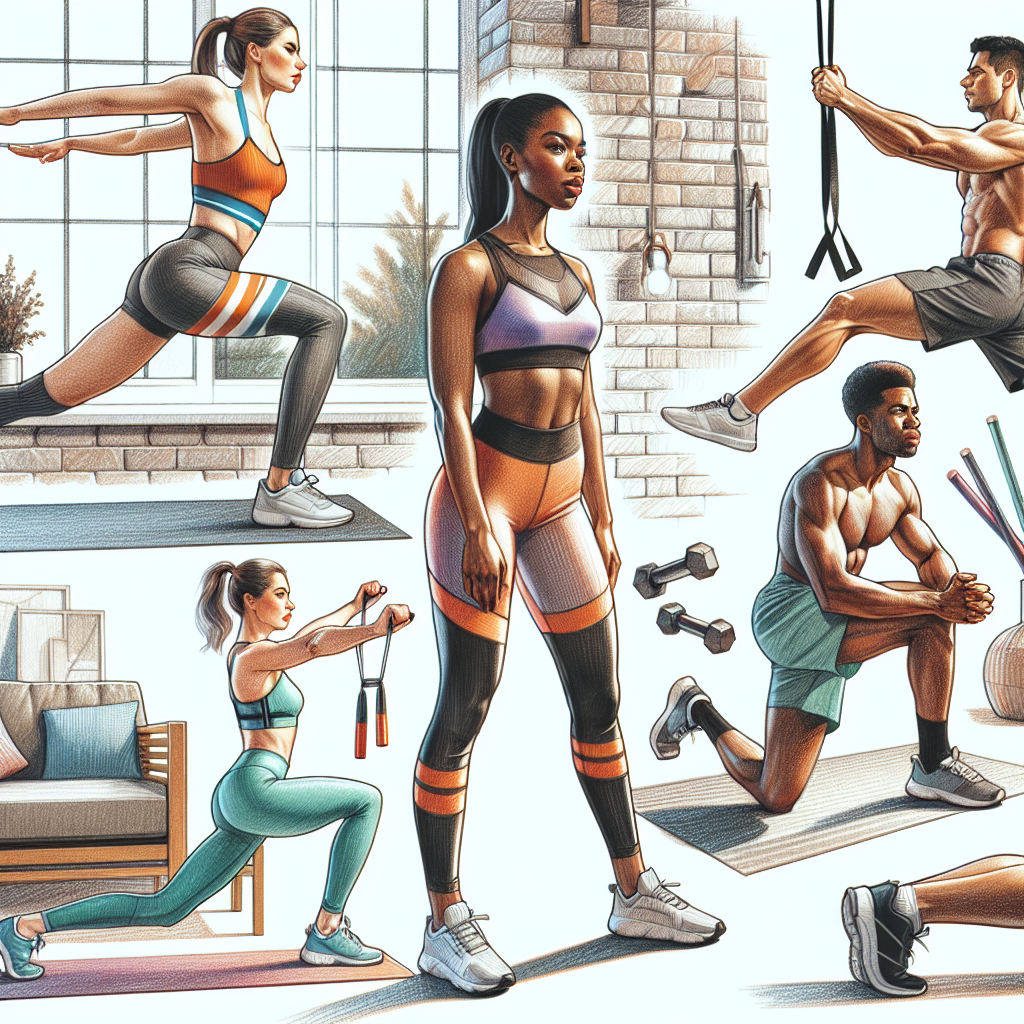
The following is a comprehensive bodyweight workout plan that targets all major muscle groups. This plan can be performed three to four times a week. Each exercise should be performed in sets of 10 to 15 repetitions, depending on your fitness level, followed by a rest period of 30 seconds to one minute between sets.
Workout Routine
- Push-Ups: Engages chest, shoulders, and triceps.
- Bodyweight Squats: Targets quads, hamstrings, and glutes.
- Plank: Strengthens core and stabilizer muscles.
- Lunges: Focuses on legs and glutes, improving balance.
- Bicycle Crunches: Enhances core and obliques strength.
- Burpees: Full-body workout that boosts cardiovascular fitness.
For those who seek an effective short workout, consider a free registration to a 30-day exercise program where you only need to commit to six minutes of daily exercise but achieve results comparable to a traditional gym workout. Explore this opportunity [here](https://app.revolucnicviceni.cz/en/registration).
Common Myths About Bodyweight Training
Despite its growing popularity, numerous misconceptions exist surrounding bodyweight training. Addressing these myths can encourage more individuals to explore its benefits.
Myth: Bodyweight Exercises Are Only for Beginners
In reality, bodyweight training can be tailored to advanced fitness levels. With the inclusion of variations and progressive overload, even seasoned athletes can find significant benefits.
Myth: You Can’t Build Muscle Without Weights
Bodyweight training can effectively build muscle through high-intensity workouts and varied movement patterns that continually challenge the muscles.
Myth: Bodyweight Exercises Are Ineffective For Weight Loss
When performed at higher intensities and combined with a healthy diet, bodyweight workouts can be highly effective for weight loss and overall body transformation.
When to Consult a Professional
Consulting a fitness professional or healthcare provider may be advisable under certain conditions. Consider seeking guidance if you experience:
- Persistent pain during exercises
- Previous injuries that might be aggravated by movement
- Uncertainty regarding proper technique that could lead to injury
- A significant change in health status or fitness level
Frequently Asked Questions
Can I get results from bodyweight exercises?
Yes, bodyweight exercises can produce substantial strength, endurance, and flexibility improvements when performed consistently.
How often should I perform bodyweight workouts?
Aiming for three to four times a week is ideal, ensuring adequate rest between sessions for recovery.
What is the best way to progress in bodyweight training?
Progression can be achieved by increasing repetitions, reducing rest time, or incorporating more advanced variations of exercises.
Are bodyweight workouts suitable for all fitness levels?
Absolutely. Bodyweight exercises can be customized for beginners as well as advanced athletes.
How long should a bodyweight workout last?
Workout durations can vary, but targeting around 30 to 45 minutes is effective for most individuals.
What if I don’t have time for a long workout?
Even short workouts, such as the six-minute daily exercises in the mentioned program, can yield significant results when performed consistently.
Conclusion
- Bodyweight workouts are effective for building strength and improving fitness.
- A comprehensive warm-up and cool-down routine is vital to performance and recovery.
- Many myths surrounding bodyweight training can hinder its adoption.
- Consult a professional if you have specific health concerns or injuries.
- Consistency and progression are key to achieving results.
Embark on your fitness journey today by exploring various bodyweight exercises. Remember, the commitment to a daily routine—even as little as six minutes—can transform your fitness level. Consider taking advantage of the free registration for a unique 30-day exercise program [here](https://app.revolucnicviceni.cz/en/registration).
Author: John Angel