
Beginner Back Workout No Equipment
Developing a strong and flexible back is essential for overall physical health and well-being. A well-rounded back workout can enhance posture, alleviate back pain, and improve performance in various activities. For beginners, performing back exercises without equipment can be both effective and accessible. This article provides a comprehensive guide to help you initiate your back-strengthening journey.
- Understanding the Importance of Back Workouts
- Warm-Up: Preparing Your Body
- Beginner Back Exercises
- Cooling Down and Stretching
- Recognizing When to Consult a Professional
- Mistakes to Avoid in Your Back Workout
- FAQ
- Conclusion
Understanding the Importance of Back Workouts
The back consists of numerous muscles that are crucial for maintaining balance and supporting day-to-day activities. Strong back muscles are vital for a strong core, which can prevent injuries and improve overall physical performance. Engaging in regular back workouts, even without equipment, helps improve posture, decreases the risk of pain, and enhances your capacity to perform various movements safely.
Warm-Up: Preparing Your Body
Before embarking on any workout, it is essential to warm up your muscles and joints to prevent injuries. A proper warm-up increases blood flow, enhances flexibility, and readies the body for physical activity. Here are a few simple warm-up exercises:
- Arm Circles: Stand tall and extend your arms to the side. Make small circles for 30 seconds, then switch directions.
- Torso Twists: Stand with your feet shoulder-width apart. Rotate your torso to the left, then to the right, repeating for 30 seconds.
- Cat-Cow Stretch: On your hands and knees, alternate between arching your back and sinking your belly towards the floor. Repeat this for 10 rounds.
Beginner Back Exercises
The following exercises can be performed without any equipment and are suitable for beginners. Aim to perform 10–15 repetitions of each exercise, depending on your fitness level:
1. Superman Exercise
Lie face down on the floor with your arms extended in front of you. Simultaneously lift your arms, chest, and legs off the ground, holding for a few seconds before lowering. This helps strengthen your lower back.
2. Bird Dog
Start in a tabletop position on your hands and knees. Extend your right arm forward while simultaneously extending your left leg back. Keep your back straight and hold the position for a few seconds. Alternate sides.
3. Plank
Assume a push-up position but rest on your forearms instead. Hold your body in a straight line from head to heels, engaging your core. Hold for 20–30 seconds, gradually increasing as your strength builds.
4. Bent-Over T’s
Stand with your feet shoulder-width apart, hinge at the hips, and keep your back straight. Extend your arms out to the side to form a “T” shape. Squeeze your shoulder blades together as you lift your arms.
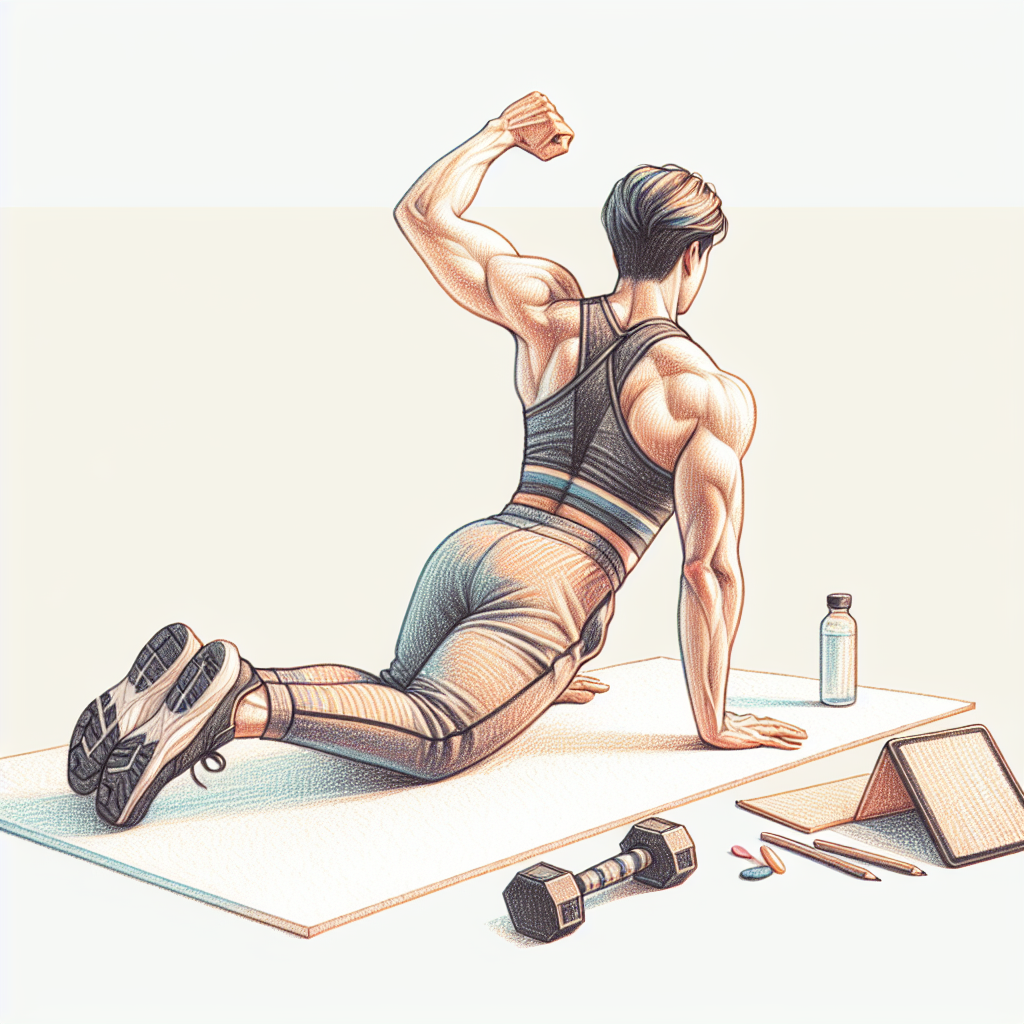
5. Side Lying Rear Delt Raises
Lie on your side and keep your bottom arm extended for support. With your top arm bent at the elbow, lift your arm towards the ceiling and lower it again. This exercise targets the upper back and shoulders.
Cooling Down and Stretching
Cooling down after your workout is crucial in aiding muscle recovery and maintaining flexibility. Engage in gentle stretches to promote relaxation and reduce tension in your back:
- Cobra Stretch: Lie face down and push your chest upwards with your hands while keeping your hips on the ground.
- Child’s Pose: Sit back on your heels while stretching your arms forward on the ground, sinking your chest down.
- Seated Forward Bend: Sit with your legs extended, and gently reach towards your toes while keeping your back straight.
Recognizing When to Consult a Professional
While exercising is beneficial, it is important to recognize when professional guidance may be necessary. If you experience any of the following symptoms, consider seeking advice from a healthcare provider or fitness expert:
- Persistent back pain that worsens with exercise.
- Difficulty performing simple daily tasks or movements.
- Numbness or tingling in the legs or arms during workouts.
- Back pain accompanied by other symptoms such as fever, weight loss, or weakness.
Mistakes to Avoid in Your Back Workout
As you embark on your back workout regimen, it is important to be aware of common mistakes that can hinder your progress or lead to injury:
- Neglecting proper form can lead to strain and ineffective workouts.
- Focusing solely on one area of the back can lead to muscle imbalances.
- Failing to warm up and cool down increases the risk of injury.
- Overtraining can result in burnout and diminished results; rest is essential.
FAQ
1. How often should I perform back exercises?
For beginners, aim for 2–3 times a week, allowing adequate recovery time.
2. Can I see results without equipment?
Yes, bodyweight exercises can be very effective for building back strength and endurance.
3. What if I experience pain during exercises?
Stop the exercise immediately and consult with a healthcare provider if the pain persists.
4. Are warm-ups necessary every time before a workout?
Yes, warming up each time reduces the risk of injury and prepares your body for exercise.
5. Should I incorporate cardio into my back workout routine?
Yes, combining cardio with strength training can enhance overall fitness and weight management.
6. Can I progress to more advanced exercises?
Absolutely! As you build strength, gradually incorporate more complex movements or resistance training.
Conclusion
- Strengthening your back enhances overall health and posture.
- Bodyweight exercises are effective for beginners and require no equipment.
- Consistency is key; aim for regular workouts to see improvements.
- Always warm up before and cool down after your exercises.
- If experiencing pain or discomfort, consult a professional for guidance.
For those looking to further streamline their fitness journey, consider registering for a 30-day exercise program that involves only 6 minutes of daily workouts, yielding impressive results akin to traditional gym routines.
Author: John Angel