
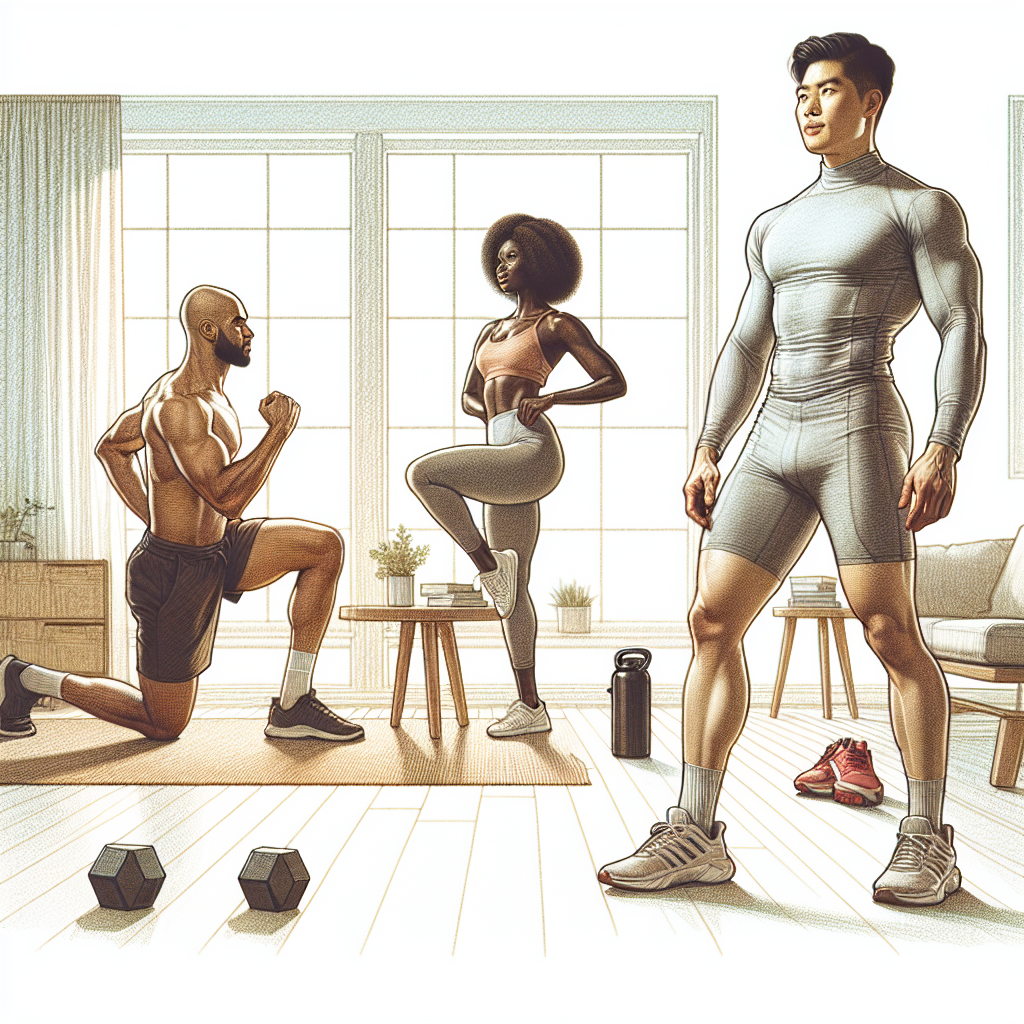
Beginner Full Body Workout at Home: No Equipment Required
Staying fit and healthy doesn’t always require a gym membership or expensive equipment. For beginners, a full-body workout at home can be both effective and convenient. This article outlines simple yet comprehensive exercises that require no equipment, allowing anyone to adopt a well-rounded fitness routine. By engaging various muscle groups, you can enhance strength, flexibility, and endurance—all in the comfort of your home.
- Benefits of a Full-Body Workout
- Essential Warm-Up Techniques
- Beginner-Friendly Exercises
- Creating Your Weekly Routine
- When to Consult a Professional
- Common Misconceptions
- FAQ
- Conclusion
Benefits of a Full-Body Workout
A full-body workout is advantageous for several reasons:
- Comprehensive Muscle Engagement: It works all major muscle groups, leading to balanced strength development.
- Time-Efficient: You can achieve a thorough workout in a short amount of time—ideal for busy schedules.
- Boosts Metabolism: Engaging multiple muscles can increase caloric burn and enhance metabolic rate.
- Convenience: Can be performed anywhere, eliminating barriers related to gym access.
- Improves Mobility: Incorporating dynamic movements increases flexibility and range of motion.
Essential Warm-Up Techniques
Before starting your workout, it’s crucial to warm up to prepare your body and prevent injuries. A proper warm-up increases blood flow to your muscles and raises your heart rate. You can consider the following warm-up exercises:
- Arm Circles: 30 seconds each direction.
- Leg Swings: Swing each leg forward and backward for 30 seconds.
- Torso Twists: Rotate your upper body side to side for about 30 seconds.
- Dynamic Lunges: Step forward into a lunge, alternating legs for 1 minute.
Beginner-Friendly Exercises
Here’s a set of beginner-friendly exercises that form a full-body workout. Aim to perform each exercise for 30 seconds, resting for 15 seconds between movements. You can repeat the circuit 2-3 times based on your fitness level.
- Bodyweight Squats: Stand with feet shoulder-width apart and squat down as if sitting in a chair.
- Push-Ups: Start in a plank position, lowering your chest toward the ground. Modify by dropping to your knees.
- Lunges: Step forward with one leg, lowering your hips. Alternate legs.
- Plank: Hold a plank position on your forearms or hands for stability and core strength.
- Mountain Climbers: Assume a plank position and rapidly bring knees to your chest, alternating quickly.
- Jumping Jacks: Stand upright, jump while spreading legs and arms out, then return back together.
Creating Your Weekly Routine
To incorporate this full-body workout into your routine, consider the following weekly schedule:
- Monday: Full-body workout (2-3 circuits)
- Tuesday: Low-impact cardio (walking or light jogging)
- Wednesday: Full-body workout (2-3 circuits)
- Thursday: Rest day or yoga
- Friday: Full-body workout (2-3 circuits)
- Saturday: Active leisure (hiking, cycling, etc.)
- Sunday: Rest or light stretching
When to Consult a Professional
While exercising at home can be beneficial, there are instances when professional guidance is recommended:
- If you experience persistent pain or discomfort during any exercise.
- If you are new to exercise and unsure of correct techniques.
- If you have existing health concerns or conditions affecting your ability to exercise.
Consulting a fitness professional can provide personalized advice and ensure your safety.
Common Misconceptions
There are several myths regarding bodyweight exercises that should be addressed:
- Only Weights Build Muscle: Bodyweight exercises can also effectively build strength and definition.
- More Reps Equals Better Results: Quality over quantity is essential; form is crucial to effectiveness.
- You Need to Sweat Profusely to Be Effective: Moderate exercise yields results; focus on consistency instead.
FAQ
What is a full-body workout?
A full-body workout targets all major muscle groups in one session, providing comprehensive benefits.
How often should I perform a full-body workout?
For beginners, 2-3 times a week is effective, allowing for rest and recovery in between sessions.
Do I need special equipment for a bodyweight workout?
No equipment is necessary; these workouts use your body weight as resistance.
Can I lose weight with a beginner workout at home?
Yes, when combined with a balanced diet, a regular workout routine can facilitate weight loss.
How long should a workout session last?
A 20-30 minute session can be effective, particularly for beginners.
Is it safe to work out at home alone?
Yes, as long as you are mindful of your limits and exercise safely. Consider seeking guidance if unsure.
Conclusion
- Full-body workouts can be effective without equipment.
- Warm-ups are essential to prevent injuries.
- Consistency and proper form are vital for progress.
- Consult professionals when experiencing pain or uncertainty.
- Start your journey today with a 30-day program that only requires 6 minutes daily for results—register for free here.
Author: John Angel