Best Strength Exercises Without Equipment
In today’s fast-paced world, finding time for fitness can be a challenge. However, strength training is vital for maintaining muscle mass, improving metabolism, and enhancing overall well-being. This article explores the best strength exercises you can perform without any equipment, empowering you to work out effectively anytime and anywhere. By incorporating these exercises into your daily routine, you can achieve significant fitness results.
- Introduction
- Benefits of Bodyweight Training
- Top Strength Exercises
- Creating a Balanced Routine
- When to Seek Professional Guidance
- Common Myths and Mistakes
- Frequently Asked Questions
- Conclusion
Benefits of Bodyweight Training
Bodyweight exercises, performed using your own body weight as resistance, offer numerous advantages:
- Convenience: No need for gym memberships or equipment; you can exercise anywhere.
- Versatility: Exercises can be modified to target various muscle groups and fitness levels.
- Functional Fitness: Movements mimic everyday activities, enhancing overall functional ability.
- Cost-effective: Ideal for budget-conscious individuals, as no expensive equipment is required.
Top Strength Exercises
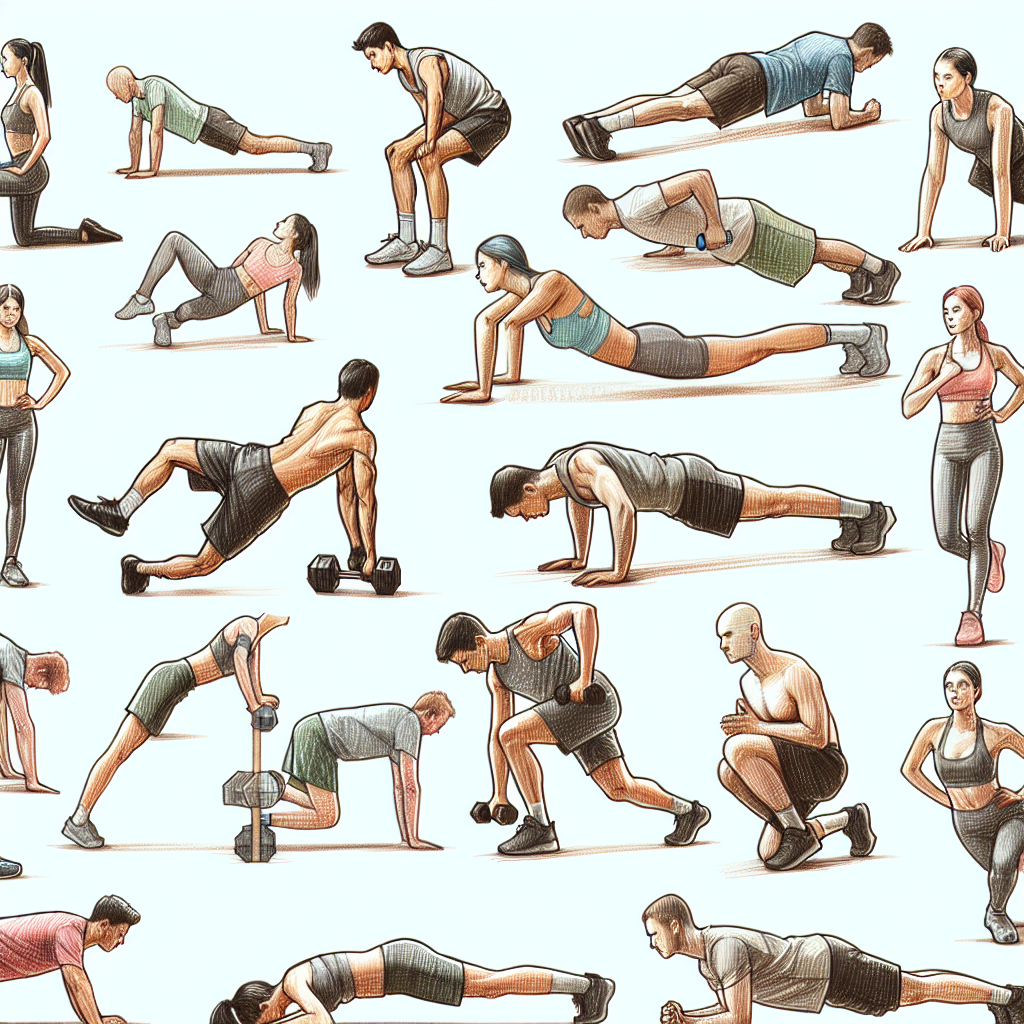
Here is a list of some of the most effective bodyweight strength exercises that can easily be incorporated into your routine:
Push-Ups
Push-ups are an excellent upper body exercise that targets the chest, shoulders, and triceps.
- Start in a plank position with hands slightly wider than shoulder-width apart.
- Lower your body until your chest almost touches the ground.
- Push back up to the starting position.
Squats
Squats engage multiple muscle groups, including the glutes, quadriceps, and calves.
- Stand with your feet shoulder-width apart.
- Lower your body into a squat position, keeping your back straight.
- Push through your heels to return to standing.
Lunges
Lunges are highly effective for strengthening the legs and improving balance.
- Step forward with one leg, bending both knees to about 90 degrees.
- Push back to the starting position.
- Switch legs and repeat.
Planks
Planks build core strength and stability.
- Lie face down with your forearms and toes on the ground.
- Lift your body into a straight line from head to heels.
- Hold this position for as long as possible, maintaining proper form.
Burpees
Burpees provide a full-body workout, combining strength and cardiovascular training.
- From standing, squat down and place your hands on the ground.
- Kick your feet back into a plank position.
- Perform a push-up, then return to squat and jump explosively back to standing.
Creating a Balanced Routine
To ensure a well-rounded fitness regimen, consider the following components:
- Warm-Up: Engage in light cardio or dynamic stretching to prepare your muscles.
- Strength Training: Perform 3-4 workouts a week, alternating between upper and lower body exercises.
- Flexibility and Cool Down: Conclude with static stretches to improve flexibility and prevent injury.
For those looking to simplify their exercise journey, consider exploring a 30-day exercise program where you only need to dedicate 6 minutes each day. The program yields results comparable to traditional gym visits. You can register for free at this link.
When to Seek Professional Guidance
Consult a professional if you experience any of the following:
- Persistent Pain: If pain from exercising continues for more than a few days.
- Injuries: Any sign of serious injury, such as fractures or ligament tears.
- Medical Conditions: Existing health problems that could affect your ability to exercise safely.
- Inexperience: If unsure how to execute movements correctly, professional guidance can ensure safe and effective workouts.
Common Myths and Mistakes
Understanding the following misconceptions can enhance your workout experience:
- Myth 1: Bodyweight exercises are not effective for building strength.
- Myth 2: You need equipment for a complete workout.
- Myth 3: High repetitions are the only way to gain muscle.
- Mistake: Neglecting core and stabilizing muscles, which are essential for overall strength.
Frequently Asked Questions
Can I build muscle without weights?
Yes, bodyweight exercises can effectively build muscle and strength.
How often should I do bodyweight exercises?
Aim for 3-4 sessions per week, allowing recovery between workouts.
Are bodyweight exercises safe for beginners?
Yes, they can be started at any fitness level, but proper form is crucial.
How can I progress with bodyweight exercises?
Increase repetitions, vary exercises, or reduce rest time to create more challenge.
Do I need to stretch after bodyweight workouts?
Yes, post-workout stretching is vital for recovery and flexibility.
Can I lose weight with bodyweight exercises?
Yes, they can contribute to weight loss when combined with a balanced diet.
Conclusion
- Bodyweight exercises are effective for building strength and improving overall fitness.
- Key exercises include push-ups, squats, lunges, planks, and burpees.
- Creating a balanced routine can maximize results and prevent injury.
- Consult professionals when encountering persistent pain or injury concerns.
- Understanding common myths helps you avoid mistakes in your workout approach.
Begin your fitness journey today by incorporating these exercises into your routine, and consider exploring the free 30-day exercise program available at this link. Your body will thank you for it!
Author: John Angel