
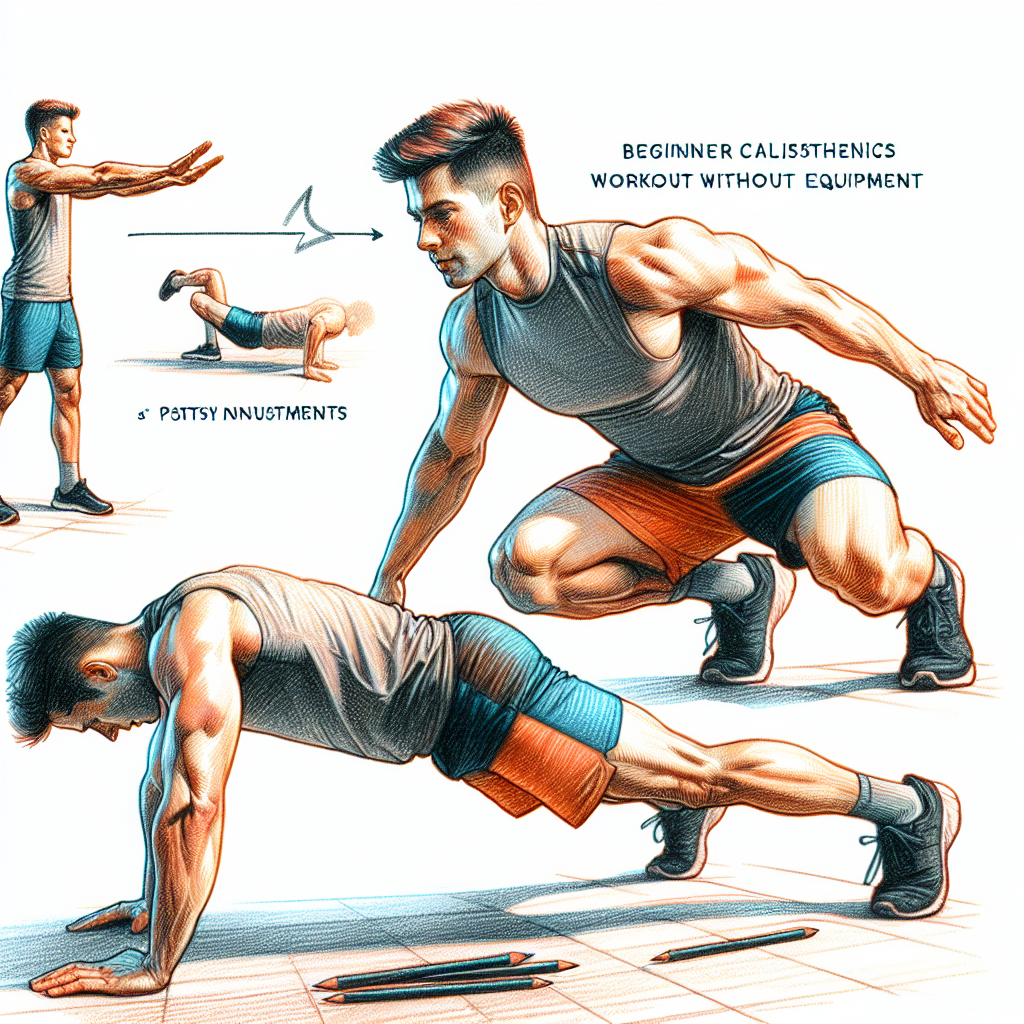
Calisthenics is an effective workout regimen that utilizes body weight for resistance training, making it an excellent choice for beginners who may not have access to traditional gym equipment. This guide presents a beginner workout plan that focuses on calisthenics techniques, designed to build strength, improve flexibility, and enhance overall fitness without the need for equipment. By incorporating a few basic exercises, anyone can get started on their fitness journey.
- What is Calisthenics?
- Essential Calisthenics Exercises
- A Sample Beginner Workout Plan
- Tips for Effective Training
- When to Consult a Professional
- Myths and Misunderstandings About Calisthenics
- FAQs
- Conclusion
What is Calisthenics?
Calisthenics is a form of exercise that relies on using your body weight as resistance. It involves various movements that enhance strength without the need for weights or machines. Common examples of calisthenics include push-ups, squats, lunges, and planks. This approach emphasizes natural movement patterns and can be adjusted for different fitness levels, making it accessible for beginners.
Essential Calisthenics Exercises
To help you establish an effective workout regimen, here are some fundamental exercises to incorporate:
- Push-Ups: A classic exercise that targets the chest, shoulders, and triceps.
- Squats: Excellent for building leg and glute strength.
- Lunges: A dynamic movement that improves balance and coordination.
- Planks: Strengthens core muscles and improves stability.
- Burpees: A full-body exercise that combines strength and cardio.
A Sample Beginner Workout Plan
The following workout plan requires no equipment and is suitable for beginners. Aim to perform these exercises three to four times a week.
- Warm-up: 5 minutes of light jogging or jumping jacks.
- Push-Ups: 3 sets of 5-10 repetitions.
- Bodyweight Squats: 3 sets of 10-15 repetitions.
- Lunges: 3 sets of 10 repetitions per leg.
- Plank: Hold for 20-30 seconds, repeat 3 times.
- Burpees: 3 sets of 5-10 repetitions.
- Cool Down: 5 minutes of stretching major muscle groups.
If you are seeking a structured approach to exercise, consider registering for a 30-day exercise program with just 6 minutes of daily workouts that yields results comparable to traditional gym efforts.
Tips for Effective Training
To maximize the benefits of calisthenics, consider the following training tips:
- Maintain Proper Form: Focus on executing each movement correctly to prevent injury.
- Progress Gradually: Increase repetitions or sets as your strength improves.
- Stay Consistent: Regular training is vital to achieve noticeable results.
- Listen to Your Body: Rest when needed and avoid pushing through pain.
- Mix It Up: Incorporate a variety of exercises to target different muscle groups.
When to Consult a Professional
While calisthenics is generally safe for beginners, there are instances where professional guidance may be warranted:
- If you experience persistent or severe pain during exercise.
- When unsure about proper form for specific movements.
- If you have pre-existing health conditions that could affect your ability to exercise.
- When needing personalized workout plans or nutrition advice.
Myths and Misunderstandings About Calisthenics
Understanding common misconceptions can help you stay motivated and informed:
- Calisthenics is Not Challenging: Many advanced calisthenics movements can be extremely demanding.
- You Cannot Build Muscle without Weights: Bodyweight exercises can effectively build muscle if performed correctly.
- Calisthenics is Only for Young People: Individuals of all ages can reap benefits from calisthenics.
- It is a Time-Consuming Approach: Effective workouts can be completed in a short duration.
FAQs
Can calisthenics help me lose weight?
Yes, calisthenics can aid in weight loss when combined with a balanced diet and consistent exercise routine.
Do I need to warm up before starting calisthenics?
Yes, warming up helps prevent injuries and prepares your muscles for exercise.
How often should I practice calisthenics?
For beginners, engaging in calisthenics three to four times a week is advisable.
Can I do calisthenics at home?
Absolutely, calisthenics is convenient and can be performed anywhere, making it ideal for home workouts.
Are there any risks to practicing calisthenics?
As with any exercise, there is a risk of injury if movements are performed incorrectly. Listening to your body is crucial.
Is calisthenics suitable for everyone?
Calisthenics is generally suitable for most individuals, but consulting with a healthcare provider is recommended for those with specific health concerns.
Conclusion
- Calisthenics is an effective, equipment-free workout suitable for beginners.
- A structured plan can help you build strength and improve fitness.
- Focus on proper form and progress gradually to avoid injuries.
- Consult professionals when unsure about exercise techniques or health concerns.
- Combat myths to stay motivated in your fitness journey.
Calisthenics offers a flexible and rewarding pathway to fitness without requiring extensive equipment or gym memberships. Start your journey today! Consider signing up for a 30-day exercise program that only requires 6 minutes a day but can lead to significant results.
Author: John Angel