
Introduction
Circuit training at home without equipment offers a practical and efficient way to improve strength, endurance, and overall fitness. This approach can deliver results comparable to conventional gym workouts, and it can be accomplished in a limited time frame. For individuals seeking an effective exercise routine that fits into a busy lifestyle, investing just a few minutes daily in circuit training can be remarkably beneficial.
- Understanding Circuit Training
- Benefits of No-Equipment Circuit Training
- Effective Home Circuit Routine
- Common Mistakes in Circuit Training
- When to Seek Professional Help
- Frequently Asked Questions
- Conclusion
Understanding Circuit Training
Circuit training involves a series of exercises performed in sequence with minimal rest between them. This method not only maximizes calorie burn but also enhances muscle endurance and cardiovascular fitness. When done at home without equipment, participants can incorporate bodyweight exercises that target various muscle groups, making it adaptable and accessible.
Benefits of No-Equipment Circuit Training
There are several advantages to conducting circuit training at home without equipment:
- Cost-Effective: Eliminating the need for gym memberships and equipment reduces financial burden.
- Time-Efficient: Short, intense workouts fit well into a busy schedule.
- Flexibility: Participants can train anywhere, making it convenient for those with varying commitments.
- Accessibility: No prior fitness level is required, making it suitable for beginners and experienced individuals alike.
- Variety: Circuit training allows for varied routines to keep workouts engaging and prevent boredom.
Effective Home Circuit Routine
To get started with no-equipment circuit training, consider the following routine, which targets multiple muscle groups and includes both strength and cardio components:
- Jumping Jacks: 30 seconds
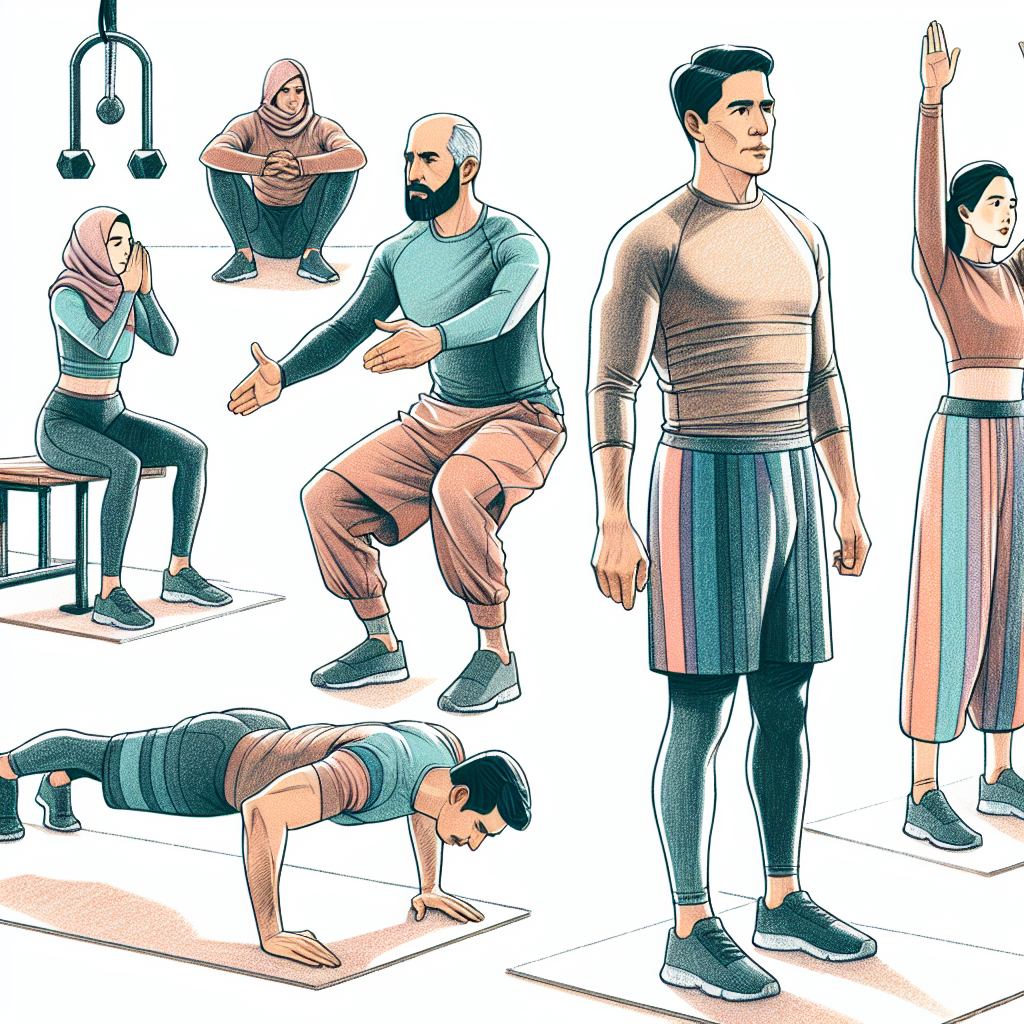
- Bodyweight Squats: 30 seconds
- Push-Ups: 30 seconds
- High Knees: 30 seconds
- Plank: 30 seconds
- Rest: 30 seconds
Repeat this circuit 2-3 times, depending on your fitness level. Adjust the duration of each exercise to suit personal fitness goals, and consider registering for a free 30-day exercise program where you only need to commit to 6 minutes of exercise each day while achieving effective results: 30-Day Exercise Program.
Common Mistakes in Circuit Training
Even the most well-intentioned participants can fall victim to common pitfalls:
- Neglecting Form: Prioritizing speed over proper technique can lead to injuries.
- Skipping Warm-Up: Failing to prepare the body for exercise increases the risk of strains.
- Inadequate Rest: Overlooking recovery time between workouts can hinder progress.
- Lack of Variation: Repeating the same routine can lead to plateaus; diversity in exercises is crucial.
- Ignoring Hydration: Staying hydrated is essential for optimal performance and recovery.
When to Seek Professional Help
It is vital to recognize situations where consultation with a fitness professional may be necessary:
- If experiencing persistent pain during or after exercise.
- When struggling to achieve desired results despite consistent effort.
- If experiencing sudden changes in health or fitness levels.
- When requiring guidance on proper form and technique.
- If there are existing medical conditions or concerns that may affect exercise routines.
Frequently Asked Questions
What is circuit training?
Circuit training involves performing a series of exercises in succession with minimal rest, targeting different muscle groups and improving cardiovascular fitness.
Can I do circuit training at home without equipment?
Yes, many effective bodyweight exercises can be performed at home, making circuit training highly accessible.
How long should a circuit workout last?
A circuit workout can be completed in as little as 10–30 minutes, depending on the number of repetitions and rest periods.
Is circuit training suitable for beginners?
Absolutely, circuit training can be tailored to accommodate all fitness levels, including beginners.
How often should I do circuit training?
It is recommended to perform circuit training 2-3 times a week, allowing for recovery between sessions.
What are some examples of bodyweight exercises?
Some common bodyweight exercises include push-ups, squats, lunges, planks, and burpees.
Conclusion
- Circuit training at home is a cost-effective and time-efficient method to enhance fitness.
- No-equipment workouts are accessible for all fitness levels, promoting inclusivity.
- Short, intense routines can yield significant results in minimal time.
- Common mistakes can be avoided with awareness and proper technique.
- Consulting a professional may be necessary in certain situations for safety and effectiveness.
If you’re looking to improve your fitness level in just a few minutes a day, consider starting your journey today.
Author: John Angel