
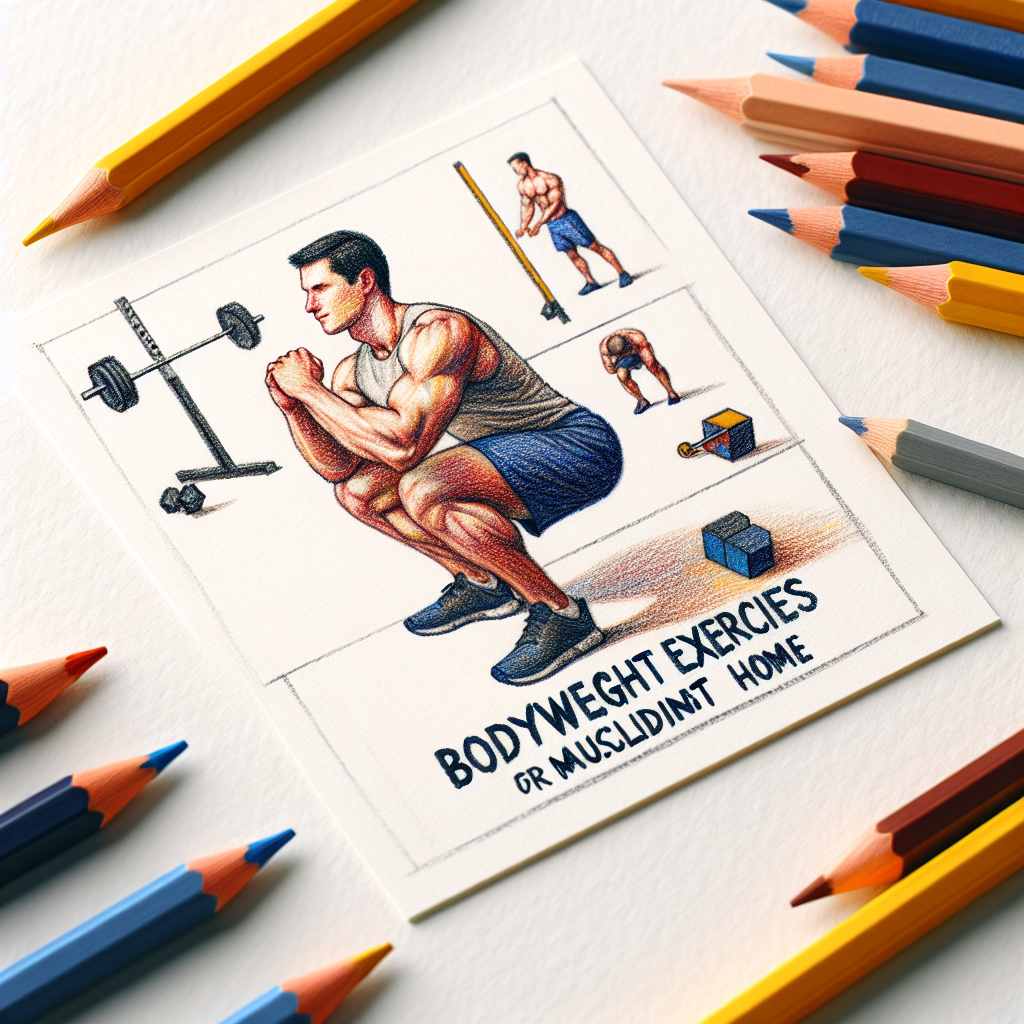
Exercises to Build Muscle at Home Without Weights
Building muscle at home without the use of weights is a practical and effective approach to achieving fitness goals. Utilizing bodyweight exercises can significantly enhance muscle tone, strength, and endurance. In addition, the convenience of working out at home allows for flexibility in routines, accommodating even the busiest of schedules. This article explores various effective exercises that can be performed at home, detailed guidance for implementation, and essential considerations for those looking to embark on or enhance their fitness journey.
- Introduction
- Benefits of Bodyweight Exercises
- Effective Bodyweight Exercises
- Sample Workout Routine
- Common Mistakes and Myths
- When to Consult a Professional
- FAQs
- Conclusion
Benefits of Bodyweight Exercises
Engaging in bodyweight exercises conveys a myriad of benefits for both novice and experienced athletes. Key advantages include:
- Accessibility: No gym membership or expensive equipment required.
- Versatility: Exercises can be modified to suit various fitness levels, enabling gradual progress.
- Functional Strength: Many bodyweight movements enhance everyday functional strength.
- Increased Mobility: Bodyweight exercises often promote flexibility and joint stability.
Effective Bodyweight Exercises
Focusing on specific muscle groups can yield substantial results. Here are some key exercises that effectively target various areas of the body:
Push-Ups
This timeless exercise targets the chest, shoulders, and triceps. To perform:
- Begin in a plank position with hands slightly wider than shoulder-width.
- Lower your body until your chest nearly touches the floor.
- Push back up to the starting position.
Squats
Squats engage the quadriceps, hamstrings, and glutes. For execution:
- Stand with feet shoulder-width apart.
- Lower your hips as if sitting back into an invisible chair.
- Return to standing, ensuring knees do not extend beyond the toes.
Plank
The plank is excellent for core stability. To perform:
- Start in a push-up position, but with your weight resting on your forearms.
- Keep your body in a straight line from head to heels.
- Hold this position for as long as possible while maintaining form.
Lunges
Lunges are effective for the lower body and core. To execute:
- Step forward with one leg, lowering your hips until both knees are bent at approximately 90 degrees.
- Push back to the starting position and switch legs.
Burpees
A full-body exercise that boosts cardiovascular endurance and strength. For a burpee:
- Start in a standing position, drop into a squat, placing your hands on the floor.
- Kick your feet back into a plank, perform a push-up, then jump your feet back.
- Explode into a jump and land back in a standing position.
Sample Workout Routine
For those wishing to establish a cohesive workout plan, consider the following 30-minute regimen involving various bodyweight exercises. Perform each exercise for 30 seconds, followed by a 15-second rest:
- Push-Ups
- Bodyweight Squats
- Plank
- Lunges
- Burpees
- Mountain Climbers
This can be adapted to fit individual needs by altering rest times or the number of rounds. Furthermore, for optimum results with minimal time commitment, consider registering for a 30-day exercise program which requires only 6 minutes of dedicated effort daily.
Common Mistakes and Myths
When engaging in bodyweight exercises, several misconceptions may arise, as well as common mistakes that can impede progress:
- Myth 1: Bodyweight exercises are not effective for muscle building.
- Mistake 2: Poor form can lead to injury; ensure you maintain proper alignment.
- Myth 3: More repetitions lead to better results; focus on quality over quantity.
- Mistake 4: Neglecting to incorporate rest days can hinder recovery.
When to Consult a Professional
While bodyweight exercises are generally safe and effective, certain circumstances warrant consulting a fitness professional:
- Experiencing persistent pain during or after exercises.
- Uncertainty regarding proper form or technique.
- Having preexisting medical conditions or concerns about exercise safety.
- Desiring a personalized training plan tailored to specific goals.
FAQs
Can I build muscle with bodyweight exercises alone?
Yes, bodyweight exercises can effectively build muscle, particularly for beginners and those maintaining fitness.
How often should I do bodyweight exercises?
Aiming for at least 3-4 times a week can yield significant results while allowing for adequate recovery.
Are bodyweight exercises effective for weight loss?
They can be effective when combined with a healthy diet and other lifestyle changes.
Do I need to warm up before bodyweight exercises?
Warming up is crucial to prepare your body and reduce the risk of injury.
Can I increase the intensity of bodyweight exercises?
Yes, by adjusting your speed, creating variations, or incorporating advanced techniques like plyometrics.
What if I can’t do a full push-up?
You can start with knee push-ups or incline push-ups to build strength gradually.
Conclusion
- Bodyweight exercises provide an effective and accessible means of building muscle at home.
- A variety of exercises, such as push-ups, squats, and lunges, target different muscle groups effectively.
- Common mistakes and myths surrounding bodyweight training should be addressed to maximize results.
- Consulting a professional is advised when encountering injury or needing tailored guidance.
- Consider a structured program for results with minimal daily commitment.
Embrace the convenience and effectiveness of bodyweight exercises today, and consider registering for a 30-day exercise program that fits easily into your daily routine. Start your journey towards improved strength and fitness now!
Author: John Angel