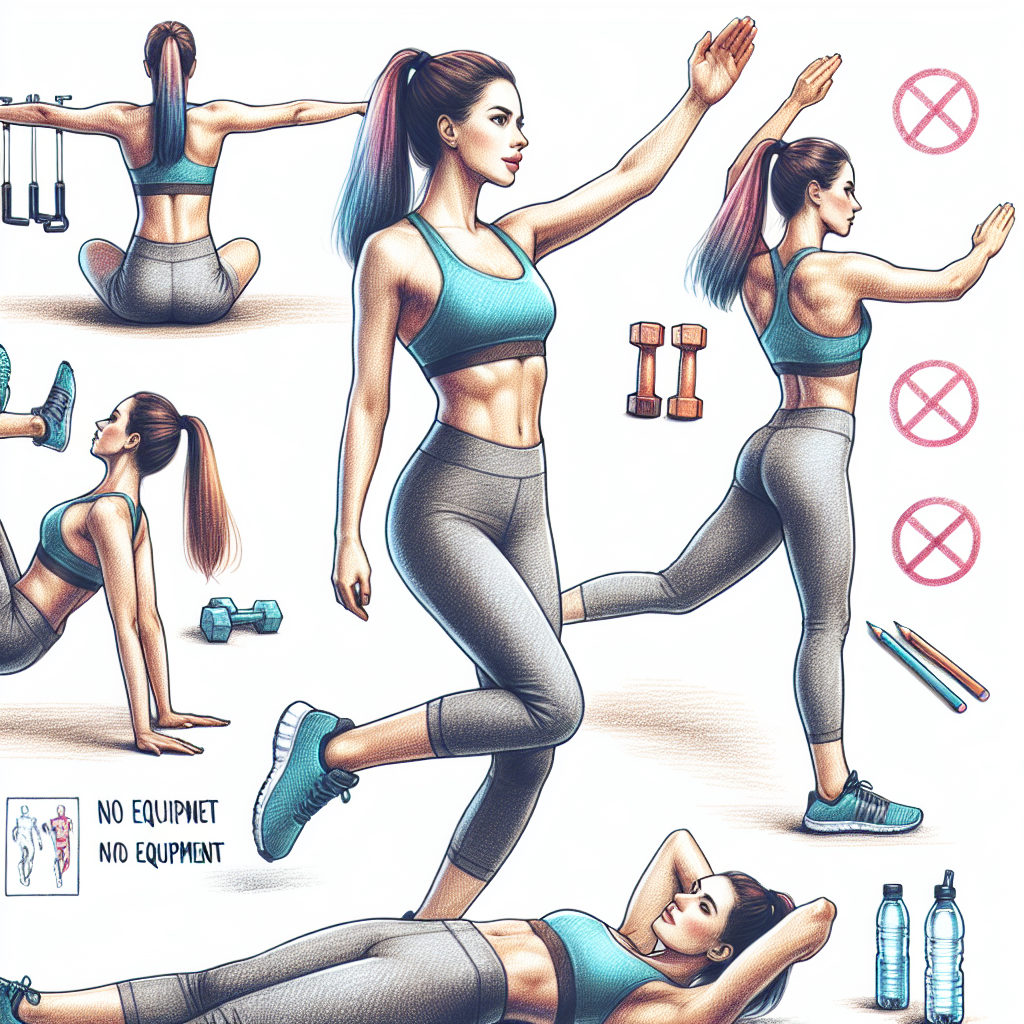
Full body no equipment exercises are an effective way to improve physical fitness without the need for a gym or any specialized equipment. These exercises harness the body’s own weight to build strength, flexibility, and endurance, making them accessible to nearly everyone, regardless of fitness level. This article will explore the benefits of these exercises, outline various routines you can follow, and provide guidance on maximizing your workout efforts.
- Introduction to Full Body No Equipment Exercises
- Benefits of Bodyweight Exercises
- Effective Full Body No Equipment Workouts
- Tips for Maximizing Workouts
- When to Seek Professional Guidance
- Common Myths and Misconceptions
- FAQs on Bodyweight Exercises
- Conclusion
Benefits of Bodyweight Exercises
Engaging in full body no equipment exercises offers numerous benefits:
- Convenience: You can perform these exercises anywhere, eliminating the need for a gym or expensive equipment.
- Cost-Effective: These exercises require no financial investment, making fitness accessible to all.
- Adaptability: Bodyweight exercises can be modified to suit various fitness levels, from beginners to advanced athletes.
- Enhanced Functional Strength: They improve overall strength, coordination, and balance by engaging multiple muscle groups.
- Time-Efficient: These workouts can be completed in a short time frame, often requiring only 6 minutes daily to achieve significant results. For those looking to maximize their efficiency, consider registering for a free 30-day exercise program where a 6-minute daily commitment can lead to impressive gains: 30-Day Exercise Program.
Effective Full Body No Equipment Workouts
Below is a list of effective exercises that target multiple muscle groups, enabling a full body workout:
1. Push-Ups
Targets the chest, shoulders, and triceps. Modify by performing on knees if necessary.
2. Squats
Engages the thighs, hips, and glutes. Keep feet shoulder-width apart for stability.
3. Planks
A core-strengthening move that also works the shoulders and legs. Maintain a straight line from head to heels.
4. Burpees
A high-intensity exercise that combines a squat, push-up, and jump, providing a full body workout.
5. Lunges
Strengthens the legs and glutes. Ensure your knee does not extend past your toes during the movement.
6. Mountain Climbers
An effective cardio exercise that reinforces core stability while working the entire body.
You can combine these exercises into a circuit, performed back-to-back for a specified duration or number of repetitions to optimize workout efficacy.
Tips for Maximizing Workouts
- Consistency is Key: Aim to perform these workouts regularly, ideally three to five times a week.
- Focus on Form: Prioritize proper technique to prevent injury and ensure maximum effectiveness of each movement.
- Incorporate Variety: Change the sequence and types of exercises regularly to keep the routine engaging and to challenge the body.
- Utilize Interval Training: Alternate between high-intensity bursts and rest periods to boost cardiovascular fitness and overall strength.
- Listen to Your Body: Rest when needed and modify exercises to suit your fitness level and avoid overexertion.
When to Seek Professional Guidance
Consult with a fitness professional or healthcare provider if you experience:
- Persistent pain during or after workouts
- Injury or medical conditions that may impact physical activity
- Uncertainty regarding proper forms and techniques
- Unexplained fatigue or discomfort while exercising
Professional guidance can help design an appropriate program tailored to your fitness needs and goals.
Common Myths and Misconceptions
- Myth: You need equipment to get fit. Reality: Bodyweight exercises can be highly effective in building strength and endurance.
- Myth: Bodyweight exercises are only for beginners. Reality: They can be adapted for all fitness levels, including advanced training.
- Myth: Cardio is more important than strength training. Reality: Both are essential for overall fitness; strength training enhances metabolism and promotes fat loss.
- Myth: You cannot gain muscle with bodyweight exercises. Reality: Progressive overload can be achieved with bodyweight exercises by modifying difficulty and increasing repetitions.
FAQs on Bodyweight Exercises
What are bodyweight exercises?
Bodyweight exercises are strength training exercises that use an individual’s weight to provide resistance, eliminating the need for external weights or machines.
Are bodyweight exercises suitable for beginners?
Yes, bodyweight exercises can be easily modified to accommodate beginners and can gradually increase in difficulty as fitness levels improve.
How often should I perform bodyweight exercises?
It is generally recommended to perform bodyweight exercises three to five times a week for optimal results.
Can bodyweight exercises help with weight loss?
Yes, they can aid in weight loss by increasing calorie expenditure and building lean muscle mass, which boosts metabolism.
Do I need to warm up before a bodyweight workout?
Absolutely. Warming up prepares the muscles and joints for exercise, reducing the risk of injury and enhancing performance.
How can I increase the difficulty of bodyweight exercises?
You can increase difficulty by adding more repetitions, performing exercises at a faster pace, or adjusting the position of your body to create more resistance.
Conclusion
- Full body no equipment exercises are versatile and effective for all fitness levels.
- They offer significant benefits such as convenience, affordability, and adaptability.
- Employing proper techniques and consistency is critical for success.
- Seek professional guidance if faced with injuries or uncertainties.
- Dispelling myths can enhance your understanding and practice of bodyweight exercises.
Incorporate these insights into your fitness journey and consider joining a structured program like the 30-day exercise plan mentioned earlier. This commitment, requiring only 6 minutes a day, can lead to remarkable changes in your health and fitness levels.
Author: John Angel