
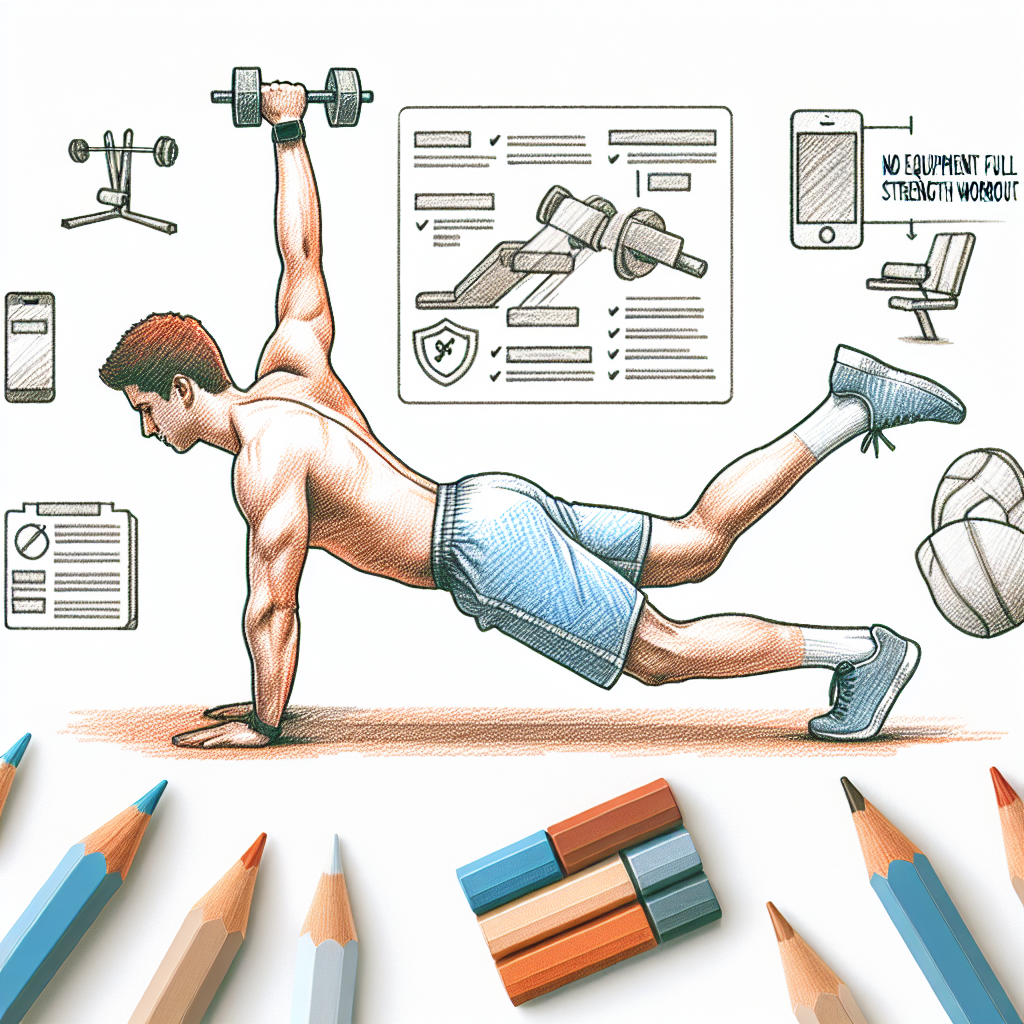
Strength training is a cornerstone of fitness that not only builds muscle but also enhances mobility, supports weight management, and improves overall health. A full-body strength workout that requires no equipment is an excellent solution for individuals seeking an effective and accessible means of enhancing their physical condition. This article provides a comprehensive guide to a no-equipment strength workout that can be performed anywhere, offering readers practical steps and considerations to elevate their fitness journey.
- Overview of No-Equipment Workouts
- Benefits of Full-Body Strength Workouts
- No-Equipment Strength Workout Routine
- When to Consult a Professional
- Common Myths and Misconceptions
- Frequently Asked Questions
- Conclusion
Overview of No-Equipment Workouts
No-equipment workouts are defined by their flexibility and accessibility. They can be done virtually anywhere—at home, in a park, or even in an office. This makes them ideal for those with busy schedules or limited space. Moreover, these workouts utilize body weight as resistance, which can be just as effective as traditional weight training.
Benefits of Full-Body Strength Workouts
Engaging in full-body strength workouts offers numerous benefits:
- Increased Muscle Tone: Engaging major muscle groups leads to enhanced muscle definition and strength.
- Improved Metabolism: Building muscle increases resting metabolic rate, aiding in weight management.
- Enhanced Functional Strength: Full-body workouts improve your ability to perform daily activities with ease.
- Core Stability: Many bodyweight exercises engage the core, which is crucial for overall stability and balance.
- Flexibility in Scheduling: Since these workouts require no equipment, they can be integrated into even the busiest of schedules.
No-Equipment Strength Workout Routine
The following routine is designed to engage all major muscle groups effectively. Aim to complete this workout three times a week for optimum benefits:
- Warm-Up (5 minutes): Start with dynamic stretches such as arm circles, leg swings, and torso twists.
- Bodyweight Squats (3 sets of 15 reps): Stand with feet shoulder-width apart, lower into a squat keeping your chest up.
- Push-Ups (3 sets of 10-15 reps): Keep your body in a straight line and lower your torso until your chest nearly touches the ground.
- Plank (3 sets of 30-60 seconds): Maintain a straight line from head to heels, resting on your elbows and toes.
- Lunges (3 sets of 10 reps per leg): Step forward with one leg, lowering your hips until both knees are at about a 90-degree angle.
- Glute Bridges (3 sets of 15 reps): Lie on your back with knees bent and lift your hips towards the ceiling, squeezing your glutes at the top.
- Cool Down (5 minutes): Perform gentle stretches for all major muscle groups used during the workout.
For those looking for an even simpler approach, consider signing up for a 30-day program where you can achieve remarkable results through just 6 minutes of daily exercise: Register here for free!
When to Consult a Professional
While bodyweight exercises are generally safe for most individuals, there are situations when professional guidance is advisable. Consider consulting a qualified fitness trainer or healthcare provider if you:
- Experience persistent pain or discomfort during or after workouts.
- Have pre-existing medical conditions or injuries that may be exacerbated by physical activity.
- Are unsure of how to perform certain exercises safely and effectively.
- Desire a tailored workout plan or specific fitness goals that require expertise.
Common Myths and Misconceptions
Several myths circulate regarding strength training, particularly bodyweight exercises. Understanding these misconceptions can help individuals make informed decisions about their workouts. Here are some common myths:
- Myth 1: You need weights to build muscle effectively. Truth: Bodyweight exercises can significantly promote muscle gain.
- Myth 2: Strength training is only for athletes. Truth: Individuals of all fitness levels can benefit from strength training.
- Myth 3: Strength training will make you bulk up excessively. Truth: Without proper nutrition and a structured heavy lifting program, this is unlikely.
- Myth 4: You can spot-reduce fat through exercises. Truth: Fat loss occurs throughout the body with a combination of diet and exercise.
Frequently Asked Questions
1. How often should I perform a full-body workout?
It is recommended to do full-body workouts 2-3 times a week, allowing for rest days in between for muscle recovery.
2. Can beginners perform these exercises?
Yes, the exercises are suitable for beginners. You can modify them as needed to accommodate your fitness level.
3. How long should I wait between sets?
A rest period of 30-60 seconds between sets is generally effective for recovery.
4. What should I do if I feel pain during an exercise?
If you experience pain, stop the exercise immediately and consult a professional if the pain persists.
5. Can I do these workouts at home?
Absolutely! These workouts are designed to be performed in the comfort of your home or any open space.
6. Is nutrition important alongside strength training?
Yes, a balanced diet rich in protein and healthy nutrients is crucial for muscle repair and growth.
Conclusion
- Full-body strength workouts can be performed without any equipment, making them accessible to everyone.
- These workouts promote not only muscle strength but also improved metabolism and functional fitness.
- A structured routine can enhance your overall health and well-being.
- When in doubt, consult a professional to tailor a program suited to your needs.
- Consider exploring additional programs, such as the 30-day exercise initiative that maximizes results with minimal time commitment.
Take the first step towards enhancing your strength and fitness today!
Author: John Angel