
Full Body Workout at Home for Beginners: No Equipment Needed
In an age where fitness is often synonymous with expensive gym memberships and intricate machinery, it is refreshing to explore the concept of achieving a full-body workout at home without the need for any equipment. This approach not only saves time and money but enables individuals to cultivate a consistent exercise regimen in the comfort of their own space. The following guide is specifically designed for beginners looking to enhance their physical fitness through effective, no-cost exercises.
- Understanding Full Body Workouts
- Basic Principles of Home Workouts
- Sample Full Body Exercises
- Creating Your Workout Plan
- When to Consult a Professional
- Myths and Misconceptions about Home Workouts
- FAQs
- Conclusion
Understanding Full Body Workouts
A full-body workout involves exercises that target all major muscle groups in a single session. This includes exercises for the upper body, lower body, and core, ensuring a balanced approach to fitness. Incorporating such routines into your weekly regime can significantly enhance endurance, strength, and overall health.
Benefits of Full Body Workouts
1. Time-efficient: Engage multiple muscle groups in a shorter amount of time.
2. Improved muscle coordination: Work different muscles together to enhance functional strength.
3. Increased calorie burn: Using more muscles at once allows for higher energy expenditure.
4. Easier recovery: Full-body workouts facilitate quicker recovery times since not all muscle groups are emphasized daily.
Basic Principles of Home Workouts
Engaging in a workout routine without equipment requires an understanding of various principles that ensure effectiveness while maintaining safety.
- Warm-up: Always start with a light warm-up to prepare your muscles and prevent injuries.
- Form over speed: Focus on executing each exercise with appropriate form rather than rushing through repetitions.
- Consistency: Aim for regular sessions; even just 6 minutes per day can yield great results.
- Rest: Incorporate rest periods into your routine to allow muscle recovery.
- Progression: As you become comfortable with basic exercises, gradually increase the intensity or duration.
Sample Full Body Exercises
Here is a list of effective exercises that require no equipment and can be performed at home:
- Bodyweight Squats: Stand with feet shoulder-width apart, squat down as if sitting back into a chair, then rise back up.
- Push-ups: Position your hands shoulder-width apart on the floor, keep your body straight, and lower yourself down before pushing up.
- Plank: Lie face down, push up onto your elbows and toes, keeping your body in a straight line.
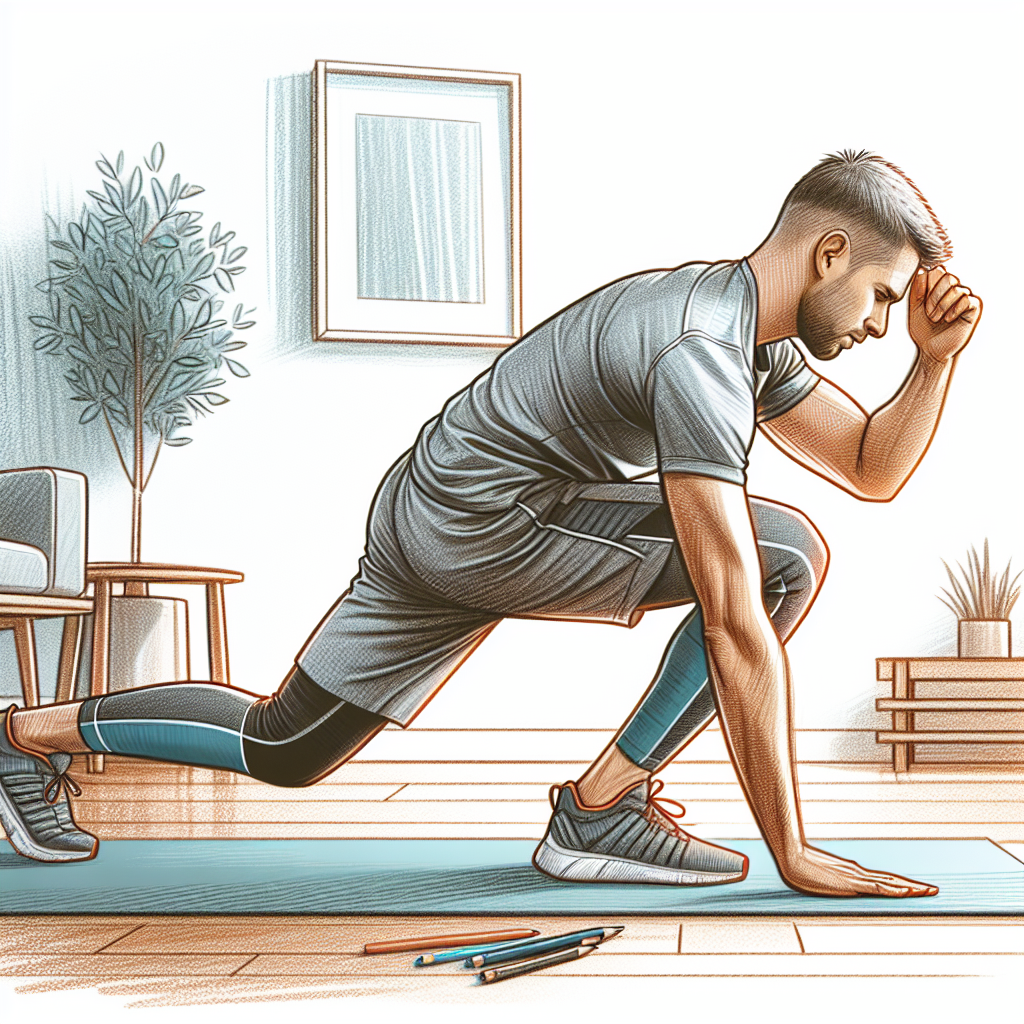
- Lunges: Step forward with one leg, bending both knees until the back knee nearly touches the floor, then return to the start position and switch legs.
- Bicycle Crunches: Lying on your back, bring your knees toward your chest, alternating bringing your elbow to the opposite knee while extending the other leg.
Creating Your Workout Plan
To maximize your results, consider integrating these exercises into a structured weekly plan:
- Monday: Full Body Routine (5 exercises, 2 sets of 10-15 reps each)
- Tuesday: Core-Focused Exercises (e.g., Planks, Bicycle Crunches)
- Wednesday: Rest or light stretching
- Thursday: Full Body Routine (as above)
- Friday: Cardio (e.g., jumping jacks, high knees for 6 minutes)
- Saturday: Active Recovery (walking, yoga)
- Sunday: Rest Day
For an additional opportunity to establish a daily workout habit, consider this 30-day exercise program, which only requires 6 minutes of your time each day and is designed to deliver outcomes comparable to a gym routine.
When to Consult a Professional
While home workouts can be highly beneficial, there are specific circumstances in which consulting a healthcare or fitness professional is advisable:
- If you experience persistent pain during or after exercises.
- When you are uncertain about performing an exercise correctly and fear injury.
- If you have pre-existing medical conditions or injuries that could affect your ability to exercise safely.
- When you require personalized guidance tailored to specific fitness goals or limitations.
Myths and Misconceptions about Home Workouts
Myths surrounding home workouts can create apprehension for beginners. Here we clarify some common misconceptions:
- Myth 1: You need equipment for a good workout.
- Myth 2: Home workouts are less effective than gym workouts.
- Myth 3: You need to spend hours exercising to see results.
- Myth 4: Only high-intensity workouts can lead to weight loss.
FAQs
How often should I do a full body workout at home?
Aim for at least three times per week for optimal results.
Do I need to warm up before starting?
Yes, warming up is essential to prepare your body and prevent injuries.
Can I lose weight without equipment?
Absolutely! Bodyweight exercises can effectively facilitate weight loss.
How long should my workouts be?
Even short sessions, around 20-30 minutes, can be beneficial if performed consistently.
What if I can’t perform an exercise correctly?
Consider watching instructional videos or seeking guidance from a fitness professional to improve your form.
Is it necessary to cool down after exercising?
Yes, cooling down helps to gradually lower your heart rate and prevent stiffness.
Conclusion
- Full-body workouts can be achieved effectively at home without equipment.
- Prioritize warm-up, form, and progression in your workouts.
- Consistency in exercise is key to achieving desired results.
- Seek professional guidance if pain or uncertainty arises.
- Don’t let misconceptions deter you from starting your fitness journey.
If you are ready to embark on your fitness journey, consider initiating a daily routine that requires just a few minutes of your day. You will be pleasantly surprised by the progress you can achieve!
Author: John Angel