
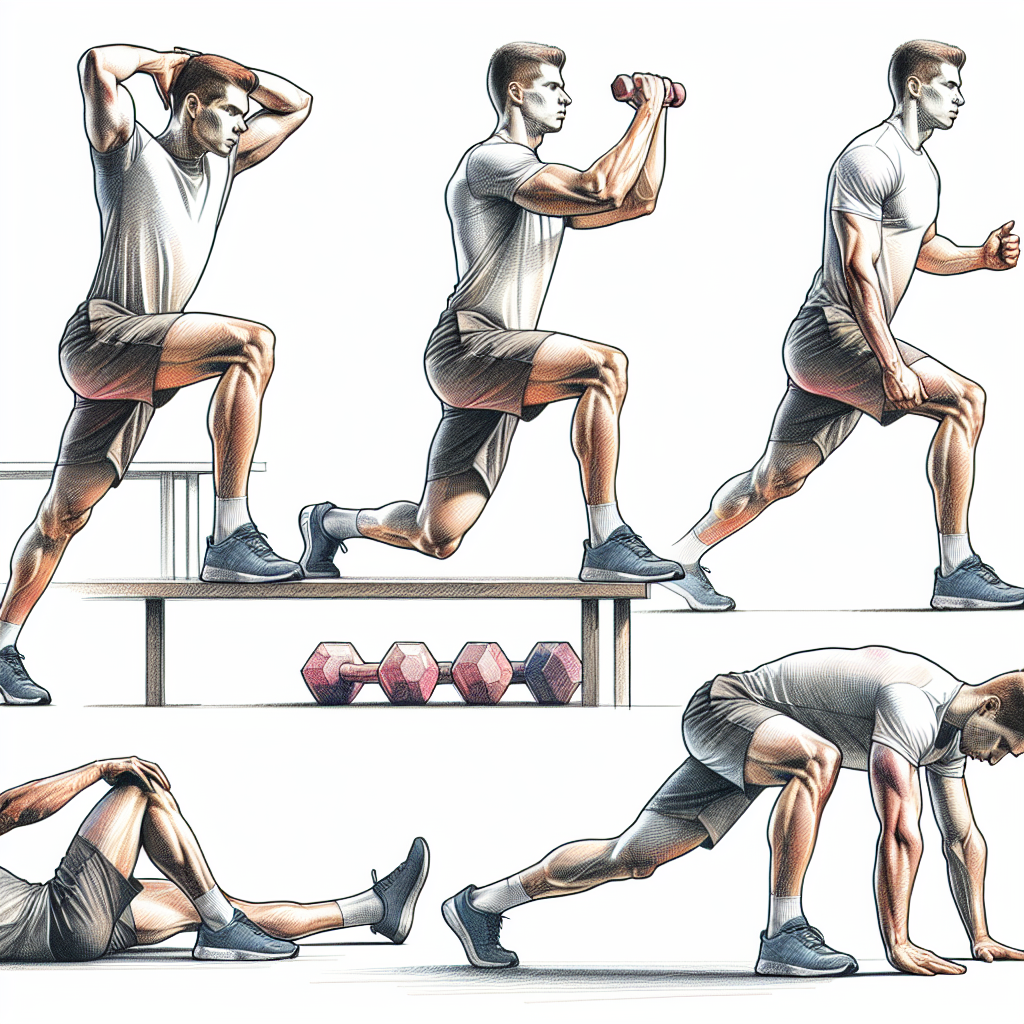
Full Body Workout at Home: No Equipment for Beginners
Embarking on a fitness journey can feel intimidating, particularly for those who are just starting. However, a full body workout at home without any equipment is an effective and accessible way to build strength, increase stamina, and enhance overall fitness. This article offers you practical guidance on how to engage in a balanced, efficient routine that can fit seamlessly into your daily schedule. You’ll discover not only the benefits but also a structured approach to achieving results, even without a gym membership.
- Understanding the Basics
- Benefits of Home Workouts
- Beginner-Friendly Full Body Exercises
- Creating a Structured Workout Plan
- When to Consult a Professional
- Common Myths and Misconceptions
- Frequently Asked Questions
- Conclusion & Call to Action
Understanding the Basics
Full body workouts are designed to engage multiple muscle groups in a single session. For beginners, these exercises promote balanced muscle development and improve functional fitness. The primary goal is to develop a solid foundation for more advanced workouts later on.
Benefits of Home Workouts
Exercising at home offers several advantages, particularly for beginners:
- Convenience: No commuting time means you can fit workouts into your schedule with ease.
- Cost-Effective: Without the need for gym fees or equipment, home workouts are budget-friendly.
- Flexibility: You can modify your routine based on your daily energy levels and time commitments.
- Privacy: Home workouts allow you to engage in physical activity without feeling self-conscious.
Beginner-Friendly Full Body Exercises
The following exercises are ideal for beginners, focusing on core strength, stability, and flexibility:
- Bodyweight Squats: Stand with feet shoulder-width apart, lower your hips back and down, then return to standing.
- Push-Ups: Begin in a plank position; lower your body toward the ground and push back up.
- Lunges: Step forward with one leg, lowering your hips until both knees are bent at 90 degrees, switch legs.
- Plank: Hold a position similar to a push-up, engaging your core muscles for stability.
- Glute Bridges: Lie on your back with knees bent, lift your hips toward the ceiling by squeezing your glutes.
- Bicycle Crunches: Lie on your back, bring knees toward your chest, and alternately touch elbows to opposite knees.
Creating a Structured Workout Plan
It is essential to develop a workout plan to maximize your results while ensuring adherence:
- Frequency: Aim for three to five sessions per week.
- Duration: Start with 20-30 minutes per session to allow your body to adapt.
- Warm-Up: Begin every session with a five-minute warm-up to prevent injuries.
- Exercise Rotation: Include a mix of all suggested exercises to target different muscle groups.
- Cool Down: Conclude each session with light stretching to aid recovery.
For an easier start, consider registering for a 30-day exercise program that requires only 6 minutes a day but delivers results comparable to a gym regimen.
When to Consult a Professional
While working out at home is beneficial, certain situations warrant a consultation with a fitness professional:
- If you experience persistent pain or discomfort during exercises.
- When you encounter difficulties in performing exercises correctly.
- If you have a pre-existing health condition that may be exacerbated by physical activity.
Common Myths and Misconceptions
Several myths about home workouts can deter beginners from taking the first step:
- Myth: You need equipment to be effective. Fact: Bodyweight exercises can be highly effective.
- Myth: Home workouts don’t provide results. Fact: Consistency and proper technique yield significant progress.
- Myth: You should feel pain to see gains. Fact: Discomfort is normal, but pain indicates potential injury.
Frequently Asked Questions
Can I get results with just bodyweight exercises?
Yes, bodyweight exercises can lead to significant strength and fitness improvements, especially for beginners.
How often should I work out to see results?
For beginners, working out three to five times a week is recommended for optimal results.
What should I do if I feel pain while exercising?
If you experience pain, stop immediately and consult a professional to determine the cause.
Is it possible to lose weight with home workouts?
Yes, when combined with proper nutrition, home workouts can be effective for weight loss.
What is the best time to exercise?
There is no universally best time; choose a time that fits your schedule and allows for consistency.
Should I warm up before starting my workout?
Yes, warming up is crucial to prevent injuries and prepare your muscles for exercise.
Conclusion & Call to Action
- Full body workouts can be effectively performed at home without equipment.
- Consistency is key; aim for three to five sessions weekly.
- Engage multiple muscle groups through diverse exercises.
- Consult a professional if you experience pain or have pre-existing conditions.
- Don’t let misconceptions hold you back; bodyweight exercises work.
Embark on your fitness journey today by choosing a workout plan that aligns with your lifestyle and goals. For a supportive and structured approach, consider registering for this 30-day exercise program that requires just 6 minutes daily for visible results. Your health journey is just a click away!
Author: John Angel