
Full Body Workout Without Equipment for Beginners
Embarking on a fitness journey does not require a gym or expensive equipment. A full-body workout can be effectively achieved through bodyweight exercises that improve strength, endurance, and flexibility. This article provides actionable insights into creating a comprehensive workout routine suitable for beginners. By committing just a few minutes each day, you can reap benefits comparable to those obtained in traditional gym settings.
- Understanding Bodyweight Exercises
- Key Benefits of Full Body Workouts
- A Beginner’s Workout Routine
- Common Mistakes to Avoid
- When to Consult a Professional
- Frequently Asked Questions
- Conclusion
Understanding Bodyweight Exercises
Bodyweight exercises utilize your own body as resistance instead of external weights. This approach can be especially beneficial for beginners, as it minimizes the risk of injury while promoting proper form and technique. Common exercises include squats, push-ups, lunges, and planks, all of which engage multiple muscle groups and offer a complete workout experience.
Key Benefits of Full Body Workouts
- Time Efficiency: Full body workouts can be completed in a short period, making them ideal for busy schedules.
- Increased Muscle Engagement: By incorporating multiple muscle groups, you enhance overall strength and endurance.
- Flexibility and Balance: These workouts help improve flexibility and balance, essential for everyday activities.
- Cost-Effective: No equipment means zero investment in gym memberships or machinery.
- Adaptability: Bodyweight exercises can be modified to suit individual fitness levels.
A Beginner’s Workout Routine
For a full body workout that requires no equipment, consider this simple yet effective routine suitable for beginners. Aim to perform the exercises in a continuous circuit, taking short breaks as necessary. Each exercise should be performed for 30 seconds followed by a 15-second rest. Repeat the circuit two to three times based on your fitness level.
- Bodyweight Squats: Stand with feet shoulder-width apart and lower your body by bending the knees, keeping the chest up.
- Push-Ups: Start in a plank position and lower your body to the ground, keeping your elbows at a 45-degree angle.
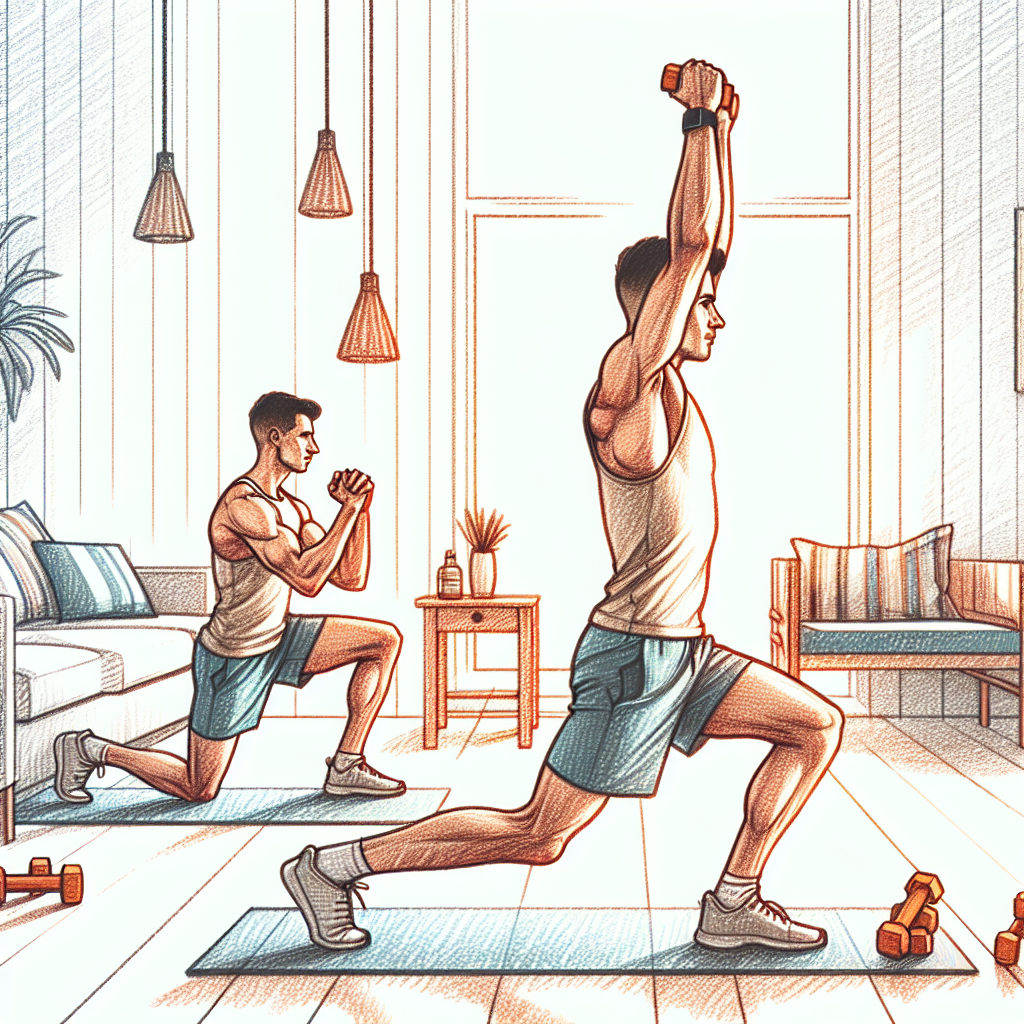
- Lunges: Step forward with one leg, lowering your hips until both knees are bent at about a 90-degree angle.
- Plank: Hold a straight position on your forearms and toes for the duration of the time, keeping your body aligned.
- Bicycle Crunches: Lying on your back, bring knees towards your chest. Alternate bringing your elbow to the opposite knee while extending the other leg.
- Mountain Climbers: From a push-up position, alternate bringing knees to your chest as if running in place.
For a structured program focusing on short daily workouts, consider this 30-day exercise program where only 6 minutes per day leads to substantial results.
Common Mistakes to Avoid
As with any fitness regime, beginners may inadvertently adopt practices that hinder progress. Here are some common mistakes to watch out for:
- Poor Form: Utilizing incorrect form can lead to injuries. Always prioritize technique over the number of repetitions.
- Neglecting Warm-Up: Failing to warm up can increase the risk of muscle strain. Add a few minutes of light cardio to prepare your body.
- Inconsistent Routine: Sporadic workouts yield limited benefits. Aim for consistency, even if that means fewer sessions per week.
- Skipping Recovery: Allow your muscles to recover to prevent fatigue and injury. Include rest days in your routine.
When to Consult a Professional
While exercise is beneficial for most individuals, there are instances when professional guidance may be necessary. Consult a qualified fitness professional if:
- You feel pain beyond normal muscle soreness.
- You have pre-existing health conditions or concerns.
- You are unsure about proper exercise techniques.
- You experience significant fatigue or lack of progress.
- You require a tailored exercise plan for specific goals.
Frequently Asked Questions
What is a full body workout?
A full body workout is a training session targeting all major muscle groups, enhancing strength and endurance in one session.
Can I build muscle without weights?
Yes, bodyweight exercises effectively build muscle by utilizing your own body resistance.
How often should I do a full body workout?
For beginners, aim for 2 to 3 times per week, allowing rest between sessions for muscle recovery.
Are bodyweight exercises effective for weight loss?
Yes, bodyweight exercises can promote weight loss when combined with a balanced diet and consistent effort.
Is it safe to start exercising alone?
Generally, beginners can start exercising alone, but seeking guidance on techniques is advisable to avoid injury.
What should I eat before a workout?
A light snack high in carbohydrates and protein can provide the necessary energy, such as a banana or a yogurt.
Conclusion
- Bodyweight exercises provide an effective, equipment-free workout solution for beginners.
- Consistency is key; aim for regular workouts to achieve the best results.
- Proper form and technique are crucial to minimize injury risks.
- Consult a professional when health concerns arise or for personalized plans.
- Consider integrating a short, structured program to enhance your routine.
Begin your fitness journey today—commit to a short daily workout, and transform your well-being without the need for a gym. Start with the simple exercises above, and explore the 30-day program for a guided approach.
Author: John Angel