
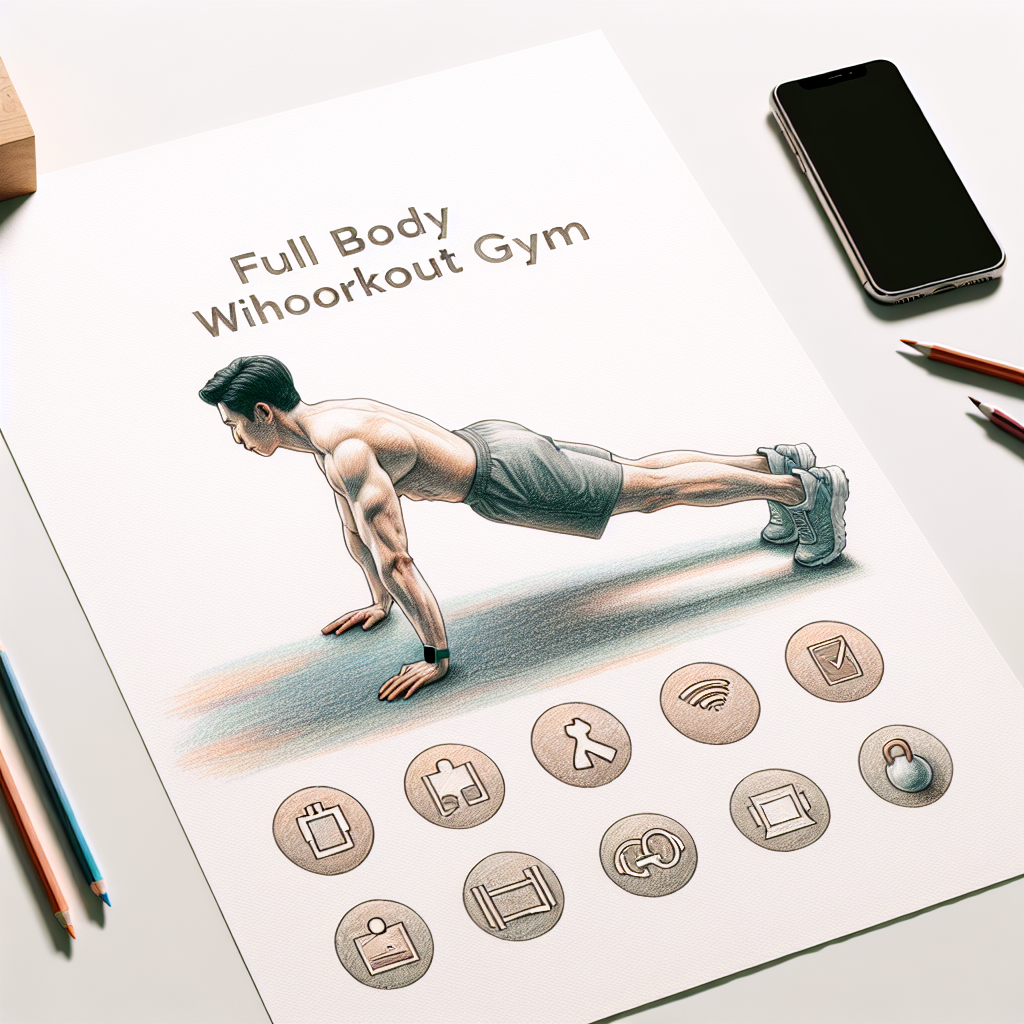
Full Body Workout Without Gym: Achieve Fitness Anywhere
In today’s busy lifestyle, finding time for gym sessions can be challenging yet maintaining fitness is essential. A full body workout without the need for a gym allows anyone to engage in effective exercise routines that can fit into their daily lives. This approach not only saves time and reduces costs but also encourages flexibility in choosing when and where to exercise. In this article, we will explore various exercises that target multiple muscle groups and discuss how you can achieve results comparable to traditional gym workouts. Additionally, we invite you to discover a unique program that demonstrates how just six minutes of daily exercise can yield significant results: register for your free 30-day exercise program here.
- Understanding Full Body Workouts
- Benefits of Working Out Without a Gym
- Key Exercises to Incorporate
- Creating Your Own Workout Routine
- When to Consult a Professional
- Common Myths and Misconceptions
- Frequently Asked Questions
- Conclusion
Understanding Full Body Workouts
A full body workout engages multiple muscle groups in a single session, promoting balanced strength and endurance building. Unlike isolated workouts that focus on specific areas—such as arms or legs—full body sessions give the entire body a comprehensive challenge. This is particularly beneficial for those with limited time who wish to maximize their results.
Benefits of Working Out Without a Gym
Engaging in workouts without a gym offers numerous advantages, including:
- Cost-Effective: No membership fees or travel costs.
- Flexibility: Exercise whenever and wherever you choose.
- Accessibility: No need for specialized equipment; bodyweight exercises are sufficient.
- Variety: You can easily adapt workouts to keep them interesting.
- Confidence: Working out in privacy can reduce self-consciousness.
Key Exercises to Incorporate
To develop a balanced full body workout, consider the following exercises:
- Push-ups: Strengthens chest, shoulders, and triceps.
- Squats: Targets thighs, glutes, and hamstrings.
- Burpees: A full-body movement that combines strength and cardio.
- Plank: Improves core stability and strengthens the back.
- Lunges: Effective for lower body strength and balance.
- Mountain Climbers: Engages the core and improves cardiovascular fitness.
Creating Your Own Workout Routine
Designing a personalized workout routine is straightforward. Consider the following steps:
- Choose five to six exercises targeting different muscle groups.
- Decide on the number of sets (2-4) and repetitions (8-15) based on your fitness level.
- Incorporate a warm-up (5-10 minutes) to prepare your body for exercise.
- Plan your workout schedule (3-5 times a week) for consistency.
- Include a cooldown period to aid in recovery.
When to Consult a Professional
While self-directed workouts can be highly effective, some situations warrant consulting a fitness professional:
- If you are unsure about proper form and technique to avoid injury.
- If you have pre-existing health conditions that may affect your ability to exercise.
- When you experience pain or discomfort during workouts that does not subside.
- If you seek tailored advice to meet specific fitness goals.
- When considering starting a new exercise program, particularly if you have been inactive for a prolonged period.
Common Myths and Misconceptions
Several misconceptions surround home workouts. Here, we debunk some of the most common myths:
- Myth 1: Home workouts are less effective than gym workouts.
- Myth 2: You need expensive equipment to see results.
- Myth 3: Exercises only need to focus on weight loss, not overall fitness.
- Myth 4: You can target fat loss in specific areas of your body.
- Myth 5: Short workouts cannot be effective.
Frequently Asked Questions
What is a full body workout?
A full body workout incorporates exercises that engage multiple muscle groups, providing a balanced approach to strength and fitness.
Can I get fit without a gym?
Absolutely. You can achieve significant fitness improvements through bodyweight exercises and outdoor activities.
How long should a full body workout last?
While many sessions are 30-60 minutes, effective workouts can be completed in as little as 6 minutes if focused and intense.
Do I need special equipment for a home workout?
No, bodyweight exercises are effective on their own. Resistance bands or a pair of dumbbells can enhance your routine but are not necessary.
How often should I do a full body workout?
3-5 times a week is ideal, allowing for rest and recovery to optimize performance.
What should I do if I experience pain during an exercise?
Stop the exercise immediately and consult a healthcare professional to identify any potential issues.
Conclusion
- Full body workouts can be effectively performed without a gym.
- Flexibility and accessibility are key advantages of home workouts.
- Incorporating a variety of exercises yields balanced fitness gains.
- Consulting professionals is advisable when experiencing pain or when starting a new regimen.
- Common myths should be debunked to encourage effective workout practices.
Consider starting your journey towards an efficient workout routine today without the constraints of a gym. To see how just six minutes can transform your fitness journey, check out the 30-day program by registering for free: sign up here.
Author: John Angel