
Categories
Fitness

Beginner’s Full Body Workout Without Equipment

Full Body Workout Without Equipment for Beginners

Embarking on a fitness journey does not require a gym or expensive equipment. A full-body workout can be effectively achieved through bodyweight exercises that improve strength, endurance, and flexibility. This article provides actionable insights into creating a comprehensive workout routine suitable for beginners. By committing just a few minutes each day, you can reap benefits comparable to those obtained in traditional gym settings.

  • Understanding Bodyweight Exercises
  • Key Benefits of Full Body Workouts
  • A Beginner’s Workout Routine
  • Common Mistakes to Avoid
  • When to Consult a Professional
  • Frequently Asked Questions
  • Conclusion

Understanding Bodyweight Exercises

Bodyweight exercises utilize your own body as resistance instead of external weights. This approach can be especially beneficial for beginners, as it minimizes the risk of injury while promoting proper form and technique. Common exercises include squats, push-ups, lunges, and planks, all of which engage multiple muscle groups and offer a complete workout experience.

Key Benefits of Full Body Workouts

  • Time Efficiency: Full body workouts can be completed in a short period, making them ideal for busy schedules.
  • Increased Muscle Engagement: By incorporating multiple muscle groups, you enhance overall strength and endurance.
  • Flexibility and Balance: These workouts help improve flexibility and balance, essential for everyday activities.
  • Cost-Effective: No equipment means zero investment in gym memberships or machinery.
  • Adaptability: Bodyweight exercises can be modified to suit individual fitness levels.

A Beginner’s Workout Routine

For a full body workout that requires no equipment, consider this simple yet effective routine suitable for beginners. Aim to perform the exercises in a continuous circuit, taking short breaks as necessary. Each exercise should be performed for 30 seconds followed by a 15-second rest. Repeat the circuit two to three times based on your fitness level.

  1. Bodyweight Squats: Stand with feet shoulder-width apart and lower your body by bending the knees, keeping the chest up.
  2. Push-Ups: Start in a plank position and lower your body to the ground, keeping your elbows at a 45-degree angle.
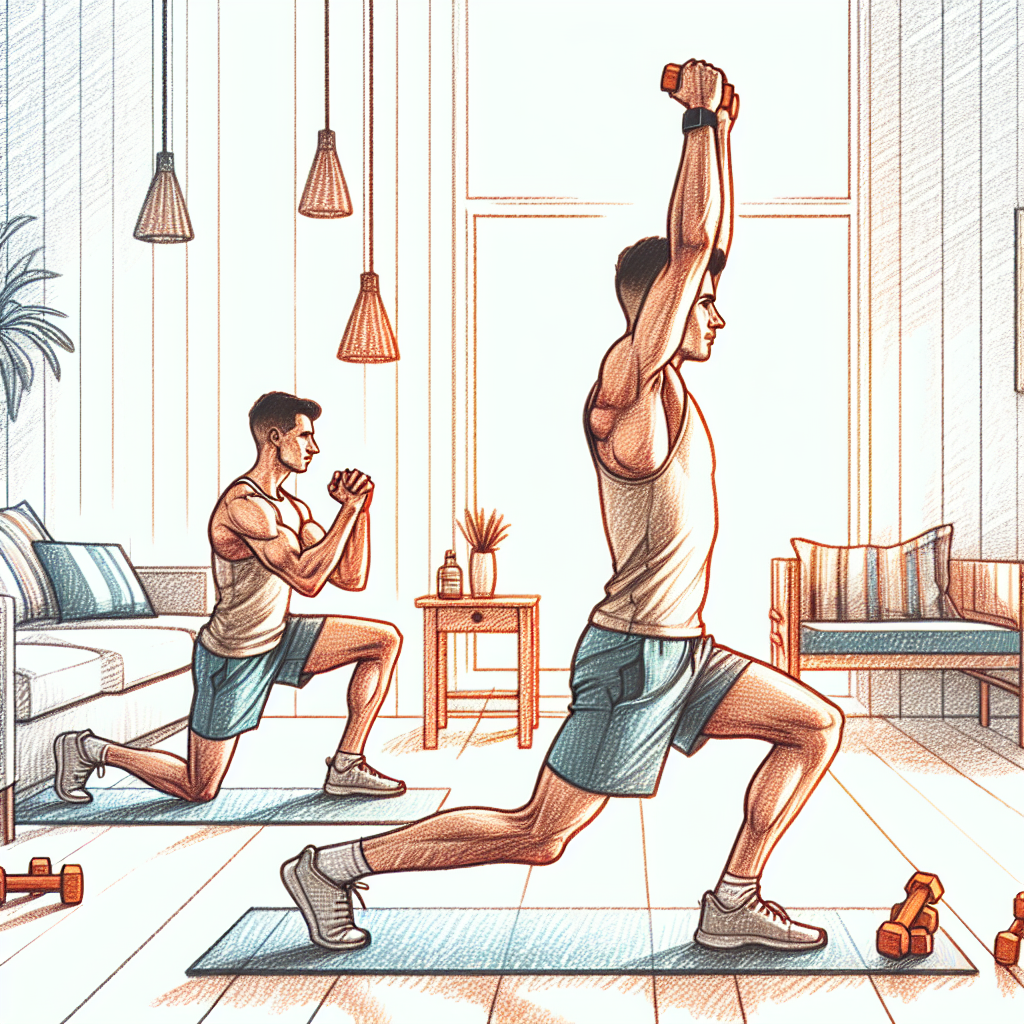
  3. Lunges: Step forward with one leg, lowering your hips until both knees are bent at about a 90-degree angle.
  4. Plank: Hold a straight position on your forearms and toes for the duration of the time, keeping your body aligned.
  5. Bicycle Crunches: Lying on your back, bring knees towards your chest. Alternate bringing your elbow to the opposite knee while extending the other leg.
  6. Mountain Climbers: From a push-up position, alternate bringing knees to your chest as if running in place.

For a structured program focusing on short daily workouts, consider this 30-day exercise program where only 6 minutes per day leads to substantial results.

Common Mistakes to Avoid

As with any fitness regime, beginners may inadvertently adopt practices that hinder progress. Here are some common mistakes to watch out for:

  • Poor Form: Utilizing incorrect form can lead to injuries. Always prioritize technique over the number of repetitions.
  • Neglecting Warm-Up: Failing to warm up can increase the risk of muscle strain. Add a few minutes of light cardio to prepare your body.
  • Inconsistent Routine: Sporadic workouts yield limited benefits. Aim for consistency, even if that means fewer sessions per week.
  • Skipping Recovery: Allow your muscles to recover to prevent fatigue and injury. Include rest days in your routine.

When to Consult a Professional

While exercise is beneficial for most individuals, there are instances when professional guidance may be necessary. Consult a qualified fitness professional if:

  • You feel pain beyond normal muscle soreness.
  • You have pre-existing health conditions or concerns.
  • You are unsure about proper exercise techniques.
  • You experience significant fatigue or lack of progress.
  • You require a tailored exercise plan for specific goals.

Frequently Asked Questions

What is a full body workout?

A full body workout is a training session targeting all major muscle groups, enhancing strength and endurance in one session.

Can I build muscle without weights?

Yes, bodyweight exercises effectively build muscle by utilizing your own body resistance.

How often should I do a full body workout?

For beginners, aim for 2 to 3 times per week, allowing rest between sessions for muscle recovery.

Are bodyweight exercises effective for weight loss?

Yes, bodyweight exercises can promote weight loss when combined with a balanced diet and consistent effort.

Is it safe to start exercising alone?

Generally, beginners can start exercising alone, but seeking guidance on techniques is advisable to avoid injury.

What should I eat before a workout?

A light snack high in carbohydrates and protein can provide the necessary energy, such as a banana or a yogurt.

Conclusion

  • Bodyweight exercises provide an effective, equipment-free workout solution for beginners.
  • Consistency is key; aim for regular workouts to achieve the best results.
  • Proper form and technique are crucial to minimize injury risks.
  • Consult a professional when health concerns arise or for personalized plans.
  • Consider integrating a short, structured program to enhance your routine.

Begin your fitness journey today—commit to a short daily workout, and transform your well-being without the need for a gym. Start with the simple exercises above, and explore the 30-day program for a guided approach.

Author: John Angel

Related articles

Categories
Home Workouts

Effective Back Workout at Home Without Equipment

In an age where convenience is paramount, achieving an effective back workout at home without equipment is both practical and efficient. Building a strong back is crucial for maintaining posture, reducing injury risk, and improving overall functional strength. This article will guide you through various exercises that engage different back muscles, ensuring comprehensive development without the need for expensive gym memberships or cumbersome equipment.

  • Introduction
  • Understanding Your Back Muscles
  • Essential Bodyweight Exercises for Back Strength
  • Sample Back Workout Routine
  • When to Consult a Professional
  • Common Myths about Back Workouts
  • Frequently Asked Questions
  • Conclusion

Understanding Your Back Muscles

The human back comprises several muscles, primarily grouped into three categories: the upper, middle, and lower back. Each area performs distinct functions and plays a significant role in everyday movements. Familiarity with these muscle groups can enhance the effectiveness of your at-home workouts.

Upper Back Muscles

This region includes the trapezius and rhomboids, crucial for pulling movements and shoulder stability. Strengthening these muscles can improve posture and balance.

Middle Back Muscles

The latissimus dorsi dominates the middle back. Enhancing its strength contributes to a wider, stronger back and improves functional movements like lifting and pulling.

Lower Back Muscles

The lower back, primarily consisting of the erector spinae, supports the spine during bending and lifting. Strengthening these muscles is essential for injury prevention and spinal health.

Essential Bodyweight Exercises for Back Strength

Several bodyweight exercises can engage your back effectively. These movements require no equipment and can be performed in small spaces, making them ideal for any home workout routine.

1. Superman Exercise

This exercise helps to engage both the upper and lower back muscles.

  • Lie face down on a mat with arms stretched forward.
  • Simultaneously lift your arms, chest, and legs off the ground.
  • Hold for 2-3 seconds, then lower back down. Repeat for 10-15 reps.

2. Reverse Snow Angels

A great exercise for upper back activation.

  • Lie face down with your arms at your sides.
  • Lift your chest slightly off the ground, extending your arms in a ‘Y’ position.
  • Slowly move your arms outward to form a ‘T’, then return. Repeat for 10-15 reps.

3. Plank Rows

This variation of the standard plank targets the upper and middle back muscles.

  • Assume a plank position with hands directly under shoulders.
  • Lift one arm toward your waist, keeping the body stable.
  • Switch sides. Perform 10-12 reps on each side.

4. Wall Angels

This exercise enhances shoulder mobility while engaging the upper back.

  • Stand with your back against a wall, feet slightly away from it.
  • Lift your arms to form a ‘W’ shape, keeping them in contact with the wall.
  • Smoothly raise your arms to form a ‘Y’, then return. Repeat for 10-15 reps.

Sample Back Workout Routine

Here’s a simple yet effective back workout routine that can be completed in about 20 minutes:

  1. Superman: 15 reps
  2. Reverse Snow Angels: 12 reps
  3. Plank Rows: 10-12 reps each side
  4. Wall Angels: 15 reps
  5. Rest for 30 seconds between exercises.

For those looking to maximize their results, consider a 30-day exercise program where you only exercise for 6 minutes every day but achieve results similar to those obtained at a gym. You can register for free at this link.

When to Consult a Professional

While home workouts are beneficial, certain situations warrant professional consultation:

  • If you experience persistent back pain or discomfort during exercises.
  • If you have existing back conditions or injuries that might be aggravated by exercise.
  • Should you have difficulty executing exercises correctly, especially if you are new to them.
  • Consulting a physical therapist or a personal trainer can provide tailored guidance and ensure safe execution of movements.

Common Myths about Back Workouts

Several misconceptions exist surrounding back workouts, which can hinder progress and deter individuals from attempting them:

Myth 1: You Need Equipment to Strengthen Your Back

Many effective back exercises require no equipment, as discussed above.

Myth 2: Only Weightlifting Can Build Back Strength

Bodyweight exercises can be incredibly effective for cultivating strength and endurance.

Myth 3: Back Workouts Are Only for Bodybuilders

Strengthening the back is beneficial for everyone, not just weightlifters. It aids in everyday activities and can help prevent injuries.

Myth 4: You Should Avoid All Back Exercises if You Have Pain

While caution is necessary, many individuals can still benefit from appropriate back exercises. Consult a professional if unsure.

Myth 5: You Only Need to Work Your Back Once a Week

More frequent engagement of back muscles can lead to improved overall strength and endurance when balanced with recovery.

Frequently Asked Questions

Can I really build back muscle without weights?

Yes, bodyweight exercises can effectively help strengthen back muscles.

How often should I perform back exercises at home?

Aim for at least two to three times per week for optimal results.

Are bodyweight exercises enough for beginners?

Absolutely, they provide a solid foundation for strength and stability.

Will I see results quickly?

Results may vary, but with consistency, most individuals see improvements within a few weeks.

Can these exercises help with posture?

Yes, strengthening your back can significantly improve posture.

Should I warm up before starting my workout?

Always include a warm-up to prepare your muscles and prevent injury.

Conclusion

  • Strengthening your back at home is achievable without equipment.
  • Understanding your back muscles is crucial for effective workouts.
  • Implementing a variety of bodyweight exercises can yield significant results.
  • Consult with a professional when in doubt or experiencing pain.
  • Address common myths to create an effective and safe workout regimen.

Ready to strengthen your back? Start today with these exercises, incorporating them into your routine for lasting results. Don’t forget to register for the 30-day exercise program to maximize your efforts!

Author: John Angel

Related articles

Categories
Fitness

Effective Bodyweight Workout Routine for Weight Loss

Embarking on a weight loss journey requires dedication and an effective workout routine. Bodyweight exercises have emerged as one of the most practical and adaptable ways to achieve fitness goals, especially for those looking to lose weight. By utilizing your own body as resistance, you can engage in workouts that are impactful and versatile, allowing for fitness to fit seamlessly into a busy lifestyle. This article outlines the profound benefits of short, six-minute bodyweight workouts that can be performed at home, empowering you to take charge of your fitness journey with minimal equipment.

  • Introduction
  • The Magic of Six-Minute Workouts
  • Benefits of Bodyweight Exercises
  • Creating Your Bodyweight Workout Routine
  • When to Consult a Professional
  • Common Myths About Bodyweight Training
  • Frequently Asked Questions
  • Conclusion

The Magic of Six-Minute Workouts

Incorporating just six minutes of intense bodyweight exercises into your daily routine may seem trivial, yet it is remarkably effective. Short bursts of effort can ignite metabolism, allowing your body to continue burning calories long after the workout is completed. This approach is ideal for individuals with hectic schedules, as it demands only a minimal investment of time while yielding significant results. By integrating these workouts into your day, you will discover not only improved physical health but also enhanced mental well-being.

Benefits of Bodyweight Exercises

Bodyweight training offers numerous advantages, making it a popular choice for weight loss enthusiasts.

  • Convenience: No gym membership or special equipment is required, making it accessible for everyone.
  • Versatility: Exercises can be modified to fit different fitness levels, ensuring a broad range of applicability.
  • Muscle Engagement: Bodyweight workouts engage multiple muscle groups simultaneously, leading to comprehensive development.
  • Functional Strength: Such exercises replicate everyday movements, translating to improved strength and durability in daily activities.
  • Enhanced Cardio Benefits: High-intensity bodyweight routines can elevate heart rate, providing cardiovascular benefits alongside strength training.

Creating Your Bodyweight Workout Routine

To get started with bodyweight exercises, consider the following steps:

  1. Choose the Right Exercises: Incorporate squats, push-ups, lunges, and planks among others.
  2. Establish a Schedule: Dedicate specific times in your week to maintain consistency.
  3. Set Clear Goals: Define what you want to achieve, whether it’s weight loss, increased muscle tone, or general fitness.
  4. Warm-Up Properly: Always spend a few minutes warming up to prevent injury.
  5. Take Short Breaks: Allow yourself brief rest periods to optimize performance and maintain intensity.
  6. Track Progress: Record your workouts to monitor improvements over time, keeping you motivated.

For a guided experience, consider registering for the SixPack workout program for 30 days for free.

When to Consult a Professional

While bodyweight exercises are generally safe, there are instances when consulting a qualified professional is advisable:

  • If you experience persistent pain during or after exercises
  • If you have existing health concerns or injuries
  • If you are unsure about the correct technique and need guidance
  • If your goals encompass specific needs, such as injury recovery or rehabilitation

Common Myths About Bodyweight Training

Despite its popularity, several misconceptions about bodyweight training exist. Let’s address some of these:

  • Myth 1: Bodyweight workouts are not effective for weight loss.
  • Myth 2: Only advanced fitness enthusiasts can perform bodyweight exercises.
  • Myth 3: You cannot build muscle with bodyweight exercises.
  • Myth 4: Bodyweight training lacks variety.
  • Myth 5: All bodyweight exercises are safe and suitable for everyone.

Frequently Asked Questions

What is bodyweight training?

Bodyweight training refers to exercises that utilize your own body weight as resistance to improve strength, flexibility, and endurance.

How often should I perform bodyweight workouts?

Ideally, aim for three to five sessions each week, ensuring you give your muscles sufficient time to recover.

Can beginners perform bodyweight exercises?

Yes, bodyweight exercises can be tailored for all fitness levels, including beginners. Start with modified versions if needed.

How long should my bodyweight workouts be?

Workouts can be as short as six minutes or longer, depending on your schedule and goals. The focus should be on intensity rather than duration.

Do I need equipment for bodyweight training?

No equipment is necessary; however, you may opt for mats or light weights to enhance your workout experience.

Can bodyweight exercises help with flexibility?

Yes, many bodyweight exercises improve flexibility while building strength concurrently.

Conclusion

  • Bodyweight training offers a convenient and effective approach to fitness.
  • Short, intense workouts can fit into any schedule, promoting consistency.
  • Bodyweight exercises develop multiple fitness attributes, including strength and endurance.
  • Awareness of myths and the need for professional guidance is crucial for safe practice.
  • Incorporate bodyweight workouts into your weight loss journey and experience transformative results.

Begin your fitness revolution today by exploring the SixPack workout program for 30 days for free. Your weight loss journey awaits, and with the right tools and mindset, you can reach your goals.

Author: John Angel

Related articles

Website analytics information

We use Google Analytics 4 for visitor statistics. Analytics cookies require your consent, which you can change using the button above. The data controller is ZDRAVÍ S ÚSMĚVEM s.r.o., company ID 29283329, contact podpora@revolucnicviceni.cz. Google processes browser, device and page visit information. We do not send form field values to Analytics. How Google uses information · Google Privacy Policy.