Gym Exercise Without Equipment: A Comprehensive Guide
Embracing a fitness routine without the need for gym equipment is not only feasible but highly effective. In this article, we explore how engaging in bodyweight exercises can enhance your strength, flexibility, and overall well-being. This approach to fitness eliminates barriers related to access and cost, enabling anyone to start their fitness journey with just a few minutes a day, providing robust results.
- Introduction
- The Benefits of Bodyweight Exercises
- Effective Bodyweight Exercises
- Creating a Structured Workout Plan
- Common Myths About Exercising Without Equipment
- When to Consult a Professional
- Frequently Asked Questions
- Conclusion
The Benefits of Bodyweight Exercises
Bodyweight exercises offer a range of benefits that make them an attractive option for individuals of all fitness levels. Here are some notable advantages:
- Accessibility: No equipment is necessary, enabling workouts virtually anywhere.
- Cost-effective: Free to practice, making fitness accessible to everyone.
- Versatility: Hundreds of variations are available to target different muscle groups.
- Functional strength: Enhances overall body strength and coordination, leading to improved daily activities.
- Time-efficient: Short, effective workouts can yield significant results.
Effective Bodyweight Exercises
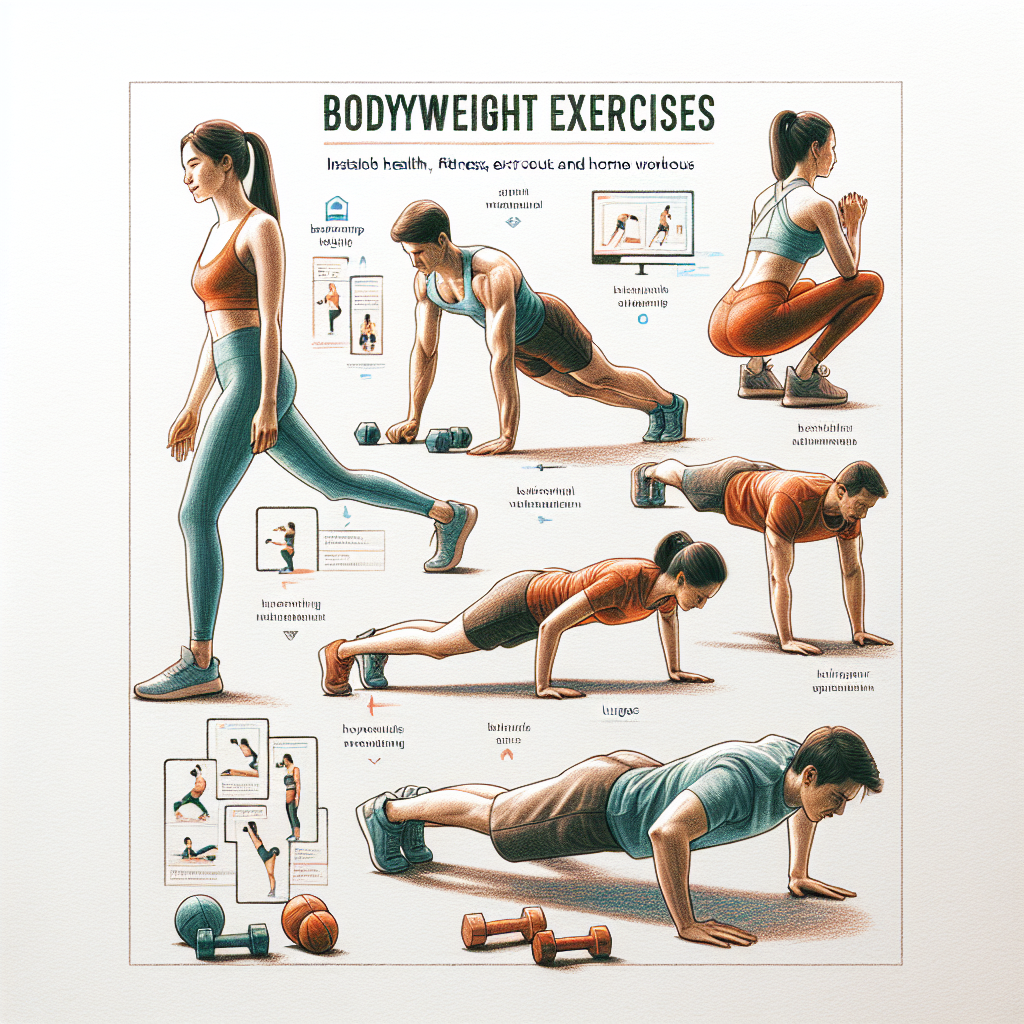
Here are some highly effective bodyweight exercises that can be combined into a workout routine:
- Push-ups: Strengthens the chest, arms, and core.
- Squats: Targets the legs, glutes, and lower back.
- Planks: Enhances core stability and overall strength.
- Lunges: Works the legs and improves balance.
- Burpees: A full-body exercise that boosts cardiovascular fitness.
- Mountain Climbers: Increases heart rate while engaging multiple muscle groups.
Creating a Structured Workout Plan
To achieve optimal results with bodyweight exercises, it is essential to establish a structured workout plan. Here is a simple guide:
- Choose Your Exercises: Select 4-6 bodyweight exercises and alternate between them.
- Set a Duration: Aim for 15 to 30 minutes per session, focusing on quality over quantity.
- Schedule Your Workouts: Designate specific days for exercise to build consistency.
- Integrate Rest Days: Allow for recovery between sessions to prevent injury.
- Track Your Progress: Use a journal or app to note improvements in repetitions and techniques.
Alternatively, consider registering for a specialized 30-day exercise program that requires only 6 minutes daily but promises substantial results. For more information, visit this link.
Common Myths About Exercising Without Equipment
Many misconceptions surround the idea of working out without equipment. Here are a few common myths debunked:
- Myth 1: You need weights to build muscle. Truth: Bodyweight exercises are equally effective for muscle strength and hypertrophy.
- Myth 2: You cannot achieve a challenging workout without equipment. Truth: High-intensity bodyweight workouts can be exceptionally demanding.
- Myth 3: Bodyweight training is only for beginners. Truth: Advanced variations exist that can challenge even seasoned athletes.
- Myth 4: You won’t burn calories without weights. Truth: Caloric burn can be substantial, especially during high-intensity sessions.
When to Consult a Professional
While bodyweight exercises are generally safe for most individuals, there are instances where professional guidance may be advisable:
- If you are new to exercise or have not been active for an extended period.
- In the presence of chronic medical conditions such as heart disease or joint issues.
- If you experience pain or discomfort that persists during or after exercise.
- For personalized advice or specialized training beyond general bodyweight exercises.
- Bodyweight exercises are accessible and provide numerous benefits.
- A structured workout can yield effective results in a minimal time commitment.
- Many misconceptions about exercising without equipment are unfounded.
- Professional consultation is warranted for specific health concerns.
- With commitment and consistency, bodyweight training can be both enjoyable and effective.
Frequently Asked Questions
Can beginners do bodyweight exercises?
Yes, beginners can effectively engage in bodyweight exercises, starting with simpler movements and gradually progressing to more complex variations.
How often should I perform bodyweight workouts?
It is generally recommended to perform bodyweight workouts 3 to 5 times per week, allowing for adequate rest.
Will I lose weight with bodyweight training?
Yes, bodyweight training, when combined with a balanced diet, can help promote weight loss by increasing caloric expenditure.
Which bodyweight exercises target the core?
Exercises such as planks, mountain climbers, and leg raises effectively engage and strengthen the core muscles.
Can I build muscle without weights?
Absolutely, bodyweight exercises can lead to muscle growth and strength improvements depending on the intensity and volume of your workouts.
Is bodyweight training safe for everyone?
While generally safe, individuals with specific health concerns should consult a healthcare professional before starting any new exercise regimen.
Conclusion
For those ready to start their journey with minimal time investment, consider exploring the convenient 30-day exercise program mentioned earlier. Your path to improved fitness is just a click away!
Author: John Angel