
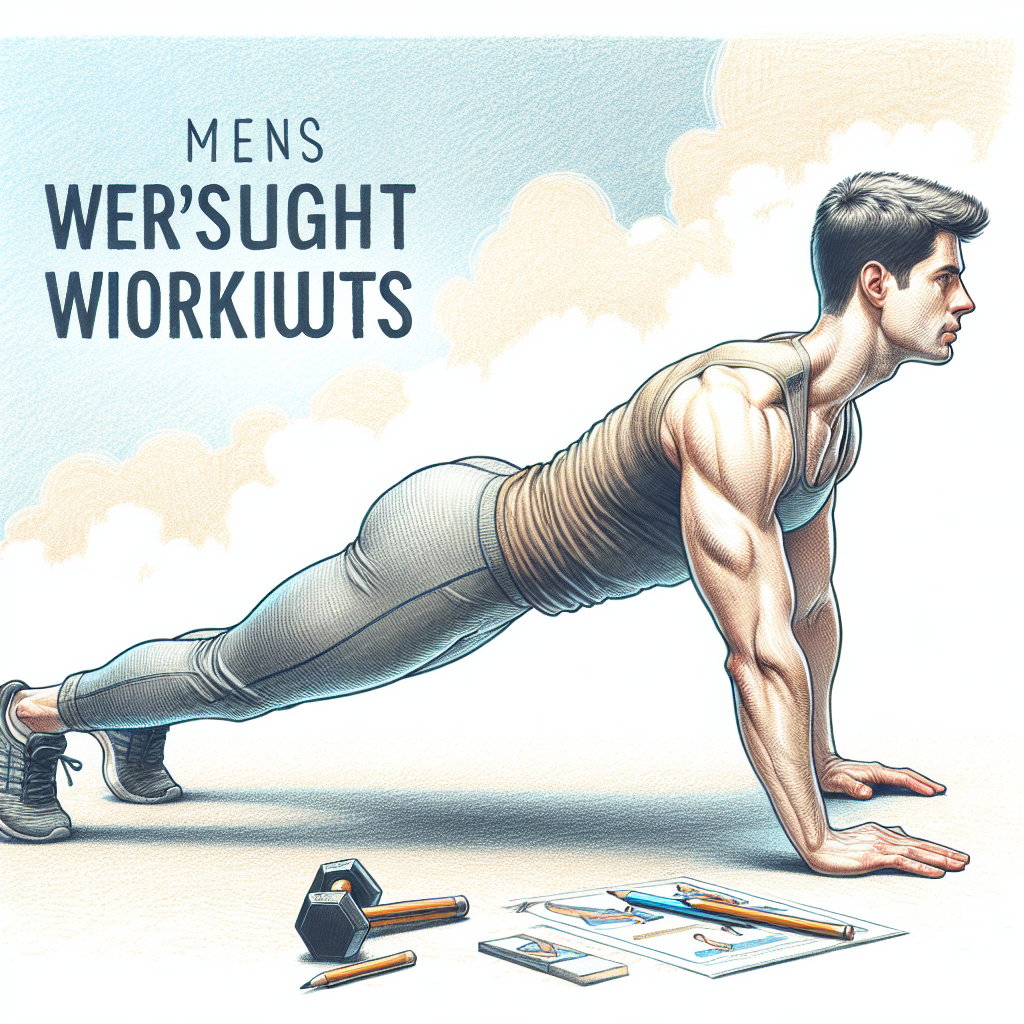
In today’s fast-paced world, establishing a consistent workout routine can seem daunting, especially for men who often feel limited by the availability of weights or gym equipment. However, a weightless workout can deliver impressive results by leveraging body weight and core strength. This article presents a comprehensive guide on how to effectively work out without weights, promoting both physical health and wellness.
- Understanding Bodyweight Exercises
- Key Benefits of Workouts Without Weights
- Essential Bodyweight Exercises for Men
- Creating an Effective Routine
- Common Mistakes to Avoid
- When to Consult a Professional
- FAQs on Weightless Workouts
Understanding Bodyweight Exercises
Bodyweight exercises involve using one’s own weight as resistance to enhance strength, stability, and endurance. These movements engage multiple muscle groups simultaneously, offering a holistic workout without the need for heavy equipment. Moreover, they can be adapted for various fitness levels, making them accessible to everyone.
Key Benefits of Workouts Without Weights
- Convenience: Bodyweight workouts can be done virtually anywhere—at home, outdoors, or while traveling.
- Cost-Effective: There’s no need for expensive gym memberships or equipment.
- Functional Strength: These exercises often mimic everyday movements, improving overall functional fitness.
- Enhanced Mobility: Many bodyweight exercises help improve flexibility and coordination.
- Reduced Injury Risk: When done correctly, they enhance muscle balance and reduce the likelihood of injuries associated with using weights improperly.
Essential Bodyweight Exercises for Men
Incorporating a variety of exercises into your routine can help target different muscle groups effectively. Below are some essential bodyweight exercises:
- Push-ups: Targets the chest, shoulders, and triceps.
- Squats: Strengthens the legs and core.
- Planks: Promotes core stability and strength.
- Lunges: Enhances lower body strength and balance.
- Burpees: A full-body workout that improves cardiovascular health.
- Mountain Climbers: Boosts agility and core strength.
Creating an Effective Routine
To maximize the effectiveness of a no-weight workout, it is essential to establish a structured routine. Here’s a suggested framework:
- Warm-up (5 minutes): Engage in light jogging or dynamic stretching.
- Full-Body Workout (20-30 minutes): Select 6-8 exercises, performing each for 30-60 seconds, followed by 15-30 seconds of rest.
- Cool Down (5 minutes): Gentle stretching to promote recovery.
For those seeking a time-efficient option, consider this incredible 30-day exercise program where you only exercise for 6 minutes daily while achieving gym-like results: Register here.
Common Mistakes to Avoid
Even experienced individuals can fall prey to common mistakes in bodyweight training. Here are a few to watch out for:
- Neglecting proper form, which can lead to injuries.
- Not progressing the difficulty of exercises over time.
- Skipping warm-ups and cool-downs, essential for muscle preparation and recovery.
- Focusing only on certain muscle groups while neglecting others.
When to Consult a Professional
While bodyweight workouts are generally safe, it’s imperative to consult a fitness professional under certain circumstances:
- If you experience pain during exercises that lasts beyond the workout.
- When you have pre-existing health conditions that may affect your ability to exercise.
- If you’re uncertain about maintaining proper form and technique.
FAQs on Weightless Workouts
Can I build muscle with bodyweight exercises?
Yes, bodyweight exercises can effectively build muscle, particularly for beginners or those returning after a break.
How often should I perform bodyweight workouts?
Aim for at least 3 to 4 times a week for optimal results, allowing adequate rest for muscle recovery.
Are bodyweight exercises suitable for beginners?
Definitely! Bodyweight exercises can be modified to match any fitness level, making them ideal for beginners.
What is the best time of day to workout?
The best time to workout is when you can consistently fit it into your schedule, whether morning, afternoon, or evening.
Are there any disadvantages to working out without weights?
While bodyweight exercises are highly beneficial, they may become less effective for advanced lifters seeking significant muscle gain and strength increases.
Can bodyweight training improve flexibility?
Yes, many bodyweight exercises naturally incorporate stretching and can enhance overall flexibility.
Conclusion
- Bodyweight workouts are convenient and effective.
- No weights are needed for a comprehensive fitness routine.
- Incorporating a variety of exercises will target different muscle groups.
- Awareness of correct form is crucial to prevent injuries.
- Consulting a professional is advisable when experiencing pain or uncertainty.
Start your journey toward fitness today without weights! Discover the potential of bodyweight training and explore the benefits it can bring to your lifestyle.
Author: John Angel