
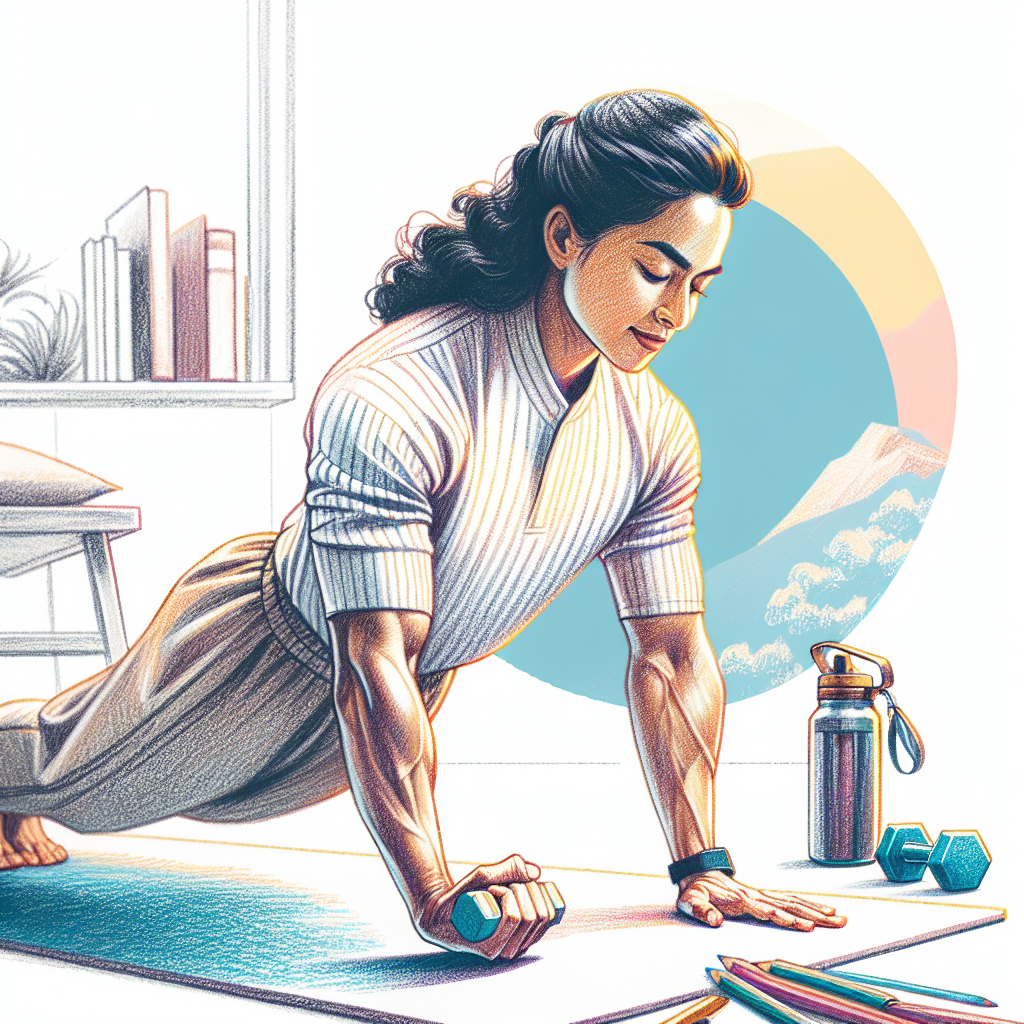
Building muscle does not necessitate access to a gym or complex equipment. In fact, one can achieve impressive results through a variety of bodyweight exercises, fostering strength and definition. This article outlines effective muscle-building workouts that require no equipment, catering to individuals at varying fitness levels.
- Introduction
- Understanding Bodyweight Exercises
- Effective Muscle-Building Workouts
- The Science Behind Muscle Growth
- Common Mistakes in Bodyweight Training
- When to Consult a Professional
- Frequently Asked Questions
- Conclusion
Understanding Bodyweight Exercises
Bodyweight exercises utilize the weight of your own body as resistance, permitting you to perform a full range of movements without needing any additional gear. This form of training not only promotes muscle growth but also enhances coordination, balance, and flexibility. Key benefits include:
- Accessibility, as they can be performed anywhere.
- Cost-effectiveness, eliminating the need for expensive gym memberships.
- Adaptability, allowing for progression based on individual fitness levels.
Effective Muscle-Building Workouts
To build muscle effectively with bodyweight exercises, incorporate a variety of movements targeting different muscle groups. Below is a recommended routine that can be completed in short increments, with each exercise performed for 30-60 seconds followed by a brief rest.
- Push-Ups: Targets the chest, shoulders, and triceps. Start in a plank position and lower your body until your chest nearly touches the ground.
- Squats: Engages the quadriceps, hamstrings, and glutes. Stand with feet shoulder-width apart, bend your knees, and lower your body as if sitting in a chair.
- Lunges: Focuses on thighs and glutes. Step forward with one leg and lower your hips until both knees are at an angle of about 90 degrees; alternate legs.
- Plank: Strengthens the core. Hold a push-up position, keeping your body in a straight line from head to heels.
- Burpees: A full-body movement that combines a squat, push-up, and jump. Start standing, drop to a squat, kick your feet back, return to squat, and jump up.
- Mountain Climbers: Engages the core, arms, and legs. Begin in a plank position and alternate bringing knees toward your chest rapidly.
For those seeking a structured approach, consider registering for a 30-day exercise program that promises effective results in just 6 minutes of daily activity.
The Science Behind Muscle Growth
Muscle growth transpires through a process called hypertrophy, wherein muscle fibers undergo microscopic tears during exercise. The body repairs these tears, leading to an increase in muscle size and strength. This process necessitates adequate protein intake and sufficient rest for optimal recovery. Key factors influencing muscle growth include:
- Progressive overload: Gradually increasing intensity or resistance.
- Nutritional support: Consuming a balanced diet rich in protein.
- Rest and recovery: Allowing adequate time for muscles to recuperate.
Common Mistakes in Bodyweight Training
Even though bodyweight workouts are simple in principle, certain misconceptions and mistakes can hinder progress. Some of the most prevalent include:
- Neglecting form: Poor form can lead to injuries and ineffective workouts. Prioritize proper technique over the number of repetitions.
- Inconsistent training: Regularity is crucial for muscle building. Aim for at least three sessions per week.
- Ignoring intensity: For optimal muscle growth, ensure that workouts are challenging enough to stimulate muscle fibers.
When to Consult a Professional
It is always advisable to consult a qualified fitness professional under certain circumstances, including:
- Experiencing persistent pain or discomfort during exercises.
- Struggling to achieve results despite consistent effort.
- Unsure about proper techniques for exercises.
- Obtain a personalized training program tailored to specific fitness goals or health conditions.
Frequently Asked Questions
Can I build muscle without weights?
Yes, bodyweight exercises can effectively build muscle without any weights.
How often should I perform bodyweight workouts?
Aiming for at least three to four sessions per week is ideal for muscle gains.
Is cardio effective for building muscle?
While cardio is beneficial for overall health, resistance training is more effective for building muscle mass.
Are bodyweight exercises suitable for beginners?
Yes, bodyweight exercises can easily be modified for beginners and progressively increased in difficulty.
How can I increase the intensity of bodyweight workouts?
To increase intensity, consider reducing rest time, adding more complex variations of exercises, or increasing the number of repetitions.
What is the best time to work out for muscle building?
The best time varies for each individual, but consistency is key. Choose a time that fits your schedule and stick to it.
Conclusion
- Bodyweight workouts can build substantial muscle without equipment.
- Regular practice and proper technique are essential for effectiveness.
- Nutrition and rest play crucial roles in supporting muscle growth.
- Avoid common mistakes to optimize your results.
- Seek professional advice when necessary to ensure safe and effective training.
In summary, building muscle without equipment is not only feasible but also rewarding. By implementing the strategies outlined in this article, you can embark on a journey towards improved strength and fitness. Consider taking the first step by joining a 30-day exercise program tailored to yield gym-like results in just six minutes a day.
Author: John Angel