
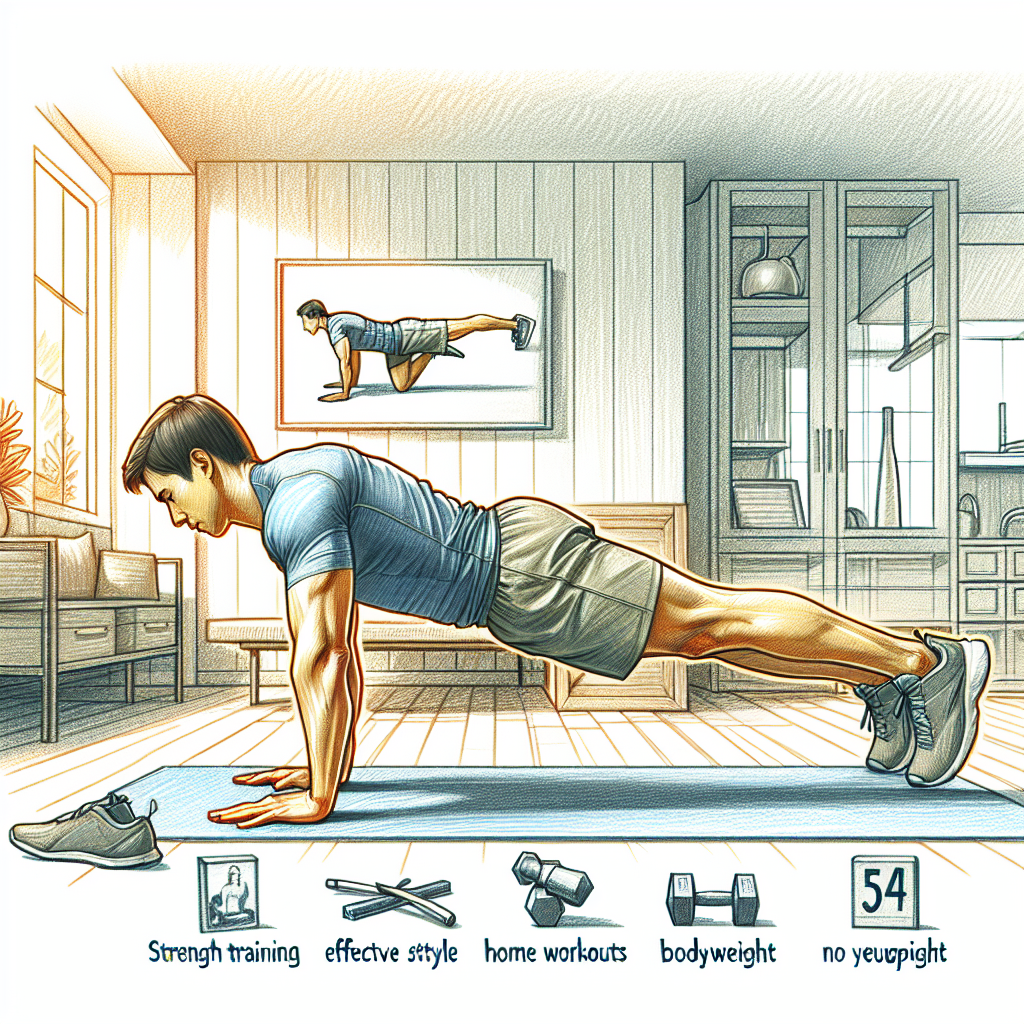
Best Strength Training Exercises Without Equipment
Strength training is a fundamental component of physical fitness that can be effectively accomplished without any specialized equipment. Engaging in bodyweight exercises not only builds muscle and enhances endurance but also boosts overall health and well-being. This article explores some of the best strength training exercises that require no equipment, providing you with a practical guide to incorporate into your daily routine.
- Introduction
- Key Benefits of Bodyweight Exercises
- Effective Bodyweight Exercises
- Creating a Structured Workout Plan
- When to Seek Professional Advice
- Common Misconceptions about Bodyweight Training
- FAQ
- Conclusion
Key Benefits of Bodyweight Exercises
Bodyweight exercises offer numerous benefits that make them an excellent choice for individuals seeking to improve their fitness levels:
- Accessibility: No require of special equipment or gym membership.
- Cost-effective: Free to practice anytime and anywhere.
- Versatility: Various exercises can target different muscle groups.
- Functional Strength: Promotes strength applicable to daily activities.
- Improved Flexibility: Many bodyweight exercises enhance mobility.
Effective Bodyweight Exercises
Here are several highly effective bodyweight exercises that you can incorporate into your routine:
1. Push-Ups
Push-ups are iconic for building upper body strength. They primarily target the chest, shoulders, and triceps.
- Start in a plank position with your hands slightly wider than shoulder-width apart.
- Lower your body until your chest is just above the ground.
- Push back up to the starting position.
2. Squats
Squats are vital for strengthening the lower body, particularly the quadriceps, hamstrings, and glutes.
- Stand with your feet shoulder-width apart.
- Lower your body as if sitting back into a chair.
- Keep your back straight and return to the starting position.
3. Lunges
Lunges are excellent for building balance and coordination while targeting multiple leg muscles.
- Stand upright and step forward with one leg.
- Lower your body until both knees are bent at about 90 degrees.
- Push back to the starting position and alternate legs.
4. Planks
Planks are a core-strengthening exercise that engages the entire body.
- Lie face down and lift your body onto your forearms and toes.
- Keep your body straight and hold the position for as long as possible.
5. Burpees
Burpees combine strength training and cardiovascular benefits, making them a highly effective full-body exercise.
- Start in a standing position, drop into a squat, and place your hands on the ground.
- Kick your feet back into a plank position, do a push-up, and jump back into the squat.
- Finally, explode up into a jump.
Creating a Structured Workout Plan
To achieve maximum results from bodyweight exercises, it is advisable to create a structured workout plan. Here are some steps to guide you:
- Identify the days of the week you will commit to exercising.
- Select 4-5 exercises from the list provided above.
- Allocate a specific number of repetitions or time for each exercise.
- Incorporate rest days to allow for muscle recovery.
- Track your progress and adjust the intensity as you improve.
For those looking for a comprehensive program that requires only 6 minutes per day, consider exploring this free registration for a 30-day exercise program, promising results akin to traditional gym workouts.
When to Seek Professional Advice
While bodyweight exercises can be undertaken by most individuals, specific situations warrant the consultation of a qualified professional. If you experience any of the following, seek guidance:
- Sustained pain or discomfort during exercise.
- Difficulty performing basic movements due to injury or health conditions.
- Specific fitness goals that require tailored programs.
- Uncertainty regarding proper form or technique.
Common Misconceptions about Bodyweight Training
Despite its advantages, several myths persist surrounding bodyweight exercises:
- Myth: Bodyweight exercises are not effective for building muscle.
- Fact: They can introduce progressive overload through variations and increased repetitions.
- Myth: Only gym workouts are beneficial.
- Fact: Bodyweight exercises can be just as effective with the right approach.
- Myth: Bodyweight exercises are only for beginners.
- Fact: They can be modified for all skill levels.
Frequently Asked Questions
1. Can I build muscle using bodyweight exercises?
Yes, with proper progression and variations, bodyweight exercises can effectively build muscle.
2. How often should I perform bodyweight exercises?
Aim for at least 3 times a week, allowing rest days for recovery.
3. What should I do if I experience pain during an exercise?
Stop immediately and consult a qualified professional if pain persists.
4. Are bodyweight exercises suitable for beginners?
Absolutely; they can be adjusted to suit any fitness level.
5. Do I need to warm up before bodyweight training?
Yes, warming up helps prevent injuries and prepares your body for exercise.
6. What if I want to increase the intensity of my workout?
You can increase repetitions, decrease rest times, or introduce advanced variations of exercises.
Conclusion
- Bodyweight exercises are accessible and effective for strength training.
- They provide a wide range of benefits, from muscle building to improved flexibility.
- A structured plan enhances the effectiveness of your workouts.
- Consult a professional if pain occurs or if you have specific concerns.
- Dispelling common myths helps recognize the value of bodyweight training.
Start your journey toward fitness today by engaging in bodyweight exercises or exploring the 30-day exercise program. Your body will thank you.
Author: John Angel