
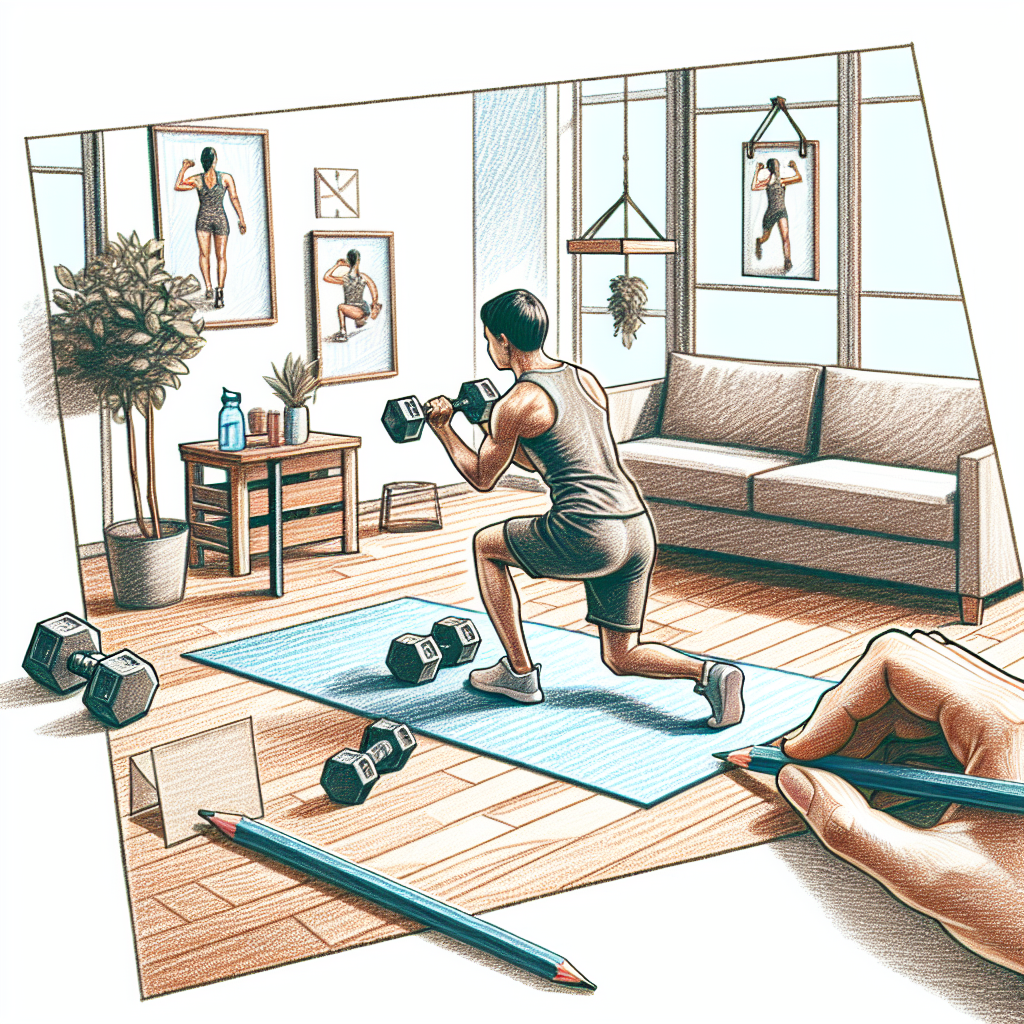
In today’s fast-paced world, finding time and space to maintain an effective workout routine can be challenging. Exercising at home without any equipment offers a practical solution, enabling individuals to stay in shape, improve their cardiovascular health, and enhance overall well-being without the need for a gym membership. By focusing on bodyweight exercises, you can achieve remarkable results in a minimal amount of time, making this approach both convenient and efficient.
- Introduction
- Benefits of Home Workouts
- Essential Bodyweight Exercises
- Creating Your Workout Routine
- Common Mistakes to Avoid
- When to Seek Professional Guidance
- Frequently Asked Questions
- Conclusion
Benefits of Home Workouts
Home workouts provide a multitude of advantages. These exercises save time by eliminating travel to the gym, allow for flexibility in scheduling, and can be easily modified to suit individual fitness levels. Additionally, the absence of gym intimidation fosters a comfortable environment for beginners. Studies suggest that working out at home can lead to enhanced adherence to exercise programs because of their accessibility and convenience.
Essential Bodyweight Exercises
Below are some of the most effective bodyweight exercises that can be done at home without any equipment:
- Push-ups: Strengthen your chest, shoulders, and arms. Start in a plank position, lower your body to the ground, and push back up.
- Squats: Target the legs and glutes. Stand with feet shoulder-width apart, lower your hips as if sitting back in a chair, then return to standing.
- Burpees: A full-body exercise that combines a squat, jump, and push-up for improved cardiovascular fitness.
- Planks: Engages your core muscles. Maintain a push-up position with your weight on your forearms, keeping your body straight.
- Lunges: Excellent for leg strength. Step forward with one leg and lower your hips until both knees are bent at a 90-degree angle.
Creating Your Workout Routine
To develop an effective home workout routine, consider the following steps:
- Determine your fitness goals (e.g., weight loss, strength building, endurance).
- Select a combination of exercises that target different muscle groups.
- Schedule workout days and ensure variety to keep your routine fresh.
- Incorporate appropriate breaks between exercises to avoid fatigue.
- Consider trying a short, intensive program, like the 30-day exercise program, where you exercise for just 6 minutes daily but achieve substantial results.
Common Mistakes to Avoid
While exercising at home can be straightforward, certain common mistakes can hinder progress:
- Improper Form: Prioritize technique over quantity to reduce injury risk and maximize effectiveness.
- Inconsistent Routine: Maintain a regular schedule; sporadic workouts can yield minimal results.
- Neglecting Warm-ups and Cool-downs: Always warm up before starting and cool down after your workout to prevent injuries.
- Overtraining: Allow adequate rest between workouts to enable muscle recovery.
- Skipping Hydration and Nutrition: Proper hydration and nutrition are essential to support any fitness regimen.
When to Seek Professional Guidance
While fitness can be self-directed, there are scenarios that warrant professional consultation:
- If you experience persistent pain during exercise.
- When attempting to achieve specific health goals (e.g., rehabilitation after injury).
- For personalized fitness programs tailored to individual needs.
- When lacking motivation or consistency in your routine.
- If you have pre-existing medical conditions, always consult with a healthcare provider before starting a new exercise regimen.
Frequently Asked Questions
Can beginners effectively perform bodyweight exercises at home?
Yes, bodyweight exercises can be easily modified to match any fitness level, making them ideal for beginners.
How long should a home workout session be?
A 20-30 minute session can be effective, but even shorter sessions, like 6 minutes, can yield impressive results with the right intensity.
Is it necessary to warm up before exercising at home?
A proper warm-up is essential to prepare the body for exercise and to minimize the risk of injuries.
Can bodyweight workouts help with weight loss?
Yes, by incorporating high-intensity bodyweight exercises combined with a balanced diet, significant weight loss can be achieved.
How often should I exercise at home?
A minimum of 3-5 times per week is recommended for optimal results, depending on your fitness goals.
What are the best times to work out at home?
Choose a time that fits best with your schedule; consistency is key to maintaining a successful workout routine.
Conclusion
- Home workouts provide a flexible and convenient alternative to traditional gym settings.
- Bodyweight exercises are effective for strength-building and cardiovascular health.
- A well-structured routine can maximize benefits and ensure progress.
- Be mindful of common mistakes to avoid injuries and setbacks.
- Consider professional advice where necessary to enhance your fitness journey.
If you’re ready to get started on your fitness journey, consider exploring the 30-day exercise program where just 6 minutes a day can lead to remarkable results. Enjoy the convenience and benefits of working out at home!
Author: John Angel